The Influence of Military Uniforms on Fashion Throughout the 20th Century
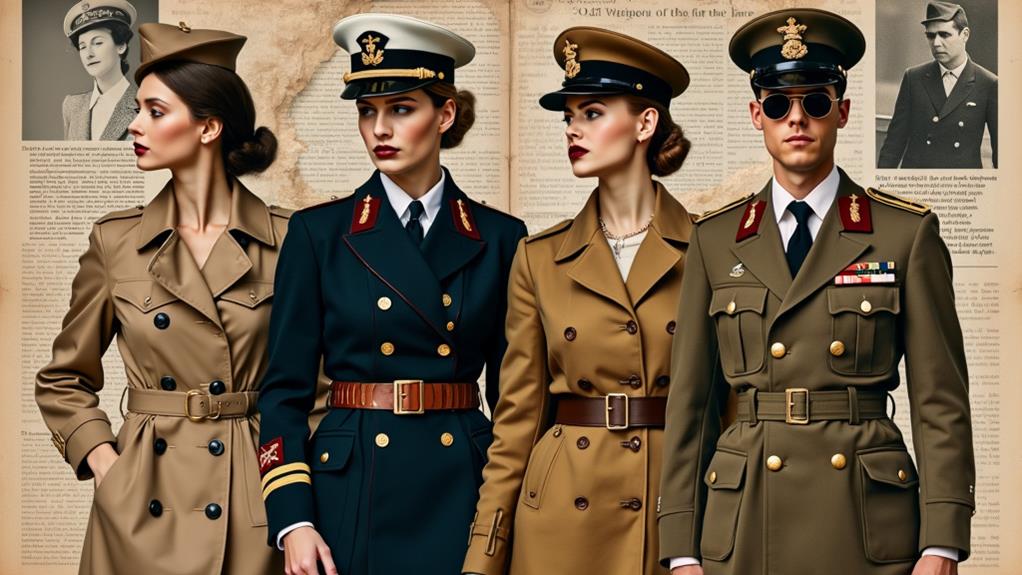
You might not realize just how much the military has shaped modern fashion. After WWII, surplus military garments found their way into everyday wardrobes, symbolizing both practicality and a subtle rebellion against consumerism. During the 1960s counterculture movements, these utilitarian pieces became statements of defiance. By the mid-1970s, high-fashion designers began drawing inspiration from military aesthetics, integrating elements like trench coats and camouflage into their collections. Curious about how these trends evolved and influenced contemporary fashion? The journey from battlefield practicality to runway chic is indeed a fascinating one.
Post-WWII Campus Fashion
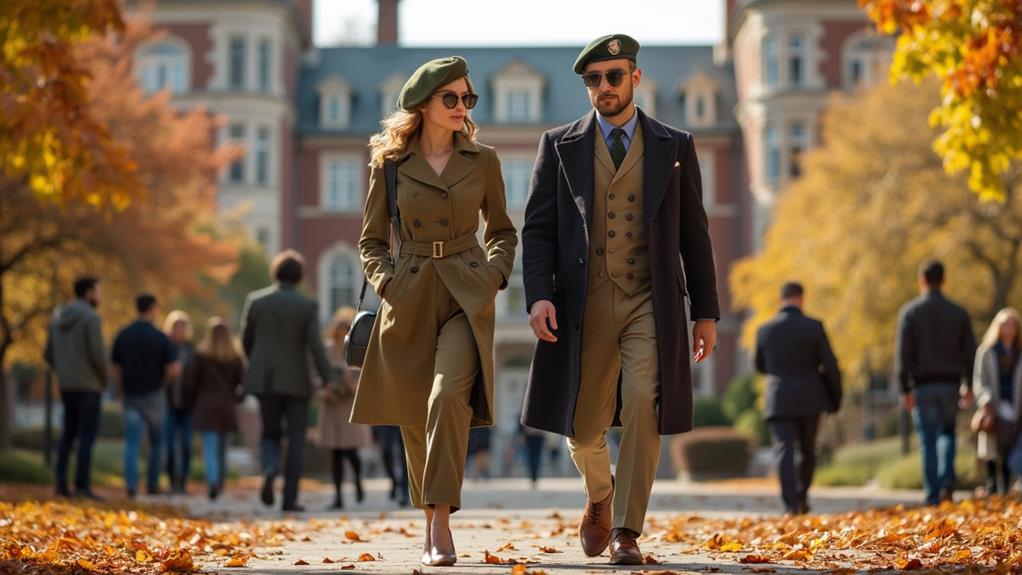
After WWII, the GI Bill enabled eight million veterans to attend college, leading to significant cultural changes on campuses. Veterans brought with them a practical and casual style influenced by their military attire. Military surplus clothing, like fatigue shirts and jackets, became popular among students. These pieces weren't just affordable fashion statements; they also symbolized rebellion, especially during the Vietnam War period.
This casualization of student dress reflected broader societal changes. Military-inspired garments evolved from purely functional to fashionable staples, particularly given the postwar scarcity of civilian clothing. Surplus stores became crucial for students seeking inexpensive yet stylish options. Items such as olive-drab jackets and khaki pants became iconic symbols of 1960s counterculture movements, blending military aesthetics with civilian life.
Walking through campuses, one could see how this blending of military and civilian styles influenced American fashion. The practicality and rebellious spirit of these garments resonated with young people, integrating elements of functionality and defiance into everyday wear. This shift didn't just alter how students dressed; it helped redefine American style, merging the lines between military necessity and civilian fashion.
The GI Bill's Impact
The GI Bill significantly transformed higher education and campus culture. With millions of WWII veterans enrolling in colleges, the student body diversified, integrating veterans' practical military attire with traditional academic styles. This shift not only democratized education but also influenced the casualization of student fashion, incorporating military elements into everyday wear.
Democratizing Higher Education
America's GI Bill, enacted in 1944, revolutionized higher education by providing unprecedented educational benefits to approximately 16 million WWII veterans. This landmark legislation democratized access to college by covering tuition, books, and living expenses, making higher education attainable for individuals from various socio-economic backgrounds. Within the first seven years, around eight million veterans utilized these benefits, reshaping American campuses and contributing significantly to the post-war economic boom.
As WWII veterans transitioned to civilian life, their presence on college campuses added a blend of maturity and ambition, significantly influencing campus culture and even student fashion. Veterans often wore military clothing, which impacted the fashion industry by popularizing these styles among civilians. The casualization of student attire included military-inspired clothing, reflecting the practical and comfortable preferences of those who had served.
The GI Bill's impact extended beyond individual educational opportunities; it established higher education as a middle-class norm and created a more educated workforce. This shift played a crucial role in America's economic growth during the post-war period, ensuring the nation benefited from the skills and knowledge of its veterans.
Veterans' Campus Influence
The influence of veterans on college campuses, driven by the GI Bill, was transformative and reshaped the post-war educational landscape. With about eight million veterans attending college through the GI Bill, campuses became hubs of maturity and ambition. This influx of veterans altered social dynamics and introduced new trends in student attire.
Military surplus clothing, chosen for its affordability and practicality, became a staple among veterans. Fatigue shirts and jackets, in particular, were popular choices, making economic sense while also contributing to a wave of casualization in campus fashion. Student attire shifted from formal, traditional styles to more relaxed, accessible clothing, reflecting broader cultural changes.
As military surplus items gained popularity, they also became symbols of rebellion, notably during the Vietnam War era. Students adopted these pieces to challenge societal norms, integrating military influences into their fashion choices. This trend not only mirrored changing times but also helped shape them. The veterans' impact on campus wardrobes marked a significant shift towards the casual, laid-back styles that came to define American university life in the mid-20th century.
Civilian Clothing Shortages
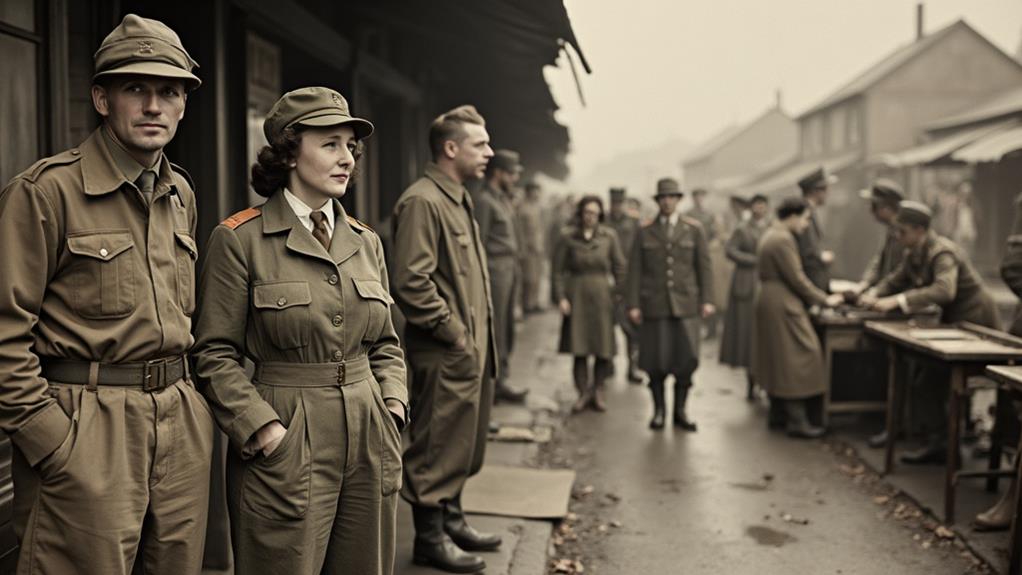
After World War II, finding basic civilian clothing was a challenge due to wartime regulations. Veterans often got creative, dyeing and altering their military uniforms to adapt them for civilian use. This necessity turned military attire and surplus items into everyday fashion staples.
Post-War Clothing Scarcity
How did the end of WWII transform the fashion landscape for civilians? The immediate post-war period experienced significant clothing shortages due to wartime regulations that had restricted civilian garment production. Veterans returning home struggled to find affordable and suitable clothing, leading to the adaptation of military uniforms for everyday use.
Military uniforms, once symbols of service, became practical necessities in civilian wardrobes. The influence of military style on post-war clothing was profound. Articles from the time suggested simple modifications, such as dyeing khaki pants and adjusting lengths, to make these uniforms more suitable for daily life. This practicality made military surplus clothing highly popular, especially among students and young adults. Items like fatigue shirts could be bought for as little as $2, providing an affordable option during a time of scarcity.
The shortage of civilian clothing also contributed to a cultural shift. On college campuses, the practicality and availability of military styles led to a more casual approach to attire. Consequently, the post-war influence of military uniforms on fashion set the stage for lasting changes in civilian clothing trends.
Modifying Uniforms for Civilians
In the aftermath of World War II, civilians faced significant clothing shortages, prompting many to repurpose military uniforms for everyday wear. With civilian clothing scarce due to wartime rationing, veterans and their families turned to military attire as a cost-effective and practical solution. Articles from that era offered tips on modifying these uniforms, such as dyeing khaki pants or adjusting garment lengths for a better fit.
Fatigue shirts, initially designed for military duties, gained popularity for their durability and affordability. Available at surplus stores for as little as $2, these shirts marked a shift toward casual and functional fashion. This trend extended beyond mere necessity, reflecting broader cultural changes. During the 1960s, veterans and students adopted military surplus clothing as symbols of rebellion and anti-consumerism.
Here are common ways military uniforms were adapted for civilian use:
| Military Item | Civilian Use | Modification Tips |
|---|---|---|
| Khaki Pants | Daily Wear | Dyeing, adjusting length |
| Fatigue Shirts | Casual Outfits | Minimal changes needed |
| Military Jackets | Outerwear | Adding patches, tailoring fit |
| Boots | Everyday Footwear | Polishing, re-soling |
| Belts | Accessory | Shortening, adding buckles |
This adaptation of military clothing not only addressed immediate needs but also influenced fashion trends and cultural expressions in post-war America.
1960s Counterculture Movements
During the 1960s counterculture movements, military surplus clothing emerged as a potent symbol of defiance against consumerism and conventional fashion. Embracing military aesthetics, students and young activists wore olive-drab jackets and fatigue shirts to express their discontent with societal norms and protest the Vietnam War. This adoption of military attire was not merely a fashion choice but a powerful political statement resonating deeply within the counterculture.
Military surplus items were highly affordable, often costing as little as $2 for a fatigue shirt, making them accessible to youth eager to reject traditional American fashion. The "ratty" appearance of these garments became a uniform of rebellion, reflecting the anti-establishment sentiment that defined the era. It was not just about looking different; it was about rejecting the consumerist ideals that mainstream fashion represented.
Mainstream Fashion Adoption
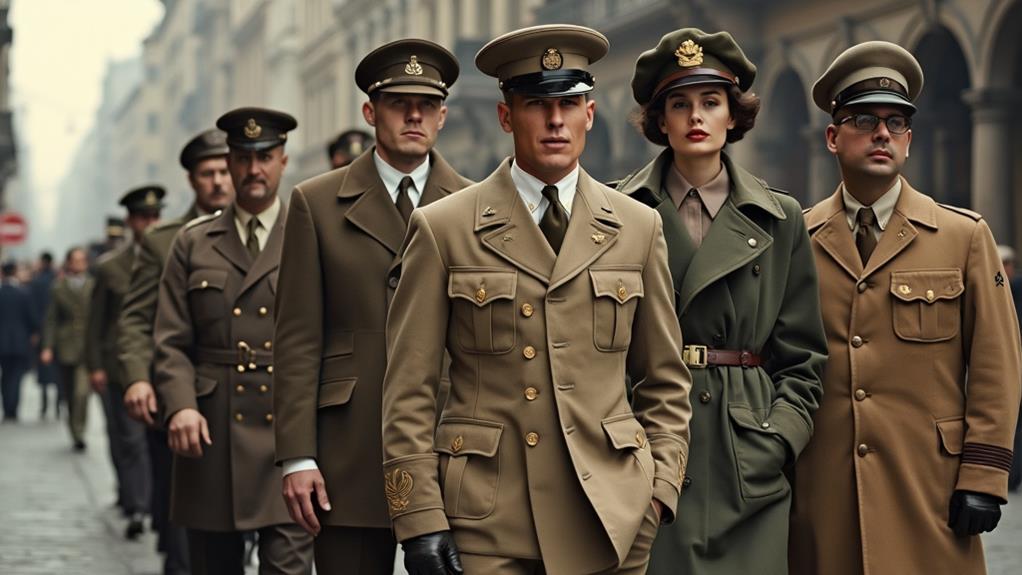
As the fervor of the 1960s counterculture began to wane, the rebellious spirit embodied by military surplus clothing persisted. By the mid-1970s, military style had made a significant leap into mainstream fashion. Brands like Ralph Lauren and Banana Republic began incorporating military styles into their collections, a trend that The New York Times dubbed "Surplus Chic." This transformation elevated military garments from utilitarian items to fashionable statements.
Military-inspired designs, such as camouflage prints and utility jackets, became widely accepted in everyday fashion. This shift reflected changing cultural attitudes and the casualization of American wardrobes. Students and young adults enthusiastically sought affordable military surplus items, driving their popularity.
Here's a quick snapshot of how military aesthetics influenced mainstream fashion across different eras:
| Era | Military Influence |
|---|---|
| 1970s | Surplus Chic |
| 1980s | Camouflage Prints |
| 1990s | Utility Jackets |
| 2000s | Epaulettes and Brass Buttons |
| 2010s-Present | Structured Silhouettes |
High-fashion designers have continued to draw inspiration from military uniforms, integrating elements like epaulettes, brass buttons, and structured silhouettes into contemporary collections. These influences are evident in everyday fashion, making military style a timeless staple.
Designer Inspirations
High-fashion designers often draw inspiration from military attire, seamlessly integrating its elements into their collections. Notable examples include Rei Kawakubo and Yves Saint Laurent, who have skillfully incorporated details such as epaulettes and structured silhouettes. These elements lend a distinct military aesthetic to high fashion, highlighting the profound influence of military styles on contemporary fashion.
Take the trench coat, originally designed by Thomas Burberry for British officers during WWI. It has evolved from a practical military garment into a timeless fashion staple, influencing modern outerwear with its classic design. Similarly, the MA-1 flight jacket, initially issued to military pilots, has become a key piece in menswear, demonstrating its enduring appeal.
To visualize this influence:
- Epaulettes and Structured Silhouettes: Convey the authority and precision of military uniforms.
- Trench Coats: Represent functional elegance, transitioning seamlessly from the battlefield to the runway.
- Camouflage Patterns and Tactical Elements: Introduce a rugged, utilitarian edge to contemporary collections.
Combat boots, once exclusive to military use, have also found their place in everyday fashion, showcasing how designers adopt practicality and rugged appeal. The ongoing influence of military aesthetics continues to shape both runway collections and everyday wear.
Modern Military Trends
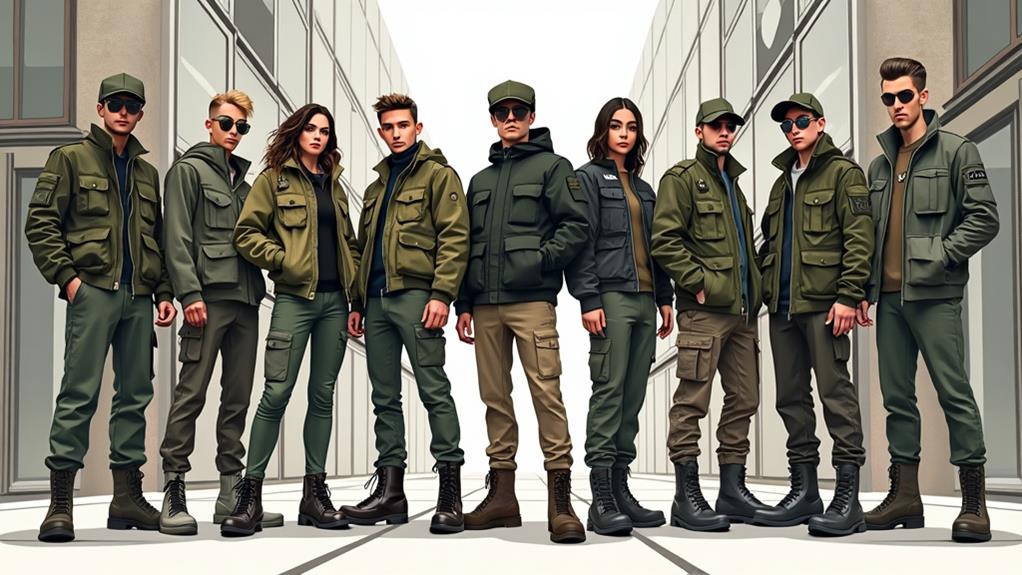
Modern military trends in fashion blend functionality with style, seamlessly integrating elements like tactical vests, cargo pants, and combat boots into contemporary wardrobes. These pieces, once central to military uniforms, now offer practicality and a rugged aesthetic for everyday wear.
The MA-1 flight jacket, initially designed for military pilots, has evolved beyond its utilitarian roots to become a staple in both high fashion and street style. Similarly, chinos, which originated as lightweight cotton pants for soldiers in the Philippines, are now versatile garments suitable for both casual and business-casual attire.
Camouflage patterns continue to captivate the fashion industry, appearing in high-end designer collections and streetwear alike. Collaborations between fashion designers and military brands have produced innovative collections that merge military aesthetics with modern flair. When you wear a camo jacket or cargo pants, you're not just following a trend; you're wearing a piece of history.