The Victorian Bustle: A Look at Extreme Silhouettes
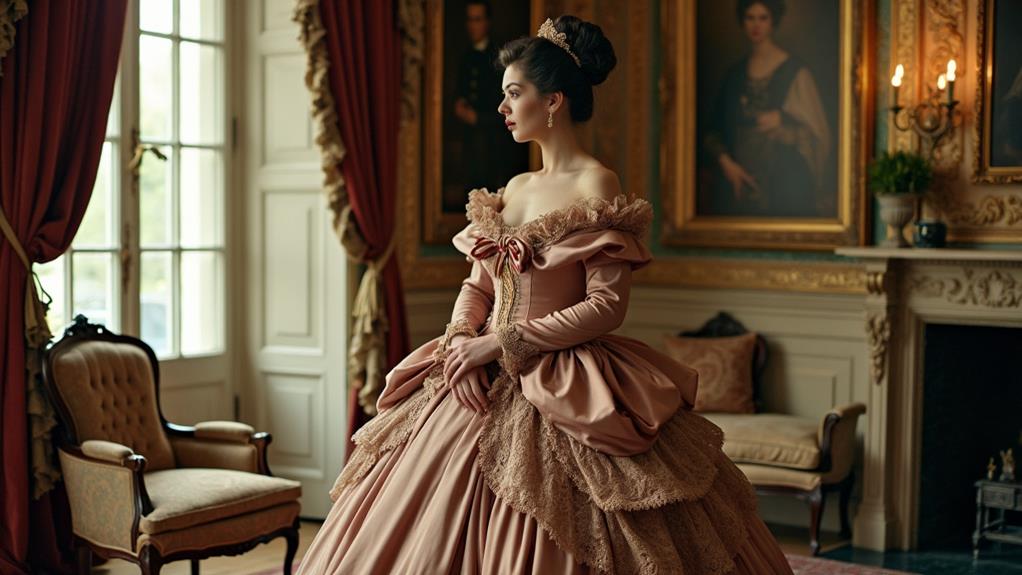
The Victorian bustle is one of the most iconic and extreme silhouettes of the 19th century. From the 1870s through the late 1880s, the bustle underwent distinct phases, each more elaborate than the last. These dramatic shapes influenced not just fashion but also society's views on femininity and self-expression. The intricate relationship between corsetry, fabrics, and design offers insights into the cultural dynamics of the period. Curious about how these trends shaped everyday life and personal identity? There is much to uncover about this fascinating fashion phenomenon.
Overview of Bustle Periods
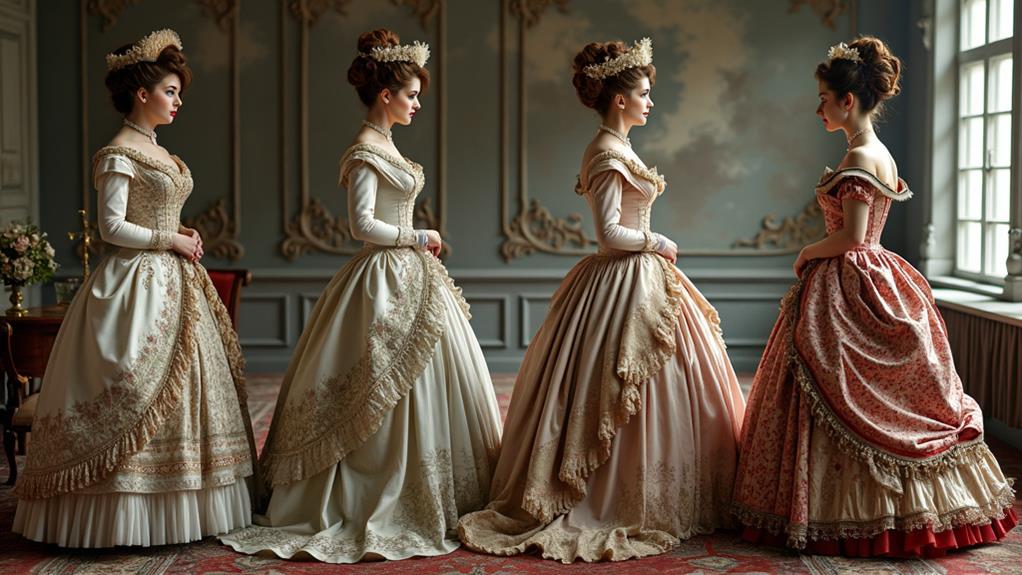
During the Victorian Bustle Period, fashion underwent dramatic transformations divided into three distinct phases. In the initial bustle period (1870-1876), skirts transitioned from elliptical shapes to more pronounced A-line silhouettes. This era's bustle shape was high, soft, and round, creating an elegant, voluminous look that epitomized Victorian fashion.
Moving into the second bustle period (1877-1882), the silhouette evolved to emphasize long vertical lines and a closer fit to the body. The introduction of the cuirass corset significantly influenced this change, enhancing figure-fitting designs. During this time, the bustle shape became lower and less pronounced, resulting in a more natural and streamlined appearance.
Early 1870s Fashion
The early 1870s marked a pivotal transformation in Victorian fashion, characterized by the emergence of the high, soft, and round bustle, creating a distinctive pouf effect at the back of dresses. This bustle became the focal point of the skirt silhouette, producing a pronounced and elegant look. Waistlines rose slightly compared to the 1860s, enhancing the overall silhouette and emphasizing the fullness at the back while maintaining a flat front.
During this period, skirts often featured polonaise draping, which added volume at the sides and back. This draping technique, along with intricate details like trims and flounces, rendered the skirts visually striking. Notable garments such as the Visiting Dress (c. 1872) and Afternoon Dress (c. 1874) exemplified the fashionable silhouette of the era.
The construction of these dresses typically involved tapes and buttons, allowing for versatile shaping and bunching of fabric to achieve the desired bustle effect. This design flexibility enabled a variety of styles within the same silhouette framework. The high bustle and raised waistlines of the early 1870s set the stage for the subsequent natural form period, influencing the progression of Victorian fashion.
Mid to Late 1870s Trends
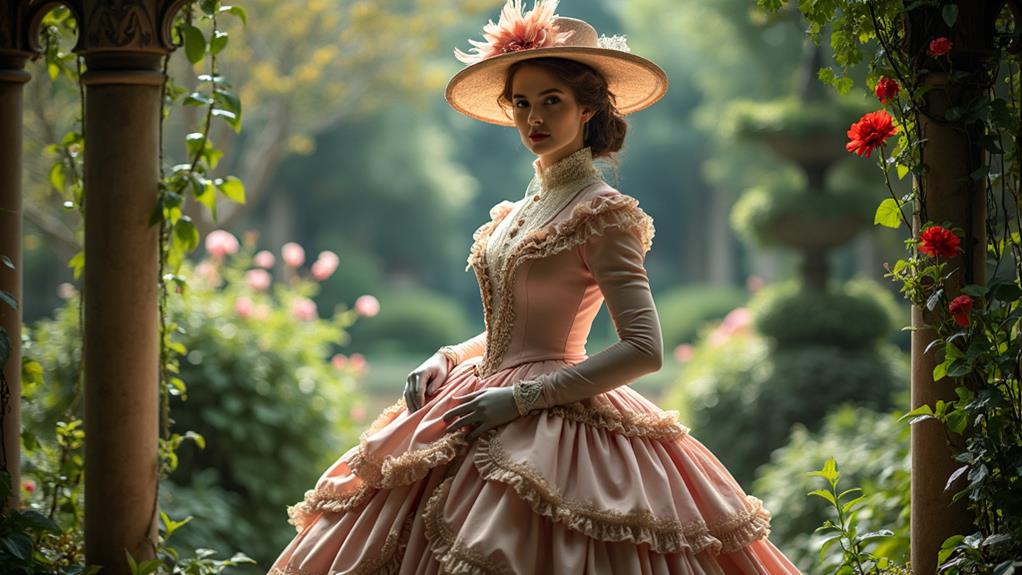
As fashion transitioned from the high, soft bustles of the early 1870s to the mid to late 1870s, there was a notable shift in silhouette. The bustle dress evolved to feature a lower bustle positioning, creating elongated skirt lines that fell straight to the ground, offering a more streamlined aesthetic. This period introduced the cuirass bodice, a tightly fitted garment extending through the hips, accentuating an hourglass shape.
The slim silhouette became a key trend, with skirts often resembling mermaid-style designs due to long trains that limited movement. Flounces and trims added intricate details to the fitted bodice and low bustle design. Tapes were used to shape skirts, allowing for a variety of fashionable looks while maintaining the streamlined silhouette.
Bodice Shapes and Styles
The evolution of bodice shapes and styles from the 1870s onward reflects the influence of corsetry, fabric choices, and detailed craftsmanship. Princess seams and tighter corsets created sleek, uninterrupted lines, while high collars and varied sleeve styles added dramatic flair. Fabrics like heavy silk taffeta enhanced the structured appearance, making each bodice a statement of elegance and form.
Evolution of Bodice Design
The bodice design of the Victorian period underwent notable transformations, reflecting the evolving fashion ideals of the time.
1870s:
During the 1870s, the introduction of cuirass bodices marked a significant shift. These bodices were form-fitting and elongated, creating a smooth silhouette from the torso to the hip. The use of princess seams eliminated the need for horizontal waist seams, resulting in a streamlined appearance. This innovation gave bodices a tightly fitted look, accentuating the highly desired hourglass figure.
1874:
By 1874, bodices became even more tightly fitted and often featured a peplum at the waist, further emphasizing the hourglass silhouette. Structured with boning, these designs maintained their shape and provided support, creating a striking visual effect that highlighted the fashionable ideal of the time.
1880s:
In the 1880s, bodice designs continued to evolve, reflecting broader trends in Victorian fashion. High collars became fashionable, and diverse sleeve styles emerged, including the return of gigot sleeves from earlier decades. As the decade progressed, there was a noticeable shift towards more blouse-like forms, indicating a growing preference for comfort and mobility. These changes mirrored the transition from rigid structure to a slightly more relaxed elegance.
Influence of Corsetry
Corsetry profoundly impacted Victorian bodice shapes and styles, dictating fashion trends and defining the iconic hourglass figure. By the 1870s, the introduction of the cuirass bodice allowed for a smooth, elongated silhouette. This style extended the waistline and minimized wrinkling through the use of boning. Corsetry created a significant distance between the bust and waist, resulting in an exaggerated hourglass figure that dominated mid to late 1870s fashion.
With the adoption of princess seams, horizontal waist seams were eliminated, contributing to a more streamlined appearance. This improved the fitted bodice design, making it a staple in Victorian wardrobes. By the late 1870s, corsets evolved to accommodate the slender fashion trend. Tightly laced designs accentuated natural curves while supporting the low bustle style, further defining the hourglass silhouette.
As fashion ideals shifted in the 1880s, bodice shapes evolved from the fitted cuirass to looser styles. Higher necklines and gigot sleeves became prominent, yet corsetry continued to play an essential role in shaping women's silhouettes. The corset's influence on Victorian fashion was undeniable, shaping bodice styles and ensuring the characteristic elegance of the time.
Fabric Choices and Details
During the Victorian period, fabric choices and meticulous details significantly influenced bodice shapes and styles. In the 1870s, popular bodice designs such as peplum, cuirass, and princess seams emphasized elongated silhouettes with intricate trims and flounces. Silk taffeta, a favorite fabric during the bustle period, was known for its luxurious drape and vibrant colors, made possible by advancements in dyeing technology.
To understand the impact of fabric choices and detailing on bodice shapes, consider these points:
- Cuirass Bodices: These form-fitting bodices were designed to minimize wrinkling. Boning was used to create a smooth appearance from the bust to the hips, essential for a polished look.
- Princess Seams: This style eliminated horizontal waist seams, offering a streamlined, elegant silhouette that was both fashionable and practical.
- Conical Silhouettes: By the mid-1870s, corsetry created a defined separation between the bust and waist, resulting in a conical shape that complemented the low bustle trend.
- 1880s Fashions: Fitted, boned bodices with high collars and gigot sleeves became popular, reflecting the decade's emphasis on structured, opulent designs.
Throughout the bustle period, these fabric choices and details played a significant role in shaping fashion history, showcasing the era's penchant for elegance and refinement.
Second Bustle Period Features
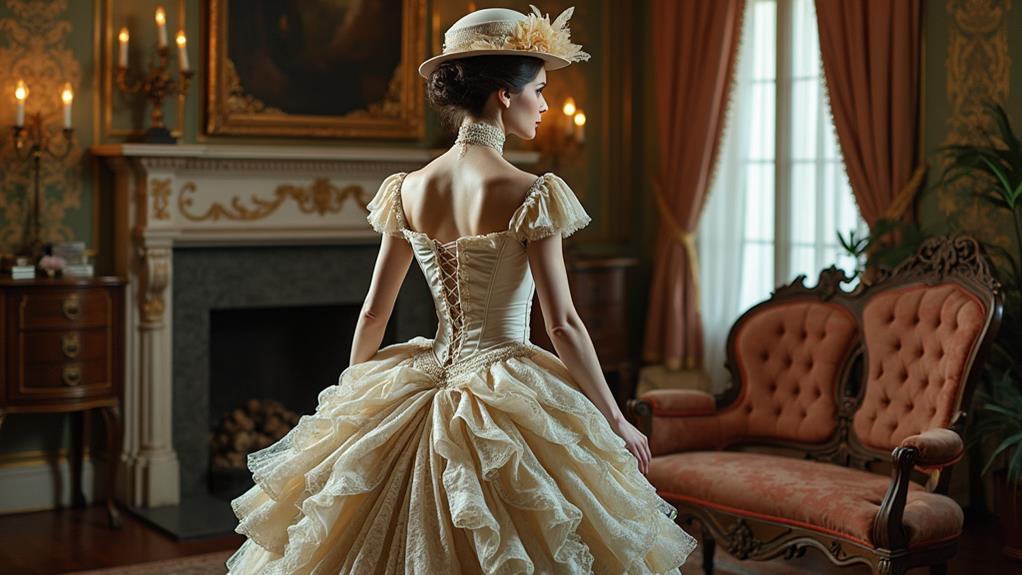
In the second bustle phase from 1883 to 1889, larger and more elaborate "shelf bustles" made a comeback. Supported by crinolines, these structures created a pronounced rear silhouette that defined this period. Dresses featured asymmetrical trims and complex draping, emphasizing the dramatic shapes and cinched waists characteristic of late 1880s fashion.
Prominent Rear Silhouettes
The Second Bustle Period (1883-1889) is notable for its dramatic rear silhouettes, achieved through "shelf" bustles that exaggerated the back profile of dresses. This era's fashion was characterized by heavy fabrics and intricate draping, with asymmetrical designs that emphasized the structured silhouette.
Women used robust undergarments, such as padded bustles and crinolines, to support these extreme shapes. The structured silhouette became a hallmark of the period, with elaborate dresses featuring extensive trims and fabric draping.
Key aspects of the Second Bustle Period include:
- Padded Bustles: Essential for creating the exaggerated rear shape.
- Structured Silhouette: Achieved with robust undergarments and heavy fabrics.
- Asymmetrical Designs: Common in skirts, enhancing the dramatic back profile.
- Elaborate Dresses: Examples like the Dinner Dress (1884-1886) highlight the period's intricate designs.
Elaborate Bustle Support
Let's transition from the dramatic rear silhouettes of the Second Bustle Period to the intricate details that made those shapes possible. The Victorian bustle saw its most elaborate support between 1883 and 1889, a time when crinolines were pivotal. Skirts required robust undergarments to maintain their elaborate designs, often crafted from heavy fabrics like velveteen and sateen. These materials ensured the skirts held their shape, emphasizing the prominent rear silhouette that became iconic during this era.
Asymmetrical trims and fabric draping added to the drama, but it was the introduction of straw-filled cushions and steel hoops that truly transformed bustle construction. Unlike the lighter, less supportive forms seen in earlier years, these new supports provided a firm, structured base for the elaborate designs. This shift allowed for more intricate and voluminous rear silhouettes, distinguishing the late Victorian bustle from its predecessors.
However, by 1893, the elaborate bustle support began evolving into simpler pads. This change paved the way for the shift towards the hourglass silhouette that would define early Edwardian fashion. The Victorian bustle, with its crinoline period roots and elaborate supports, remains a fascinating chapter in fashion history.
Fashion Influences and Trends
During the Victorian Bustle Period, fashion underwent dramatic shifts driven by societal norms and technological advancements. The transition from wide crinoline skirts to structured bustles highlighted a pronounced back silhouette. The early 1870s favored high, soft round bustles, while the late 1880s saw more exaggerated forms, reflecting the evolving fashion ideals.
Key influences on Victorian bustle fashion included:
- Charles Worth's designs: Worth's opulent styles with intricate trims and layers emphasized femininity.
- Machine sewing: Introduced in the 1870s, it enabled detailed embellishments, making elaborate styles more accessible.
- Societal norms: The bustle became a symbol of femininity and elaborate self-expression.
- Silhouette evolution: The style evolved from soft round to exaggerated bustles.
Understanding these influences helps appreciate the complexity and beauty of Victorian bustle fashion.
Practical Considerations
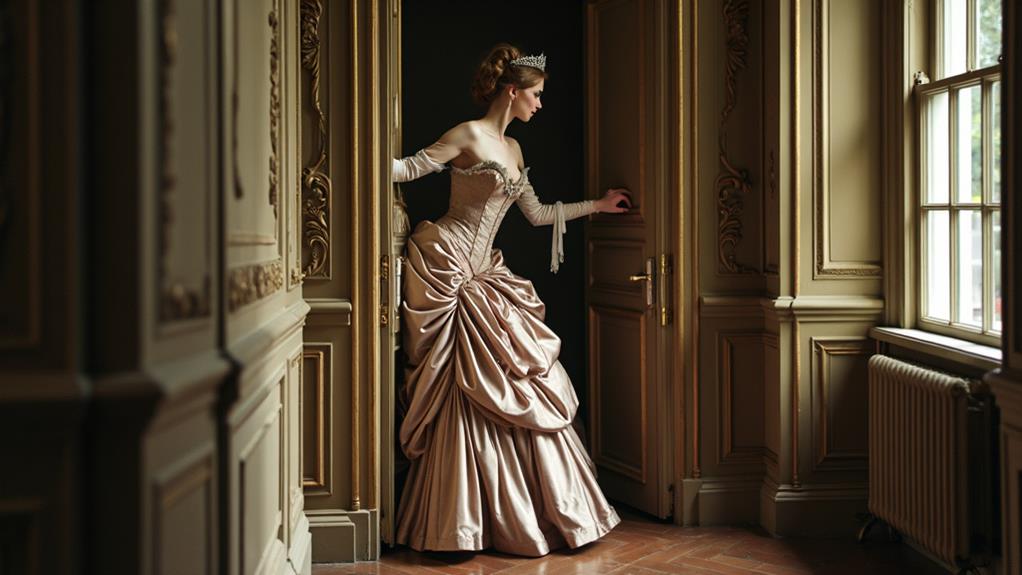
Navigating the practical aspects of Victorian bustle dresses highlights both the ingenuity and the challenges of the era's fashion. Wearing a bustle dress required mastering the delicate art of perching on the edge of seats, as the structured bustle limited movement. Adjustments were necessary when changing positions to maintain comfort and preserve the dress's shape.
Overskirts were crucial for balancing style and practicality. They were often designed to drape loosely over foundation skirts, allowing some freedom of movement while maintaining the desired silhouette. The popular polonaise style, featuring an attached overskirt without a waist seam, was particularly favored for its ease of wear and aesthetic appeal.
High necklines were a common feature, but they could be modified for comfort during warmer months, demonstrating a thoughtful approach to practical fashion. Additionally, the innovative use of bustle wires integrated into foundation skirts allowed for adjustments to the shape and position of the bustle. This adaptability enabled modifications for different occasions without compromising the iconic look. Victorian fashion skillfully blended the ornate with the practical, ensuring that the extreme silhouettes were both functional and stylish.
Cultural Impact and Perception
While Victorian bustle silhouettes necessitated practical adjustments, their cultural impact and societal perceptions were equally profound. The exaggerated forms of the bustle became a potent symbol of feminine sexuality and societal change during that period. Interestingly, these extreme shapes were not purely aesthetic but also reflected contemporary views on women's roles and identity.
Critics often saw the bustle as an emblem of sexual repression and moral suffocation, highlighting the tension between fashion and societal norms. However, it also represented a shift towards liberation compared to earlier constraints like hoop skirts. Women experienced increased mobility and comfort despite the dramatic silhouette.
Public perception varied widely:
- Condemnation: Some saw the extreme shapes as vulgar or inappropriate.
- Embrace: Others viewed it as a bold form of self-expression and individuality.
- Cultural Symbol: The bustle became emblematic of a specific cultural moment, reflecting broader societal values.
- Fashion Innovation: Its design innovations were seen as progressive, offering more freedom than previous styles.
Understanding the bustle's cultural impact helps appreciate how fashion mirrors societal evolution and the complexities of identity.
Community Engagement and Preferences
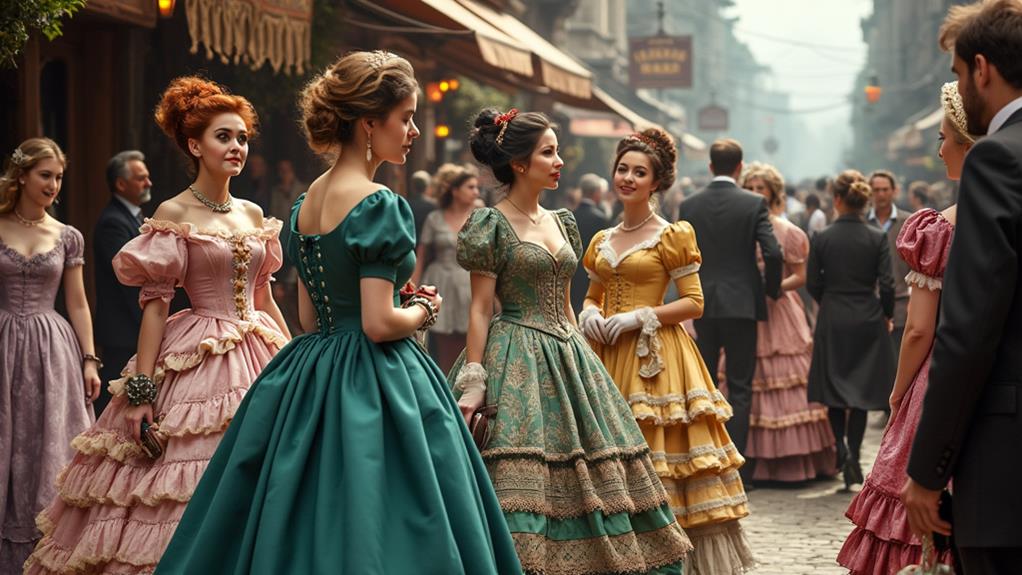
Fashion forums and social media platforms have become vibrant spaces where enthusiasts debate early versus late bustle styles, fostering rich community dialogue. These discussions often highlight the distinct silhouette of early bustle styles from the 1870s, celebrated for their volume and playful design. Many community members express a nostalgic appreciation for this period, admiring its feminine aesthetics.
In contrast, late bustle styles receive mixed reviews. The high necklines and fitted silhouettes are often seen as less flattering compared to earlier designs. These conversations not only reveal personal preferences but also reflect broader Victorian fashion trends.
Community engagement in these discussions has increased interest in historical fashion. Enthusiasts frequently participate in events or forums dedicated to celebrating and analyzing the unique characteristics of bustle dresses. This active participation ensures the allure of these distinct silhouettes endures, allowing you to connect with others who share your passion for Victorian fashion. Whether you're drawn to early or late bustle styles, the community's shared knowledge and enthusiasm make it a valuable resource for anyone interested in historical fashion.