The Zoot Suit: Bold Statements in 1940s Men's Fashion
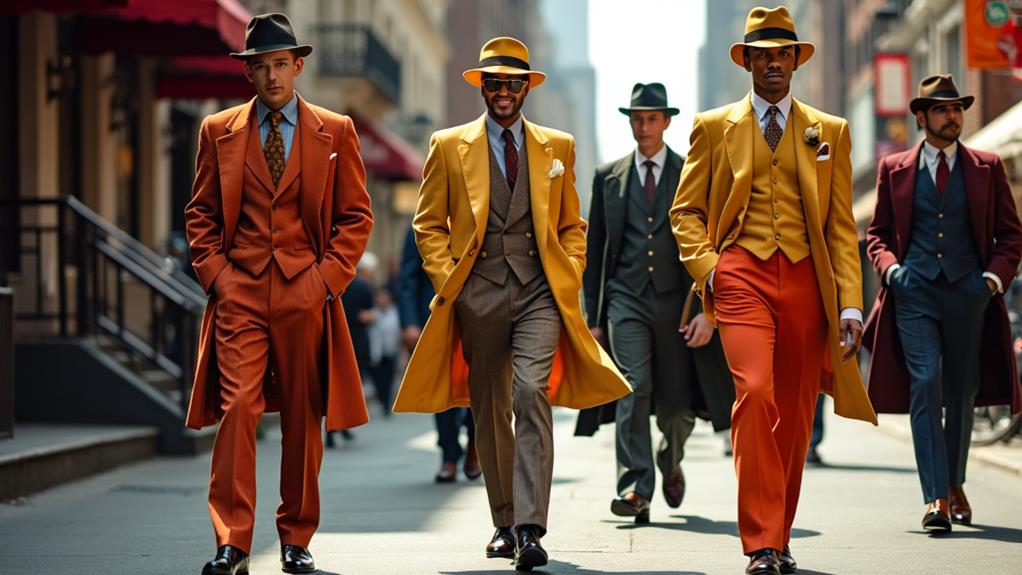
When considering bold statements in 1940s men's fashion, the zoot suit undeniably stands out. Featuring high-waisted, wide-legged trousers and long, loose-fitting jackets, the zoot suit was more than just a style choice—it symbolized cultural pride and defiance. Emerging from Harlem, this distinctive attire became a powerful statement against societal norms, particularly during World War II's fabric rationing. But what motivated marginalized communities to embrace such a striking look, and how did it culminate in the infamous Zoot Suit Riots? Let's explore how this iconic fashion challenged conventions and left an enduring impact.
Defining the Zoot Suit
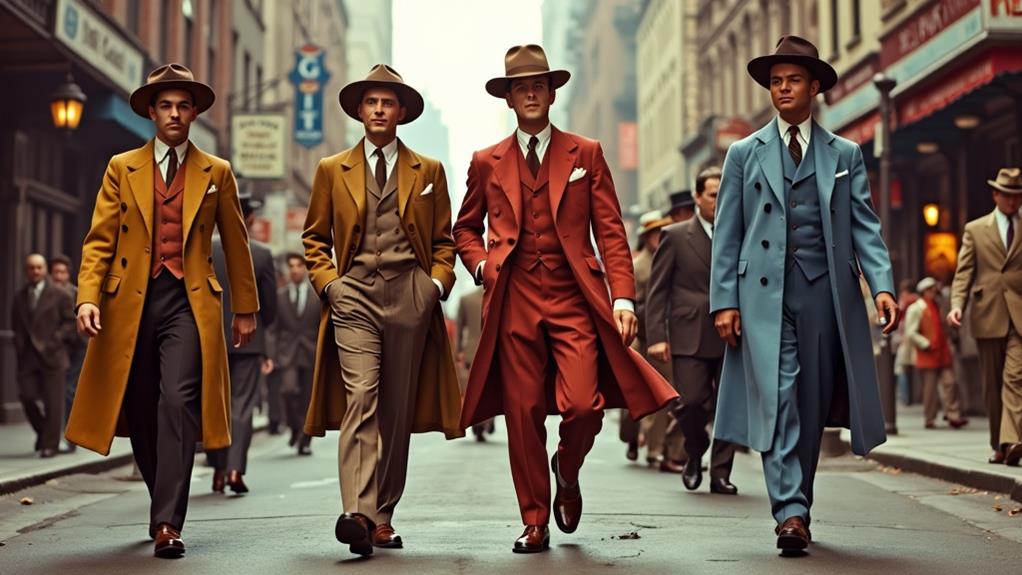
The zoot suit, originating from Harlem in the late 1930s, is a distinctive fashion statement that defied conventional menswear. Characterized by its exaggerated proportions, the zoot suit features high-waisted, wide-legged, pleated trousers paired with long, loose-fitting jackets. These elements create a flamboyant style that is unmistakable. Often accessorized with wide-brimmed hats and long chains, the zoot suit transcended mere clothing to become a declaration of cultural pride.
For African American and Latino communities, the zoot suit symbolized a bold defiance against societal norms. Its vibrant colors and patterns articulated a desire for individuality and self-expression, particularly among marginalized youth. This flamboyant style served as a form of rebellion, challenging the drabness of wartime fabric rationing and societal constraints.
Wearing a zoot suit was more than a fashion choice; it was a statement of identity and resistance. By adopting this unique style, African Americans and Latino Americans asserted their cultural pride and rejected conventional fashion norms. The zoot suit remains an enduring symbol, influencing future fashion trends and social movements.
Historical Context
Emerging from the cultural renaissance of Harlem in the late 1930s, the zoot suit became a vibrant form of self-expression for marginalized youth. Influenced by jazz and swing music, zoot suits represented a unique blend of styles and cultures. They quickly gained popularity among African Americans, Mexican Americans, and other ethnic groups during a period marked by racial tensions and social challenges.
The zoot suit's bold design and flamboyant colors stood as statements of individuality and rebellion against societal norms. This defiance was especially pronounced during the economically strained years leading up to World War II. As the war progressed, fabric rationing led to criticism of zoot suits as unpatriotic, with many arguing that they wasted valuable materials needed for the war effort, even though the fabric was purchased before rationing began.
In 1943, the Zoot Suit Riots in Los Angeles brought these underlying racial tensions to the forefront. Servicemen targeted zoot suiters, reflecting broader societal conflicts related to identity and fashion. The riots highlighted how a simple fashion trend could become a flashpoint in the broader struggle for cultural recognition and equality.
Cultural Significance
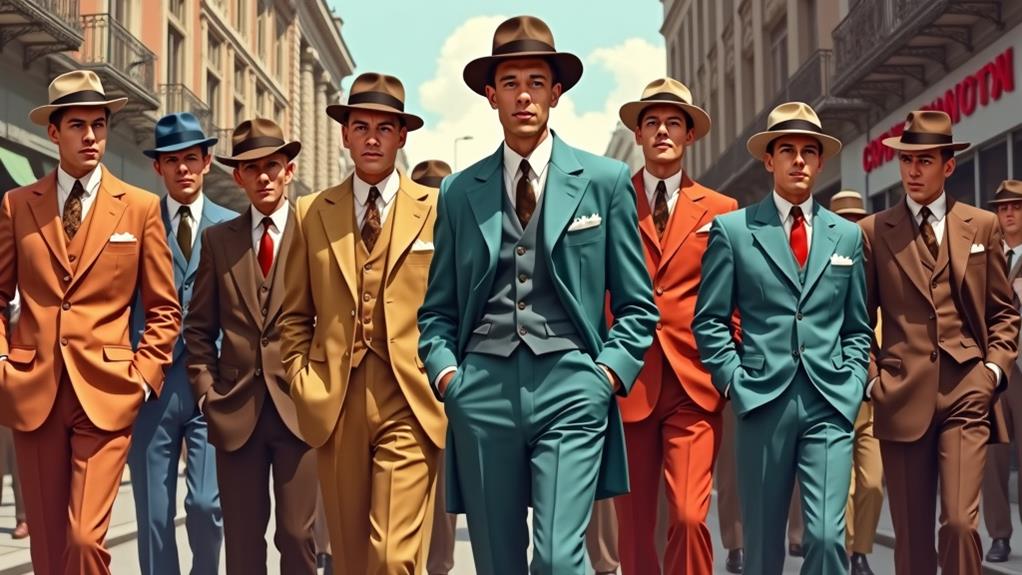
Discussing the zoot suit without acknowledging its cultural significance misses a crucial part of its history. More than just a fashion trend, the zoot suit was a powerful expression of cultural pride and individuality, particularly among African American and Latino youth in the 1940s. Originating from the vibrant jazz culture of Harlem and other urban hubs, this flamboyant style served as a form of resistance against societal norms and racial discrimination. By adopting the zoot suit's exaggerated features—such as padded shoulders and wide-legged trousers—wearers defied contemporary standards of masculinity and conformity.
The zoot suit's importance extends beyond fashion:
- Cultural Pride: It provided marginalized communities with a means to assert their identity and creativity.
- Rebellion: Wearing a zoot suit was a way to challenge societal expectations and racial discrimination.
- Identity and Resistance: The Zoot Suit Riots of 1943 highlighted the suit's role in the fight for respect and recognition.
Despite the violence and discrimination that erupted during the Zoot Suit Riots, the cultural significance of the zoot suit persists. It continues to influence modern fashion and remains a powerful symbol of resistance and cultural expression.
Wartime Controversies
During World War II, the zoot suit became a symbol of cultural pride and resistance, but its extravagant use of fabric clashed with wartime material rationing. The government promoted austerity, so wearing a zoot suit, which required a lot of fabric, was seen by many as unpatriotic.
Officials imposed harsh penalties on tailors who made zoot suits, including fines and imprisonment. This conflict between fashion and wartime austerity highlighted deeper societal issues. The tension culminated in the Zoot Suit Riots of 1943, where white servicemen attacked young men wearing zoot suits. These attacks exposed underlying racial tensions, and the zoot suit became a flashpoint for these issues.
Law enforcement often responded passively and with bias, arresting the victims rather than the aggressors. This response revealed societal biases against zoot suit wearers, who were mostly from marginalized communities. As a result, the zoot suit's image shifted from a symbol of creativity and cultural pride to one associated with delinquency and societal unrest.
Zoot Suit Riots
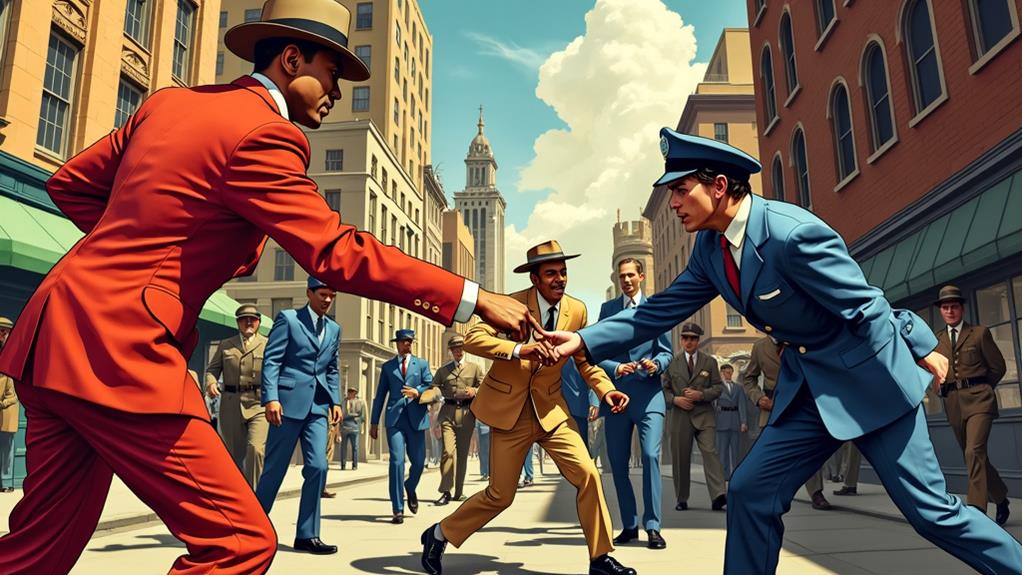
Amid the backdrop of World War II, the Zoot Suit Riots erupted in Los Angeles from May to June 1943, fueled by racial tensions and fabric rationing. These violent clashes saw white sailors and marines targeting Mexican American youth dressed in zoot suits, which the servicemen viewed as unpatriotic and a waste of valuable wartime materials.
The riots involved not only physical attacks but also exposed deep-seated societal issues. Law enforcement's response was notably biased, often siding with the attackers. Instead of protecting the zoot suiters, police frequently arrested them, exacerbating the sense of injustice felt by the Mexican American community.
The Zoot Suit Riots underscored significant cultural and social tensions:
- Racial Prejudice: The riots highlighted the discrimination faced by Mexican Americans and other marginalized groups.
- Cultural Defiance: Wearing zoot suits became a symbol of resistance against societal norms and racial discrimination.
- Media Influence: Coverage of the riots shifted public perception, associating zoot suits with criminality and unrest.
These events underscored broader issues of racism and cultural identity, leaving a lasting impact on how zoot suits were perceived in American society.
Fashion Evolution
The zoot suit originated from the 1920s English drape suit, which featured exaggerated proportions. It gained prominence in the late 1930s and 1940s jazz culture with its broad shoulders and voluminous trousers. Modern versions use lighter fabrics but maintain the bold style of the original design.
Origins and Inspirations
Born in the vibrant heart of Harlem during the late 1930s, the zoot suit's origins can be traced back to the English drape suit popularized by Edward VIII. When men wear zoot suits, they make a bold fashion statement rooted in cultural expression and the energetic jazz culture of the era. These suits, with their oversized silhouettes, symbolize a rebellious spirit and individuality.
Inspired by the dynamic rhythms of jazz and swing, the zoot suit featured exaggerated elements like padded shoulders, long jackets, and wide, pleated trousers. This design allowed for freedom of movement, embodying the fluidity and exuberance of the period's music scene. Tailors in Harlem played a crucial role in this evolution, creatively adapting the drape suit into the iconic zoot suit.
The zoot suit resonated particularly with marginalized African American and Mexican American youth, serving as a form of defiance against societal norms and racial discrimination. Accessories like wide-brimmed hats and long chains further emphasized individuality and style.
Key Design Features
The zoot suit's vibrant origins and cultural significance shaped its key design features, defining men's fashion in the 1940s. The first thing that comes to mind about a zoot suit is its exaggerated proportions. Long jackets with padded shoulders and high-waisted, wide-legged trousers created a dramatic silhouette, making the wearer stand out in any crowd.
Tailoring was crucial for achieving the zoot suit's distinctive look. It wasn't just about size; it was about precision. Ballooning trousers that tapered at the ankles required custom adjustments to ensure a perfect fit. The cinched waist of the jacket added to the overall effect, making the wearer appear both stylish and bold.
Vibrant colors and bold patterns were another hallmark of the zoot suit. These suits were more than just clothing; they were a statement, reflecting the lively jazz culture and individuality of the 1940s. Accessories like wide-brimmed hats, long chains, and brightly colored neckties completed the ensemble, making the zoot suit a significant fashion phenomenon. The combination of these elements made the zoot suit an unforgettable icon in men's fashion.
Modern Interpretations
Modern interpretations of the zoot suit seamlessly blend past and present, driving a dynamic evolution in men's fashion. Designers draw inspiration from the traditional oversized jackets and loose pants, but update them with lighter fabrics and contemporary cuts. This fusion allows the zoot suit to remain a bold statement while aligning with modern aesthetics.
Modern zoot suits often feature updated color palettes and patterns, serving as a nod to their cultural heritage and a canvas for personal expression. Fashion icons and musicians continue to draw from the zoot suit's distinctive features, integrating them into streetwear and avant-garde designs, ensuring the style remains relevant.
- Lighter fabrics: Adapt to changing fashion trends while preserving the suit's signature boldness.
- Hybrid styles: Combine traditional elements with modern aesthetics for contemporary appeal.
- Revival of interest: Highlight the enduring impact of zoot suits in fashion shows and collections.
The resurgence of vintage fashion has rejuvenated the zoot suit, demonstrating its lasting influence on men's fashion. Embrace these modern interpretations to see how they marry the old with the new.
Modern Relevance

Many might be surprised to learn that the zoot suit, a fashion statement from the 1940s, has made a striking comeback in modern fashion. Contemporary versions retain the bold colors and exaggerated silhouettes but are crafted from lighter fabrics and incorporate innovative styles. This adaptation allows the zoot suit to seamlessly blend with current trends while preserving its original essence.
Zoot suits are prominently featured in cultural festivals and events celebrating heritage, symbolizing cultural pride and identity. Their influence extends beyond these celebrations, impacting contemporary streetwear and avant-garde fashion. Designers and fashion enthusiasts appreciate the zoot suit's historical significance and its role in shaping identity and resistance within marginalized communities.
Care and Maintenance
Maintaining the elegance and longevity of your zoot suit requires diligent care and attention. The bold colors and structured lines that define this iconic 1940s fashion statement depend on proper maintenance to remain vibrant and intact. Here are key steps to ensure your zoot suit stays in top condition:
- Dry Cleaning: Regular dry cleaning is essential to preserve the fabric's quality and keep the lively patterns looking fresh. Different materials may require specific cleaning methods, so always consider the fabric type before choosing your cleaning approach.
- Pressing: Routine pressing is crucial for maintaining the suit's sharp lines and structured silhouette. Skipping this step can result in the loss of its distinctive shape.
- Breathable Storage: Store your zoot suit in a breathable garment bag to prevent moisture buildup and protect it from dust and pests.
- Routine Inspections: Regularly inspect your suit for signs of wear or damage. Early detection allows for timely repairs, preventing more extensive and costly fixes later.
By following these practices, you ensure that your zoot suit remains a standout piece in your wardrobe, maintaining its striking appearance and structural integrity.
- Dry cleaning: Preserves fabric quality and colors.
- Pressing: Maintains sharp lines and structure.
- Breathable storage: Prevents moisture and pest damage.
- Routine inspections: Early detection of wear and damage.
These simple steps will keep your zoot suit looking as striking as ever.