The "New Look": Christian Dior’s Revolutionary 1947 Fashion
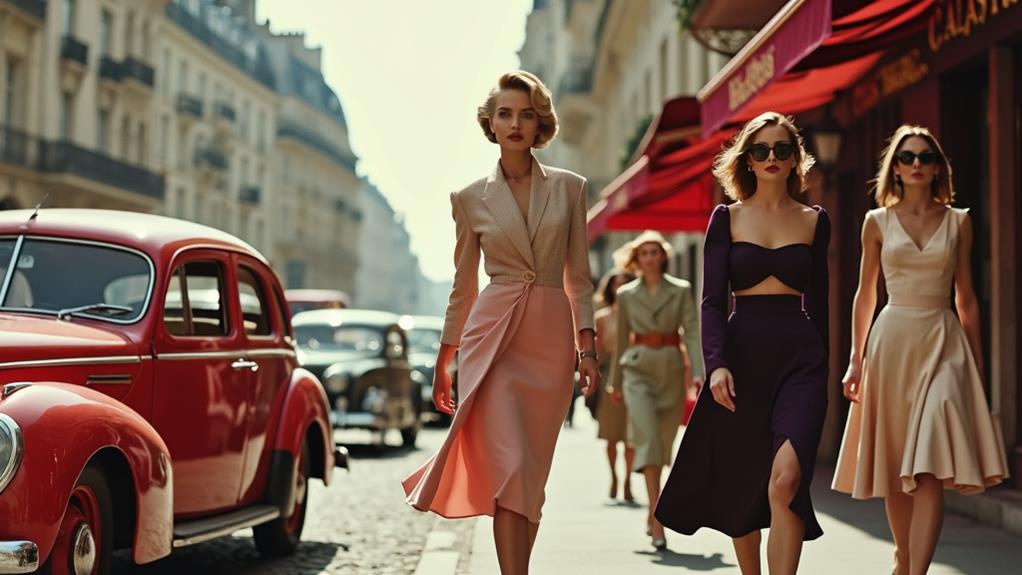
Imagine stepping into a world where fashion had been dominated by practicality and simplicity due to wartime constraints. Suddenly, in 1947, Christian Dior's "New Look" emerges, captivating everyone with its bold return to opulence and femininity. You see rounded shoulders, cinched waists, and voluminous skirts that defy the austerity of the past decade. Why did this dramatic shift face mixed reactions, and how did it ultimately redefine global fashion? Exploring Dior's vision and the subsequent industry transformation reveals a fascinating interplay of art, culture, and economics.
The Birth of the New Look

Unveiling Christian Dior's New Look on February 12, 1947, marked a transformative moment in post-war fashion. The atmosphere at Dior's Parisian atelier buzzed with anticipation as the collection revealed ultra-feminine silhouettes that starkly contrasted with the utilitarian styles of the wartime era. The New Look's defining features included rounded shoulders, cinched waists, and voluminous calf-length skirts, celebrating women's curves and femininity.
A standout piece from this collection, the Bar Suit, epitomized the essence of the New Look. This iconic ensemble featured a cream-colored jacket paired with a full black skirt, emphasizing an hourglass figure that quickly became a symbol of post-war elegance. Carmel Snow, editor of Harper's Bazaar, aptly coined the term "New Look" to describe Dior's groundbreaking style, acknowledging its significant impact on women's fashion.
The New Look was not just an aesthetic revolution; it also signaled the return of luxurious fabrics after years of rationing. Dior's collection redefined women's fashion, reintroducing glamour and sophistication that had been absent during the war years. By celebrating femininity and curves, Christian Dior solidified his enduring influence in haute couture, making the New Look a pivotal chapter in fashion history.
Dior's Vision and Philosophy
Christian Dior's vision for fashion was fundamentally transformative, viewing dressmaking as an architectural art form that celebrated the female silhouette. He believed garments should encapsulate beauty and elegance, using groundbreaking silhouettes to emphasize the feminine form. After years of wartime austerity, Dior's designs, with their soft shoulders, cinched waists, and voluminous skirts, sought to restore sensuality and femininity to women's fashion. His dedication to luxurious fabrics and meticulous tailoring was evident in iconic pieces like the Bar Suit, which became a symbol of his philosophy.
Dior saw fashion as more than just clothing; he considered it an art form worthy of museum display. His commitment to innovative and artistic garment construction set new standards in the fashion landscape, profoundly influencing perceptions of femininity in the late 1940s and beyond. By celebrating the female form and utilizing luxurious fabrics, Dior's vision reshaped an era, leaving a lasting legacy in haute couture.
| Dior's Vision | Key Elements |
|---|---|
| Philosophy | Architectural dressmaking |
| Silhouette | Soft shoulders, cinched waists |
| Fabrics | Luxurious, elegant materials |
Defining Features of the New Look
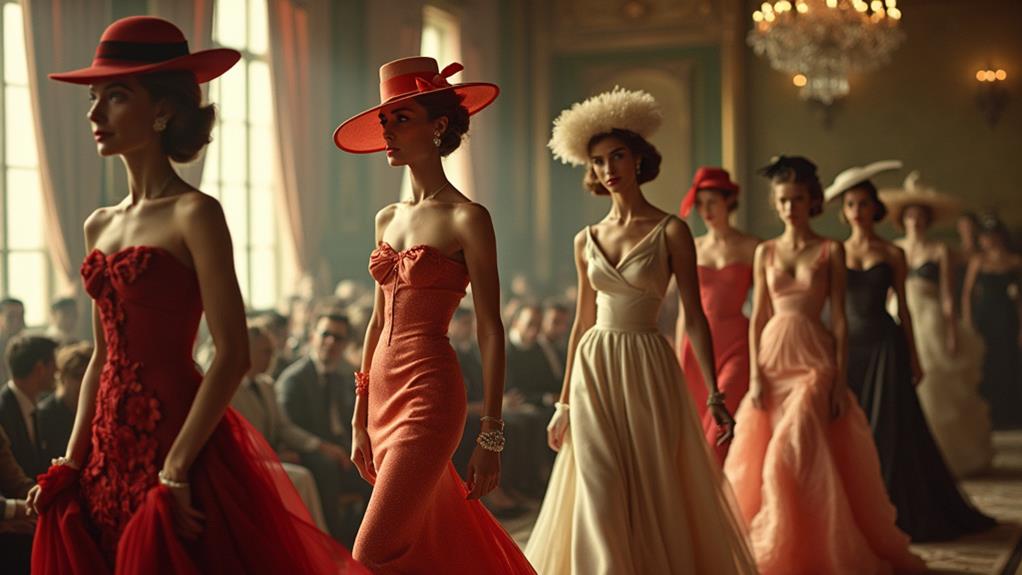
The New Look, introduced by Christian Dior in 1947, revolutionized fashion by contrasting sharply with wartime austerity. Central to the New Look is a silhouette featuring soft shoulders, a cinched waist, and a voluminous, calf-length skirt, creating an elegant hourglass figure. This marked a dramatic departure from the masculine, geometric styles of the wartime era, celebrating feminine curves and signaling a return to luxury and sophistication in women's fashion.
A quintessential piece of the New Look is the Bar Jacket, which exemplifies Dior's masterful tailoring and use of luxurious fabrics. Its structured design accentuates the cinched waist, contributing to the overall exaggerated femininity of the look.
Dior's designs required extensive fabric, often significantly more than wartime styles, initially leading to criticism for perceived wastefulness. However, this abundance of fabric was essential for achieving the voluminous skirt that became emblematic of the New Look.
Dior's innovative approach redefined women's fashion, restoring a sense of elegance and sensuality that shaped trends throughout the late 1940s and 1950s.
Public Reaction and Criticism
Dior's New Look, upon its debut, ignited a storm of mixed reactions. Within the fashion world, some women celebrated the return to an ultra-feminine silhouette, embracing the hourglass shapes and luxurious fabrics. However, this enthusiasm was not universal. Critics swiftly condemned Dior's designs for their extravagant fabric usage, particularly during a period when post-war rationing still shaped public opinion.
In the United States, many women protested the long dresses, arguing that the extensive yards of fabric required were wasteful. Coco Chanel, a significant figure in fashion, famously remarked, "Dior doesn't dress women. He upholsters them!" Her comment captured a broader disdain for the exaggerated femininity that Dior's New Look epitomized. The backlash was intense; some women who wore the New Look were even attacked in the streets.
However, as fashion magazines began to feature Dior's innovative designs, public sentiment gradually shifted. Despite the initial criticism, the New Look gained popularity over time, reshaping fashion norms and winning over many early detractors. Dior's bold vision had irrevocably altered the fashion landscape, setting the stage for future trends.
Cultural and Economic Impact
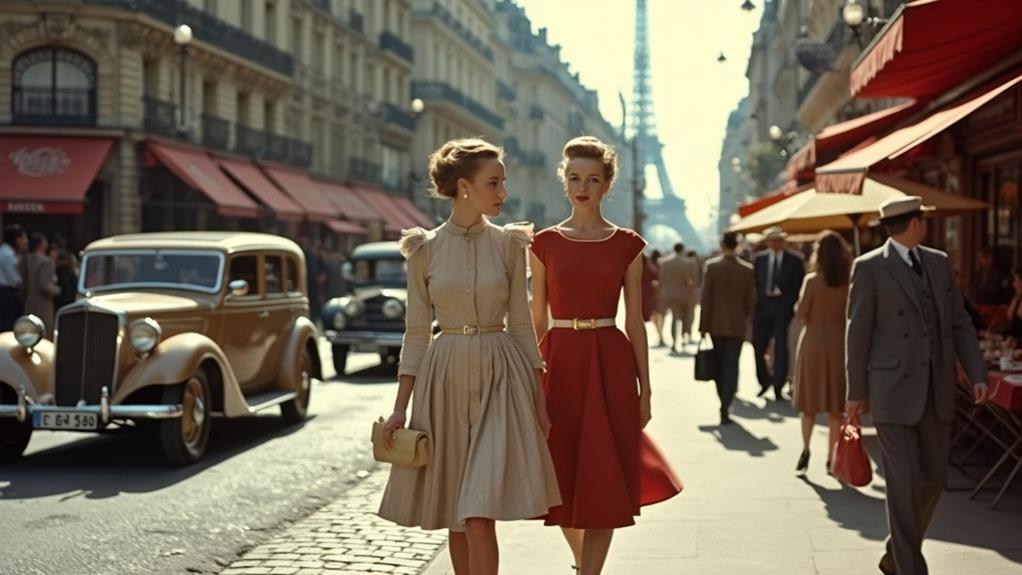
Christian Dior's 1947 New Look sparked a rebirth in post-war fashion, reinstating national pride and positioning Paris as the epicenter of style. This collection didn't just redefine femininity; it also led to significant economic growth in France. As Hollywood stars and European royals adopted the look, its global influence solidified Dior's status as a leader in haute couture.
Post-War Fashion Rebirth
In the aftermath of World War II, Christian Dior's 1947 collection, famously known as the New Look, didn't just revolutionize women's fashion; it signaled a broader cultural and economic rebirth. Dior's Haute Couture collections offered a stark contrast to the utilitarian styles of wartime. The New Look emphasized femininity and luxury, using extensive fabric to create voluminous skirts and cinched waists, a direct response to years of fabric rationing.
Initially, this opulence drew criticism for perceived wastefulness, yet it quickly became a symbol of economic recovery. Dior's designs revitalized Paris as the fashion capital, attracting high-profile clientele like Hollywood stars and European royals. This resurgence enhanced the French economy and restored a sense of normalcy and aspiration in post-war fashion.
Fashion magazines swiftly adopted Dior's groundbreaking silhouettes, spreading the New Look's influence globally and solidifying its impact on women's fashion throughout the late 1940s and 1950s.
- Emphasized femininity and luxury after wartime austerity
- Symbolized economic recovery and opulence
- Attracted high-profile clientele, enhancing the French economy
- Restored Paris's reputation as the fashion capital
Dior's New Look truly marked the rebirth of post-war fashion.
National Pride Restored
Dior's New Look did more than just redefine fashion; it became a symbol of restored national pride and economic vigor for post-war France. The launch of Christian Dior's collection in 1947 marked a resurgence in French confidence, positioning Paris once again as the global capital of couture. This revitalization was essential for a country recovering from the devastation of World War II.
Dior's emphasis on luxurious fabrics and extravagant designs didn't just turn heads; it spurred significant economic growth. The fashion industry, rejuvenated by the New Look, attracted an influx of international clientele, including Hollywood stars and European royalty. This renewed interest helped reestablish France's economic stability, underscoring fashion's critical role in the nation's recovery.
| Aspect | Impact |
|---|---|
| Economic Growth | Increased international clientele |
| National Pride | Revival of French confidence |
| Cultural Shift | Adoption of femininity and beauty |
| Fashion Industry | Paris reinstated as couture capital |
| Societal Change | Return to elegance after wartime austerity |
The New Look's cultural impact extended beyond fashion. It mirrored broader societal changes, with women seeking to reclaim elegance and femininity after years of hardship. Dior didn't just create a collection; he orchestrated a movement that restored national pride and economic optimism in France.
Global Fashion Influence
Christian Dior's New Look, initially met with some criticism, quickly became a global sensation, revolutionizing the fashion landscape. It revitalized the French fashion industry and restored Paris's status as the world's couture capital after World War II. This resurgence not only bolstered France's cultural standing but also significantly contributed to its economic recovery.
Emphasizing luxury and femininity, the collection had a profound cultural impact. Designers worldwide began adopting similar silhouettes, leading to a global shift in fashion trends. Dior's extravagant use of fabric, initially criticized as wasteful, came to symbolize post-war abundance and optimism. This inspired a heightened demand for high fashion and luxury goods.
Dior's pioneering licensing agreements for perfumes, accessories, and clothing created a new business model, allowing haute couture to thrive commercially. This approach set a precedent for future fashion brands and extended Dior's influence beyond garments.
The global acceptance of the New Look catalyzed a shift in women's fashion, celebrating femininity and individual expression. This transformation reshaped societal attitudes towards women's roles and identities in the post-war period.
- Revitalized French fashion industry
- Global adoption of new silhouettes
- Symbol of post-war optimism
- Groundbreaking business model
The New Look's impact on global fashion and culture remains undeniable.
Evolution and Legacy
Christian Dior's 1947 New Look continues to influence global fashion. This iconic silhouette reshaped design by celebrating femininity and set a precedent for future designers. Dior's vision still guides contemporary fashion, demonstrating its enduring impact on women's wear.
Global Fashion Influence
Christian Dior's 1947 New Look revolutionized global fashion by introducing a silhouette characterized by soft shoulders, cinched waists, and voluminous skirts, marking a dramatic shift towards exaggerated femininity. This style celebrated luxury and elegance, starkly contrasting the rationing and austerity that defined the post-World War II era. By employing lavish amounts of fabric, Dior made a bold statement that reverberated globally, reestablishing Paris as the epicenter of fashion.
The global fashion industry quickly embraced this groundbreaking style. Designers from New York to Tokyo began integrating elements of Dior's New Look into their collections, setting a new standard for haute couture. The Bar Jacket, a standout piece from the collection, became a timeless icon, continually reinterpreted by fashion luminaries such as Yves Saint Laurent and Maria Grazia Chiuri.
The New Look's influence extended beyond the runway, sparking a shift in consumer sentiment and contributing to the rise of fashion magazines and media celebrating Dior's designs. His impact on global fashion remains evident today, with modern collections continuing to explore themes of femininity and elegance.
- Reestablished Paris as the fashion capital
- Inspired designers worldwide
- Popularized luxurious fabrics and tailored silhouettes
- Influenced modern fashion collections
Design Philosophy Impact
Christian Dior's design philosophy consistently emphasized constructing garments around the female form, celebrating beauty and femininity through groundbreaking structures. By introducing the New Look in 1947, Dior radically departed from the utilitarian styles of the wartime period. His signature silhouette, with soft shoulders, a cinched waist, and voluminous skirts, redefined women's fashion. This design philosophy celebrated an exaggerated femininity that sharply contrasted with previous styles, marking a pivotal moment in fashion history.
The iconic Bar Jacket, known for its fitted bodice and hourglass shape, exemplified Dior's mastery in crafting feminine garments. This piece became a staple of Haute Couture and has been reinterpreted by numerous designers over the decades, showcasing its lasting influence. Dior's approach to fashion as a form of art, where garments were seen as sculptural works deserving of museum status, set a precedent for future designers. This philosophy encouraged creativity and craftsmanship in their collections.
The New Look not only established Dior as a leading figure in Haute Couture but also influenced trends and perceptions of femininity for decades. Dior's inventive design philosophy continues to inspire and shape the fashion world today.
Dior's Influence on Modern Fashion
Dior's 1947 "New Look" not only revolutionized post-war fashion but also established foundational design principles that resonate in contemporary fashion. By introducing exaggerated femininity with soft shoulders, cinched waists, and voluminous skirts, Dior's love for luxurious fabrics and precise construction set new couture standards. The iconic Bar Jacket from the New Look collection remains a staple, continuously reinterpreted by designers such as Maria Grazia Chiuri.
Dior's philosophy of enhancing the female form through structured garments inspired future designers to prioritize silhouette and structure. This shift significantly impacted fashion design principles, influencing how modern designers approach their craft. The success of the New Look also reinstated Paris as the fashion capital, steering global trends away from wartime utility towards elegance and opulence.
Modern fashion still heavily draws from Dior's legacy. Designers like Raf Simons and Maria Grazia Chiuri continue to infuse their collections with elements reminiscent of Dior's emphasis on femininity and luxurious fabrics. The enduring appeal of the New Look demonstrates its timeless influence on contemporary fashion.
Key Contributions:
- Silhouette and Structure: Dior's focus on the female form transformed garment design.
- Paris as Fashion Capital: The New Look revived Paris's global fashion status.
- Iconic Pieces: The Bar Jacket remains a symbol of haute couture.
- Modern Reinterpretations: Designers continually draw inspiration from Dior's original vision.