The Influence of Space Age Fashion on 1960s Couture
The 1960s was a decade of radical change, and Space Age fashion played a pivotal role in transforming couture during this period. Designers like Pierre Cardin and André Courrèges didn't just push boundaries; they shattered them with cutting-edge materials like PVC and metallic fabrics. This movement catered to a youth culture hungry for futuristic aesthetics and unisex designs, democratizing fashion in the process. But how did these groundbreaking styles manage to blend optimism with avant-garde technology? There's more to uncover about this fascinating intersection of fashion and the future.
The Birth of Youth Fashion
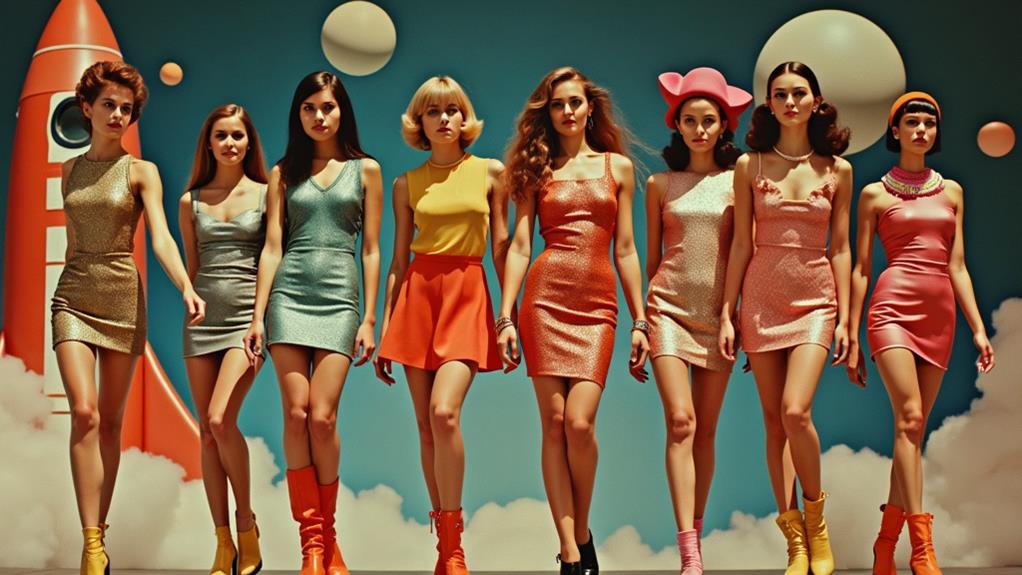
Although the 1950s fashion scene was dominated by the elite, the post-WWII economic boom provided young people with more disposable income, sparking a distinct youth fashion identity that broke away from traditional adult styles. This newfound financial freedom allowed young people to explore and experiment with clothing, leading to the emergence of youth fashion.
The Space Age, characterized by a fascination with technology and the future, heavily influenced these new styles. Futuristic designs with geometric patterns and metallic fabrics became popular, reflecting the era's optimism and innovation. Designers responded by creating clothes that were affordable, lively, and expressive.
Youth subcultures like the Beatniks and Mods played a significant role in shaping this fashion revolution. They embraced European influences and blended them with their unique aesthetic tastes, resulting in a dynamic and eclectic mix of styles that resonated with the rebellious spirit of the youth. Unisex clothing also emerged, challenging traditional gender norms and allowing for greater personal expression.
In essence, the Space Age influence and the rise of youth fashion in the post-WWII period marked a crucial shift in the fashion landscape, paving the way for the playful and experimental styles of the 1960s.
Boutiques and Retail Innovation
The 1960s saw a retail revolution with the rise of boutiques in London's trendsetting districts like King's Road and Carnaby Street. These boutiques redefined the fashion landscape by offering affordable, trendy clothing tailored for the youth market. Designers such as Mary Quant and John Stephen led this movement, fostering direct connections with customers and creating more personalized shopping experiences. This new retail model emphasized separates and playful designs that complemented the urban lifestyles of young people.
The vibrant boutique scene was instrumental in establishing the Mod aesthetic, characterized by bright colors and tailored minimalism. The iconic mini-skirt, popularized by Mary Quant, became a hallmark of this period and a staple in boutique collections. These shops not only catered to evolving tastes but also influenced global fashion trends, highlighting the power of innovative retail.
- Personalized shopping experiences: Boutiques facilitated direct designer-customer interactions.
- Youth-centric fashion: Focused on separates and playful designs for urban lifestyles.
- Global influence: London's boutique scene set fashion trends worldwide.
Space Age Materials

The 1960s fashion scene embraced groundbreaking materials that mirrored the era's fascination with space exploration. Designers widely adopted inventive materials like PVC, polyester, and Spandex, enabling the creation of futuristic silhouettes and striking garments essential to the iconic space-age look.
Metallic fabrics and shiny plastics became staples, with silver and other reflective materials embodying a high-tech, forward-thinking vibe. The introduction of paper dresses in 1966 further showcased this novelty, adding a playful and avant-garde twist to fashion.
Accessories followed suit, featuring vinyl boots and plastic goggles that emphasized the futuristic feel. These unconventional materials not only enhanced appearance but also facilitated the exploration of new shapes and geometries in garment construction. This shift from traditional tailoring allowed for more experimental and bold fashion statements.
In essence, the innovative materials of the 1960s were crucial in defining the space-age aesthetic, pushing the boundaries of fashion.
Key Designers of the Era
When you think of the Space Age fashion of the 1960s, key designers like Pierre Cardin, André Courrèges, and Paco Rabanne come to mind. They were visionary pioneers who utilized futuristic materials like silver vinyl, PVC, and chain mail to create iconic fashion statements. Their groundbreaking designs defined the era's aesthetic and left a lasting impact on the fashion world.
Visionary Design Pioneers
Pioneering the Space Age fashion movement of the 1960s, designers like Pierre Cardin, André Courrèges, Paco Rabanne, and Rudi Gernreich redefined haute couture with their innovative creations. The space race inspired these designers to blend futuristic aesthetics with groundbreaking designs, pushing the limits of fashion.
Pierre Cardin led with his Cosmocorps collection, featuring sharp, modernist silhouettes and metallic materials. His designs became synonymous with Space Age fashion, reflecting the optimism and technological advances of the era.
André Courrèges revolutionized fashion with his "Moon Girl" collection in 1964. Introducing go-go boots and A-line skirts made from high-shine PVC, he created a youthful, forward-thinking look that captured the spirit of the space race.
Paco Rabanne broke new ground using unconventional materials like chain mail in mini shift dresses. His designs, reminiscent of extraterrestrial warriors, showcased his ability to push fashion boundaries.
Each of these designers left an indelible mark on haute couture, forever changing the landscape of fashion with their visionary creations.
Futuristic Materials Utilized
The 1960s Space Age fashion was defined by innovative silhouettes and groundbreaking materials that revolutionized the industry. Designers like Pierre Cardin used advanced materials such as metallic lamé and vinyl to create sleek, futuristic designs, reflecting the era's fascination with space exploration. These materials enabled garments to shimmer and shine, encapsulating the futuristic aesthetic.
André Courrèges notably used high-shine PVC in his collections, popularizing stiff A-line skirts and go-go boots. His use of PVC went beyond stylistic choices, embodying the intergalactic glamour prevalent in the 1960s. Paco Rabanne pushed boundaries further with unconventional materials like chain mail and metal discs, challenging traditional garment construction and expanding fashion creativity.
Reed Crawford introduced helmet-hat hybrids crafted from innovative materials like silver milk bottle tops, epitomizing the space-age movement with futuristic headwear. Into the 1980s, Thierry Mugler's collections featured boxy shoulder pads and metallic fabrics, continuing the legacy of space-inspired fashion with ethereal, cosmic styles.
Iconic Fashion Statements
In the 1960s, space-time fashion wasn't merely a trend; it was a revolutionary movement led by visionary designers who redefined couture with their futuristic visions.
Pierre Cardin transformed the fashion world with his space-age designs, notably the Cosmocorps collection. Featuring sharp, modernist silhouettes and metallic fabrics, his creations were embraced by celebrities like Mia Farrow and The Beatles.
André Courrèges brought the "Moon Girl" collection to life in 1964, epitomizing the futuristic spirit with go-go boots and high-shine PVC A-line skirts. His designs became synonymous with the space-age aesthetic, boldly representing the future of fashion.
Paco Rabanne, renowned for using unconventional materials, created mini shift dresses from chain mail and designed costumes resembling extraterrestrial warriors for films like Barbarella. His groundbreaking approach pushed the boundaries of traditional couture.
Key Highlights:
- Pierre Cardin: Pioneered space-age silhouettes and metallic fabrics.
- André Courrèges: Introduced iconic go-go boots and PVC skirts.
- Paco Rabanne: Utilized unconventional materials and crafted film costumes.
These designers didn't just follow trends—they set them, forever altering the landscape of 1960s fashion with their space-inspired creations.
Iconic Space Age Looks

When you think about iconic Space Age looks, metallic colors, plastics, and groundbreaking materials immediately come to mind. Fashion in the 1960s was all about sleek, futuristic designs that captured the excitement of the space race. Pierre Cardin was a pioneer in this movement, creating ensembles with sharp, modernist silhouettes. His use of shimmering lamé and silver vinyl epitomized the futuristic style, making a bold statement in couture.
André Courrèges also left an indelible mark on the era with his introduction of go-go boots and A-line skirts made from high-shine PVC. These elements became signature aspects of Space Age fashion, offering a playful yet avant-garde twist. Paco Rabanne pushed the boundaries even further, designing mini shift dresses from chain mail and other unconventional materials. His work blended historical themes with an extraterrestrial aesthetic, creating a unique and memorable look.
Accessories played a significant role in defining Space Age fashion. Chin-strap helmets, vinyl boots, and plastic goggles became iconic representations, emphasizing a futuristic and groundbreaking approach. These elements combined to create a distinctive style that still inspires designers today.
Cultural and Social Influences
Amid the enthusiasm of the 1960s, cultural and social influences profoundly shaped Space Age fashion. The Apollo 11 moon landing in 1969 epitomized the period's optimism and technological marvels, sparking a fascination with space exploration themes that permeated the fashion world. Designers like André Courrèges and Pierre Cardin captured this spirit, integrating metallic fabrics and geometric silhouettes into their collections. Their groundbreaking designs resonated with the lively youth culture, eager to adopt futuristic styles.
The cultural zeitgeist, driven by sci-fi films and a growing interest in unisex fashion, led to revolutionary gender-neutral designs. These designs challenged traditional fashion norms, promoting inclusivity and fluidity in clothing choices. By using materials like PVC and other plastics, designers not only mirrored the space aesthetic but also made fashion more accessible and appealing.
Influential factors included:
- Youth Culture: The dynamic energy of the youth, fueled by music and art movements, intertwined seamlessly with Space Era aesthetics.
- Cutting-edge Materials: Use of new materials like PVC made futuristic fashion more widespread.
- Gender-Neutral Designs: The rise of unisex fashion challenged and expanded traditional style boundaries.
These cultural and social currents molded a distinctive, expressive fashion landscape that defined the 1960s.
Fashion Shows and Events
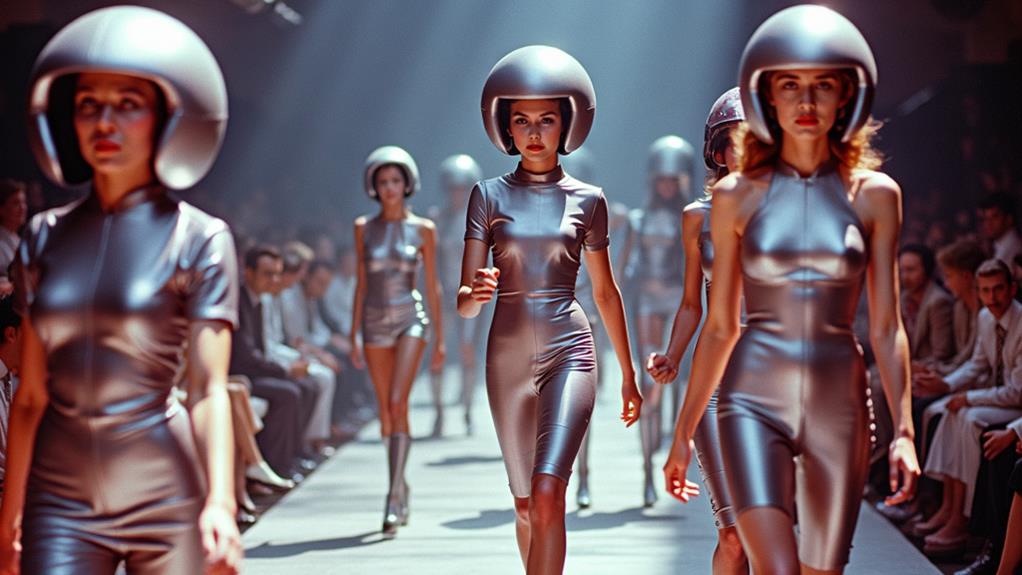
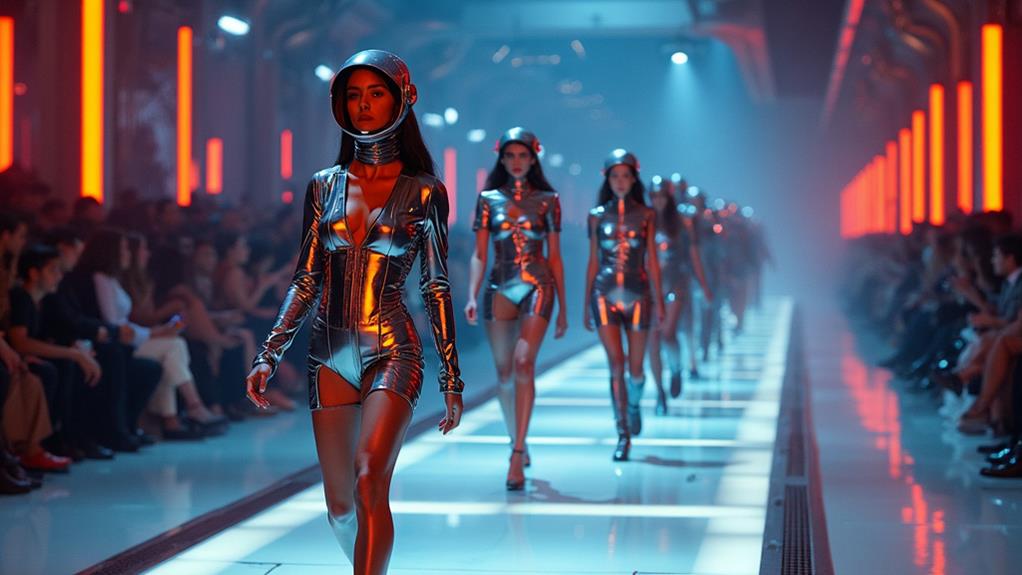
The 1960s fashion shows became showcases for the Space Age aesthetic, with designers like André Courrèges leading the charge. His 1964 "Moon Girl" collection, revealed at a Paris fashion show, epitomized this futuristic trend with go-go boots and PVC materials, perfectly capturing the era's spirit. Metallic fabrics, groundbreaking silhouettes, and sci-fi-inspired accessories were prevalent on the runway.
Renowned designers like Pierre Cardin and Paco Rabanne brought their space-inspired collections to major events, including Fashion Week. Their avant-garde use of materials, from metal plates to plastic discs, turned heads and set new standards. Cardin's unisex designs, often presented on the runway, mirrored the cultural shifts of the 1960s, pushing traditional fashion norms.
Events like the 1968 fashion show for the film "Barbarella" offered a unique platform for designers to present their futuristic visions in a cinematic context. These shows blurred the lines between fashion and film, making the Space Age aesthetic accessible and thrilling. Fashion Week during this period became a hotbed for creativity, eagerly anticipated by critics and fashion enthusiasts alike.
Lasting Legacy of the 1960s
The bold, innovative designs of the 1960s continue to inspire today, reflecting a timeless vintage appeal. This era's challenge to traditional norms catalyzed a cultural shift in fashion, embracing gender-neutral styles and futuristic aesthetics. Modern designers often draw from the chic and playful elements of Space Age couture, underscoring its lasting influence.
Enduring Vintage Appeal
Stepping into a vintage boutique, one can immediately sense the timeless charm of 1960s fashion. The era's enduring style is evident in pieces from designers like Pierre Cardin, whose creations continue to captivate. Items from André Courrèges, including iconic sweaters, dresses, and handbags, are still highly sought after, showcasing the timeless allure of 1960s aesthetics.
The influence of the 1960s is also apparent in contemporary fashion trends. For example, Marc Jacobs' quilted ankle boots draw inspiration from this transformative decade. The ongoing popularity of mod eyeglass frames further underscores the distinctive style of the 1960s. Fashion historians frequently emphasize the period's significant impact on today's trends, encouraging a renewed appreciation for vintage styles.
When exploring this lasting legacy, consider:
- Vintage Courrèges pieces: Highly sought after and emblematic of timeless elegance.
- Mod eyeglass frames: A continuous trend reflecting the distinctive 1960s style.
- Marc Jacobs' quilted ankle boots: Modern designs influenced by 1960s fashion.
The film *Barbarella* remains a cultural touchstone, inspiring modern designers to incorporate 1960s elements into their collections, further cementing the period's enduring vintage appeal.
Cultural Fashion Evolution
Often hailed as a revolutionary period, the 1960s forever changed the landscape of fashion with its bold and expressive styles. Designers like Mary Quant introduced the miniskirt, which became a defining element of the time. This decade was marked by a significant shift towards more casual and expressive styles, paving the way for future trends.
Space Age aesthetics played an essential role in this fashion revolution. Designers such as André Courrèges and Paco Rabanne adopted futuristic themes, using new materials like PVC and metallic colors. These innovations transcended high fashion and permeated everyday wear, democratizing access to modern styles. The optimism of the space race even led to unisex fashion, reflecting a more inclusive approach to clothing.
The lasting legacy of 1960s fashion is evident today. Contemporary designers like Hedi Slimane and brands such as Yperlab continue to draw inspiration from this period, incorporating its elements into modern collections. The decade's exploration of new materials and gender fluidity laid the groundwork for ongoing advancements, ensuring that the cultural impact of the 1960s endures in the current fashion landscape.
Vintage Appeal and Market
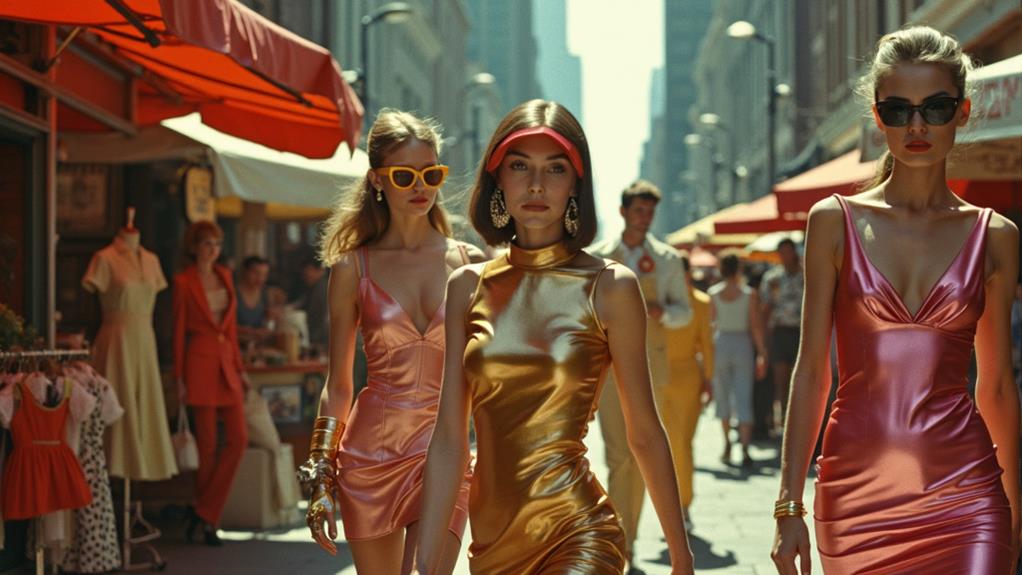
The allure of 1960s fashion continues to captivate modern audiences, driving a vibrant market for vintage couture. Pieces from this era, particularly those designed by André Courrèges and Paco Rabanne, are highly sought after. Iconic creations such as Courrèges' A-line skirts and Rabanne's chain mail dresses regularly fetch high prices at auctions and vintage shops. These designs are not merely historical artifacts but remain influential, inspiring contemporary fashion.
For fashion enthusiasts and collectors, the appeal lies in the timeless aesthetics and craftsmanship of these pieces. Retailers curate vintage collections that prominently feature recognizable designs and accessories from the 1960s, attracting customers who appreciate the period's unique style.
- High demand for iconic items: Courrèges' A-line skirts, Rabanne's chain mail dresses
- Enduring popularity of vintage eyewear: Mod eyeglass frames from the 1960s
- Contemporary inspiration: Modern brands drawing from retro styles
The strong demand for vintage 1960s fashion underscores its lasting appeal. Fashion historians note that this resurgence is part of a broader trend, where vintage-inspired designs frequently appear in current collections and collaborations. Whether you're a seasoned collector or simply appreciate the nostalgia, the 1960s remain a pivotal decade in fashion history.
Mass Production and Accessibility
In the 1960s, space-age fashion became accessible to a wider audience through mass production and affordable fashion lines. Designers like Mary Quant collaborated with retailers to democratize contemporary style trends, making modern, futuristic designs available to the masses. This shift allowed more people to adopt the innovative aesthetics of the era.
Affordable Fashion Lines
Mass production in the 1960s revolutionized the fashion industry, making stylish clothing more accessible. Affordable fashion lines emerged, allowing contemporary styles to reach a broader audience. Designers like Mary Quant played a pivotal role in this shift. By collaborating with US retailer JC Penney, Quant democratized her designs, ensuring iconic pieces were available at reasonable prices for everyday consumers.
Quant's impact extended further. In 1963, she introduced the Ginger Group, a diffusion line that offered stylish, modern clothing at lower price points for young shoppers. Her collections were featured in boutiques like Paraphernalia in New York, highlighting this accessible fashion trend for youth culture.
This movement towards affordability transformed everyday wear, shifting fashion from high-end exclusivity to more casual and expressive styles for the masses. The result was a newfound freedom in fashion choices for a wider demographic.
- Affordable fashion lines democratized style: Making contemporary fashion accessible to the masses.
- Young designers led the charge: Innovating and collaborating to reach broader audiences.
- Transformed everyday wear: From exclusive couture to casual, expressive styles for all.
Wider Market Reach
In the 1960s, the allure of space-age designs captivated many fashion enthusiasts. This fascination extended beyond high-end runways, as mass production played a crucial role in democratizing fashion, making these futuristic styles accessible to a broader audience. Mary Quant, a significant figure in this movement, collaborated with US retailer JC Penney to create affordable versions of her iconic designs, ensuring that space-age fashion reached everyday consumers.
Quant's Ginger Group, established in 1963, further emphasized this shift by offering stylish pieces at lower price points. This diffusion line appealed to a wider demographic, bridging the gap between high fashion and the general public. Boutique Paraphernalia in New York showcased Quant's accessible collections, highlighting how designers adapted to the growing market demand for affordability and modernity.
| Aspect | Details |
|---|---|
| Key Designer | Mary Quant |
| Collaboration | JC Penney |
| Diffusion Line | Ginger Group |
| Retail Showcase | Boutique Paraphernalia, New York |
The focus on mass production and accessibility not only expanded the consumer base but also set a precedent for future designers. By prioritizing affordability and modernity, they paved the way for a more inclusive fashion industry, resonating with the ethos of democratizing fashion.
Democratizing Style Trends
The 1960s marked a pivotal transformation in the fashion industry as designers began to prioritize mass production and accessibility, making high-fashion trends attainable for everyday consumers. This democratization of style ensured that fashion was no longer reserved for the elite. A key architect of this shift was Mary Quant, who, through her collaboration with US retailer JC Penney, brought her innovative designs to a broader audience at more affordable price points.
In 1963, Quant furthered her mission by establishing the Ginger Group, a diffusion line aimed at producing stylish, modern clothing for the masses. Boutiques like Paraphernalia in New York prominently featured Quant's designs, highlighting the importance of accessible fashion, particularly for the youth market.
This democratization of fashion had several notable impacts:
- Affordability: High-fashion items were produced at lower costs, making them more budget-friendly.
- Accessibility: Trendy pieces became available to a wider audience.
- Inclusivity: More people could engage with and enjoy contemporary trends.
The shift to mass production not only made fashion more accessible but also proved that style could be chic and attainable for the average consumer.