The Influence of Punk Fashion in the 1970s and 80s
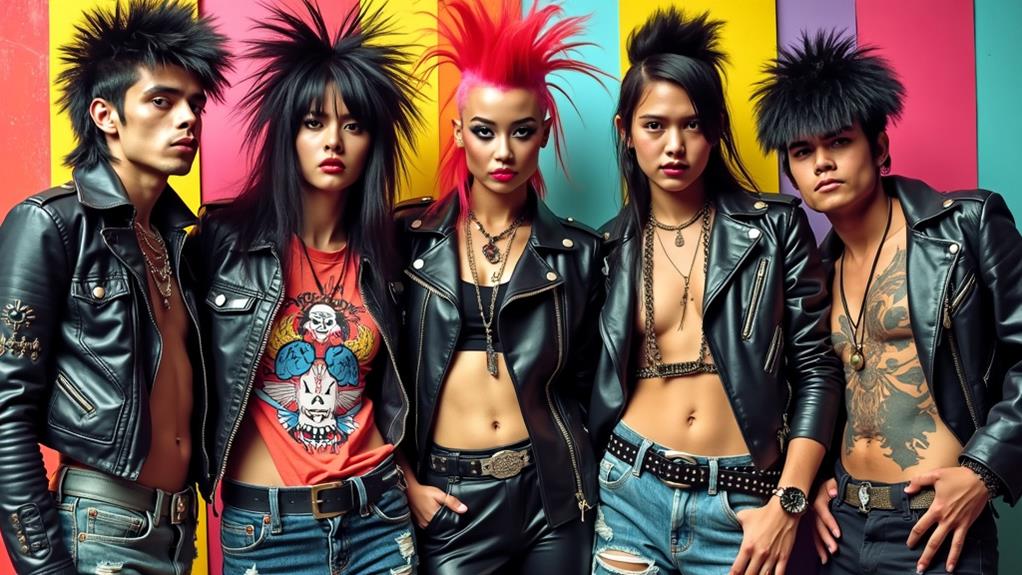
Imagine walking down a bustling street in the late 1970s, enveloped by the raw energy of punk fashion. You're not just seeing clothes; you're witnessing a rebellion against societal norms. Influential figures like Vivienne Westwood and Malcolm McLaren didn't merely design apparel; they crafted statements that challenged traditional beauty standards. Leather jackets, ripped jeans, and androgynous looks became symbols of defiance. But what was it about this period that made such a lasting impact? How did these bold styles shape the fashion industry and popular culture in ways that continue to resonate today?
Origins of Punk Fashion
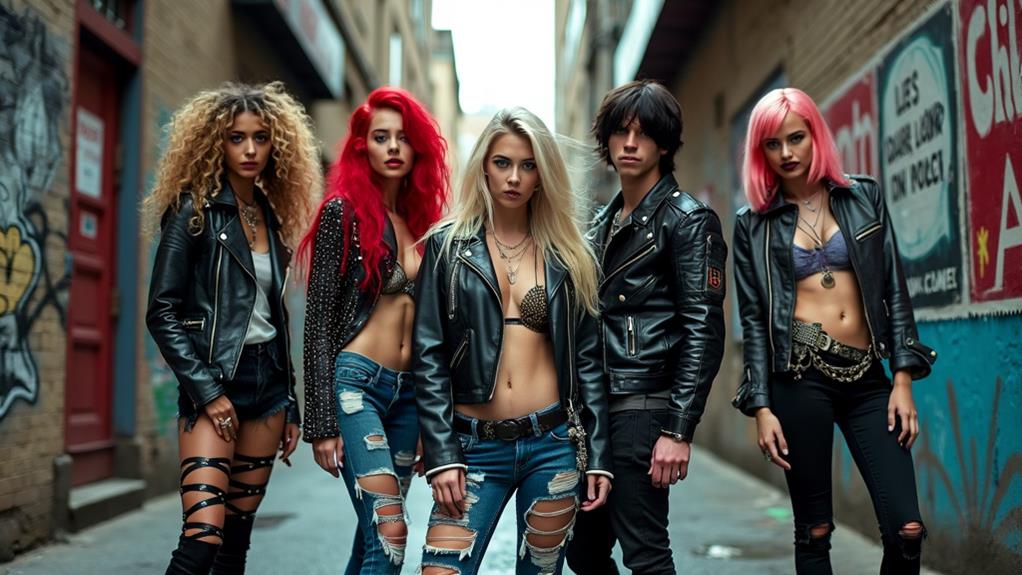
Punk fashion originated as a rebellious statement against mainstream culture, emerging in mid-1970s London. At its core, punk fashion expressed anti-establishment sentiments, heavily influenced by the punk music scene, particularly bands like the Sex Pistols. Key figures like Vivienne Westwood played a pivotal role, with her boutique, SEX, serving as a crucible for this radical style.
Embracing a DIY ethos, punk fashion celebrated individuality and rebellion. Ripped clothing, leather jackets, and bold accessories, often crafted from thrift store finds, became characteristic features. Safety pins, chains, and provocative imagery were not merely decorative but symbols of defiance and a rejection of societal norms.
A defining feature of punk fashion was its unisex approach, challenging traditional beauty standards and gender norms. Androgynous styles and body piercings blurred the lines between male and female fashion, promoting equality and rebellion against societal constraints. Ultimately, punk fashion was not just about clothes; it was a powerful statement against the status quo.
Key Designers and Influences
Vivienne Westwood and Malcolm McLaren revolutionized the fashion world with their boutique, SEX, which became the epicenter of punk's rebellious style in the 1970s. Embracing a DIY ethos, they transformed safety pins, leather jackets, and ripped clothing into iconic elements of punk fashion. Their provocative designs defied societal norms and celebrated individuality, making a lasting impact on both the punk subculture and high fashion.
Westwood's collections, such as the iconic "Tartan" and "Sex" lines, influenced not just the music scene but also mainstream fashion. Designers like Zandra Rhodes and Jean-Paul Gaultier adopted these punk elements, further blurring the distinction between subculture and high fashion.
| Designer | Contribution to Punk Fashion |
|---|---|
| Vivienne Westwood | Pioneered punk style through SEX boutique |
| Malcolm McLaren | Co-created rebellious, DIY-inspired designs |
| Zandra Rhodes | Incorporated punk elements into high fashion |
| Jean-Paul Gaultier | Bridged the gap between punk and mainstream fashion |
The anti-establishment attitude of punk fashion has inspired countless movements, leaving a lasting legacy visible in contemporary fashion. By bringing punk's rebellious style to the forefront, these designers ensured its enduring influence and cemented its place in fashion history.
Iconic Punk Styles
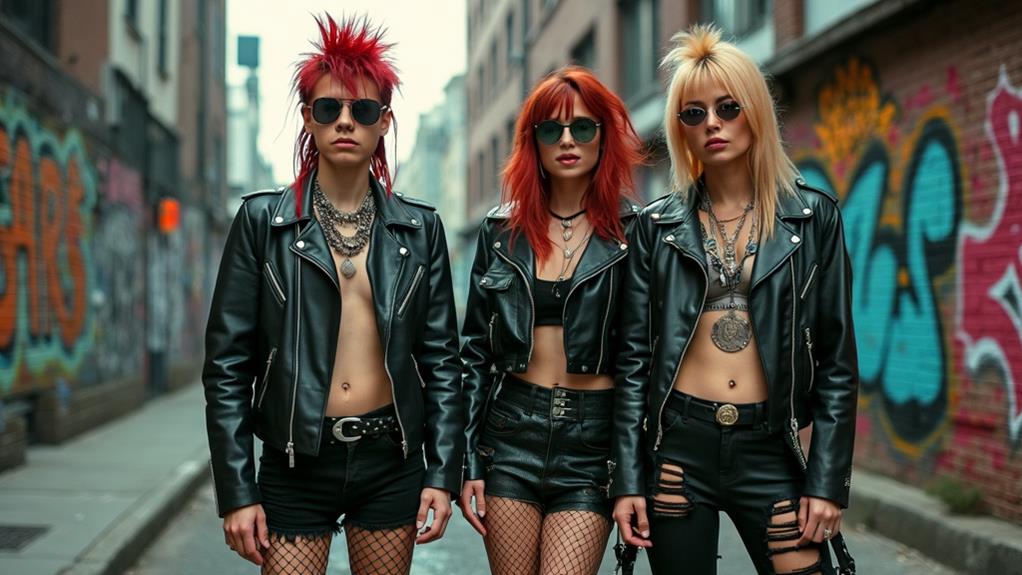
Punk fashion in the 1970s and 80s was a form of sartorial rebellion, seamlessly blending fashion and music with DIY aesthetics that championed individuality. Leather jackets adorned with safety pins, chains, and patches symbolized the movement's rebellious spirit. Ripped jeans were more than a trend; they were a declaration of defiance.
Vivienne Westwood's boutique, SEX, played a pivotal role in shaping punk fashion. Her provocative designs, featuring bondage gear and tartan plaid patterns, captured punk's anti-establishment ethos. Westwood's influence transcended clothing, challenging societal norms and redefining acceptable fashion.
Punk's embrace of androgyny was a notable feature, with fitted jeans, combat boots, and spiky hairdos blurring gender lines. This rejection of traditional gender norms marked a radical shift from mainstream fashion. Bondage elements like leather and studs heightened the audacious aesthetic, normalizing sexual references in everyday wear.
Plaid patterns, especially tartan, became iconic, symbolizing resistance to conformity. Bands like the Sex Pistols popularized these looks, making them central to punk identity. The fashion of the era wasn't just about clothes; it was a revolutionary act of self-expression.
Cultural Impact
The cultural impact of punk fashion in the 1970s and 80s was profound and transformative. This movement served as a potent form of cultural commentary, directly challenging social norms and the status quo. Disillusioned youth adopted punk fashion as their uniform to express their frustration and defiance. The DIY aesthetic surged, with individuals using thrift store finds, ripped clothing, and safety pins to craft unique, rebellious looks.
Designers like Vivienne Westwood and Malcolm McLaren were pivotal in popularizing bold, anti-establishment styles through their boutique, SEX. Their designs often featured vibrant hair colors, leather jackets, and spiked accessories, turning fashion into a form of protest.
Punk fashion resonated deeply with youth culture, driving a significant cultural shift. It was more than just clothing; it was about questioning societal values and beauty standards. This emphasis on anti-materialism and self-expression influenced music, visual arts, literature, and broader social movements.
Legacy and Evolution
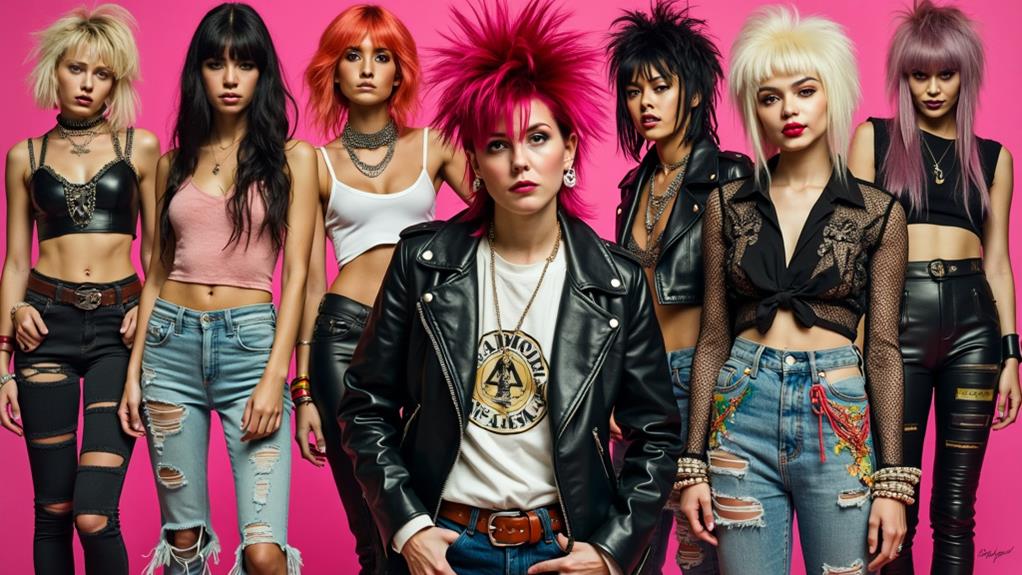
As the cultural impact of punk fashion reverberated through the 1970s and '80s, its legacy began to solidify and evolve in fascinating ways. Initially rooted in a DIY aesthetic with ripped clothing and leather jackets, punk fashion started influencing mainstream fashion. Designers like Vivienne Westwood and Malcolm McLaren introduced punk elements to the runway, blending rebellion with luxury and making punk more accessible to a broader audience.
Punk fashion's legacy extends beyond clothing; it challenges conventional beauty standards. Punk promoted androgyny and body piercings, which gained mainstream acceptance by the 1990s. Its visual culture, marked by provocative imagery and slogans, mirrored its anti-establishment ethos. This left a lasting imprint on graphic design and street art, continuing to inspire contemporary artists.
The evolution of punk fashion is evident in its influence on diverse subcultures, from grunge to emo. These movements adopt punk's focus on identity and self-expression. By integrating into high fashion and influencing other trends, punk's legacy demonstrates its enduring adaptability and significance. It remains a powerful symbol of rebellion and individuality, resonating through the decades.