The Grandeur of 30+ Carat Diamond Engagement Rings: A Guide to Extraordinary Luxury
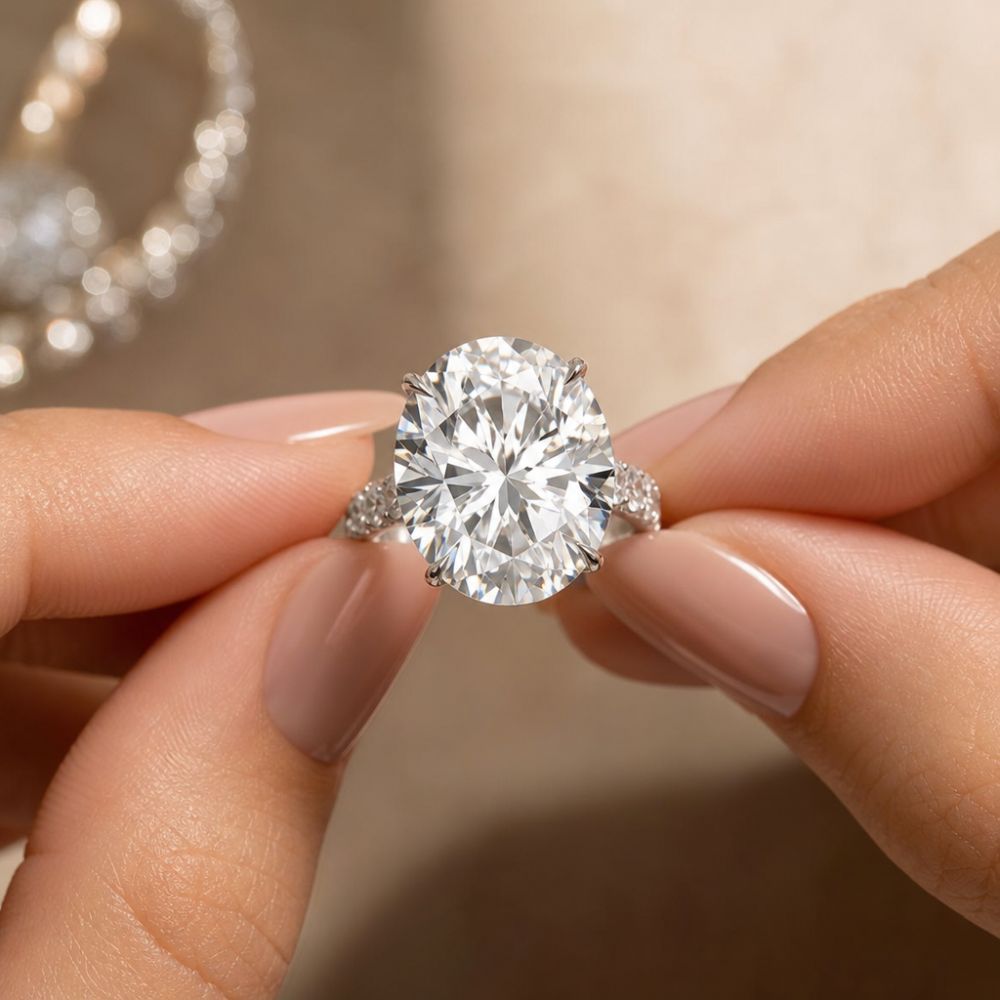
There is a category of fine jewelry that exists beyond the reach of ordinary imagination — where diamonds are not merely stones set in precious metal, but declarations of a love so profound it demands the rarest materials on earth to express it. Engagement rings featuring diamonds of 30 carats or more occupy this rarefied space. They are not simply large; they are transformative. Wearing one is an experience that changes how light moves around you, how a room responds to your presence, and how the world perceives the depth of a commitment made between two people. Understanding what makes these extraordinary pieces so compelling requires a closer look at the nature of large diamonds, the craftsmanship behind their settings, and the legacy they carry.
What Defines a Diamond at This Scale
A diamond's carat weight is a measure of mass, with one carat equaling 0.2 grams. While this sounds modest, the visual impact of a 30-carat diamond is anything but. At this size, a well-cut stone commands an extraordinary presence on the hand — its table facet alone can span nearly the width of a finger, and its depth creates a visual depth that smaller stones simply cannot replicate. The play of light within a large diamond is more complex, more dramatic, and more captivating than in smaller counterparts.
What makes these stones genuinely rare is not just their size, but the convergence of size with quality. Finding a diamond that exceeds 30 carats while maintaining exceptional color, clarity, and cut is extraordinarily uncommon. The geological conditions required to produce such a stone — extreme pressure, precise temperature, and millions of years of formation — rarely align to produce a gem of this magnitude without inclusions or color tinting. When they do, the result is a stone that gemologists and collectors regard as a natural miracle.
The Role of Cut in Maximizing Brilliance
At 30 carats and beyond, the cut of a diamond becomes even more critical than it is at smaller sizes. A poorly proportioned cut on a large stone wastes its potential entirely, producing a dull, glassy appearance rather than the fire and scintillation that make diamonds legendary. Master cutters who work with stones of this caliber spend weeks — sometimes months — studying the rough crystal before making a single cut. The goal is to preserve as much carat weight as possible while engineering a geometry that maximizes light return. Round brilliants, emerald cuts, and cushion cuts are among the most popular choices for large diamonds, each offering a distinct visual personality suited to different aesthetic preferences.
The Rarity Factor: Why Large Diamonds Command Extraordinary Value
The diamond market operates on a principle of exponential rarity. As carat weight increases, the price per carat rises steeply — not linearly. A 30-carat diamond is not simply thirty times the value of a one-carat stone of equivalent quality; it may be hundreds of times more valuable. This is because large rough diamonds are extraordinarily scarce. Of the millions of carats of diamonds mined globally each year, only a tiny fraction yield polished stones above 10 carats, and stones above 30 carats represent a fraction of a fraction. Each one is effectively unique.
This scarcity is compounded by the fact that large diamonds of exceptional quality are often acquired by private collectors, auction houses, or royal families before they ever reach the open market. When one does become available through a reputable jeweler, it represents a genuine opportunity that may not present itself again. For those who understand the investment dimension of fine jewelry, a 30-carat diamond engagement ring is as much a legacy asset as it is a symbol of love.
Colored Diamonds at Large Carat Weights
While colorless diamonds dominate the conversation around large engagement stones, the world of colored diamonds adds another dimension of rarity and beauty to this category. Pink diamonds, in particular, are among the most sought-after gems in existence. For those curious about what makes these stones so exceptional, natural pink diamonds carry fascinating geological and historical distinctions that set them apart from every other variety of colored stone. At 30 carats or more, a natural pink diamond would represent one of the most significant gemological finds in modern history — a stone that would likely be named, documented, and celebrated by the global jewelry community.
Natural vs. Lab-Grown: Understanding the Distinction at the Highest Level
The emergence of laboratory-grown diamonds has introduced important questions for buyers at every price point, including those considering stones of exceptional size. Lab-grown diamonds are chemically identical to natural diamonds, but they are produced in controlled environments over weeks rather than billions of years beneath the earth's surface. For buyers exploring the key differences between lab-grown and real diamonds, the distinctions go beyond chemistry to encompass rarity, provenance, and long-term value retention. At the 30-carat level, natural diamonds carry an irreplaceable narrative — one of geological time, natural forces, and singular existence — that laboratory production cannot replicate.
For collectors and couples who view their engagement ring as both a personal symbol and a generational heirloom, the natural origin of a large diamond is not a minor detail. It is central to the stone's meaning and its enduring worth.
Leon Diamond: A Destination for Exceptional Scale
When it comes to sourcing diamonds of this magnitude, the expertise and inventory of the jeweler matter enormously. Leon Diamond has established itself as one of the foremost destinations for clients seeking stones of extraordinary size and quality. Their curated collection of 30+ carat diamond engagement rings represents a carefully assembled portfolio of some of the most remarkable stones available in the current market. Each piece reflects the jeweler's commitment to exceptional craftsmanship, ethical sourcing, and the kind of personalized service that a purchase of this significance demands.
Working with a jeweler of this caliber means more than simply selecting a stone from a display case. It means entering into a collaborative relationship where the client's vision, the stone's unique characteristics, and the setting's design are considered together as a unified whole. The result is not just a ring — it is a singular object that will be passed down through generations as a testament to a moment, a relationship, and a standard of excellence.
The Enduring Legacy of a 30-Carat Engagement Ring
Throughout history, the most celebrated diamonds in the world have been those of extraordinary size. The Hope Diamond, the Cullinan, the Koh-i-Noor — these stones are not merely jewelry. They are cultural artifacts, symbols of power, beauty, and human fascination with the natural world. While not every 30-carat diamond will achieve the same historical notoriety, each one carries within it the same essential qualities: rarity, permanence, and a beauty that does not diminish with time.
Choosing a diamond engagement ring at this scale is a decision that transcends fashion and trend. It is a statement about values — about the belief that some things are worth pursuing at the highest level, that love deserves to be expressed with the finest materials available, and that the most meaningful commitments are those made with intention, knowledge, and an appreciation for what is truly rare in this world. A 30-carat diamond engagement ring is, in every sense, a once-in-a-lifetime choice — and for those who make it, it becomes one of the defining objects of their lives.