The Glam Rock Era: Glitter, Platform Shoes, and Androgyny
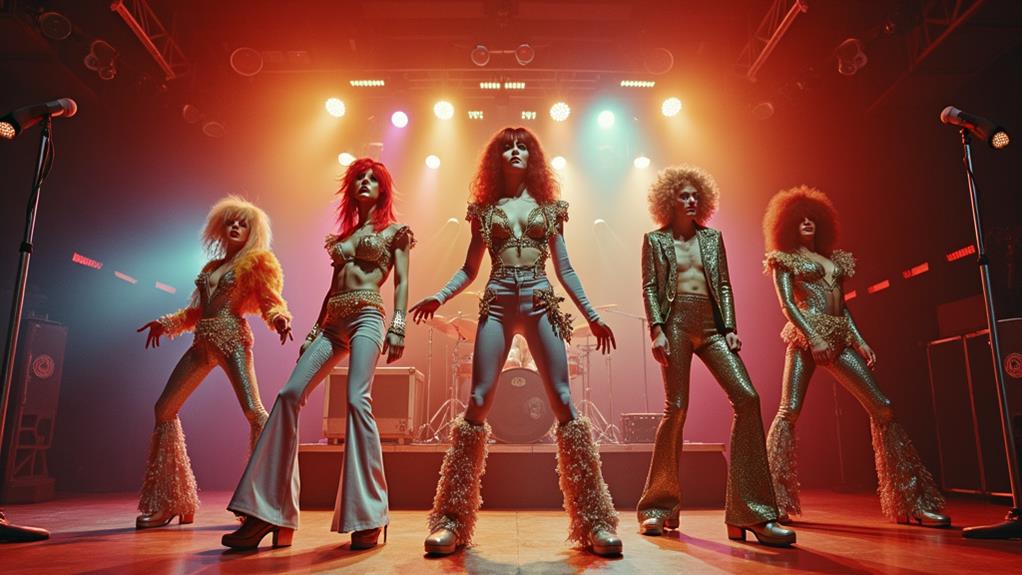
Imagine stepping into a world where glitter, platform shoes, and daring fashion choices reign supreme. You're exploring the Glam Rock period of the early 1970s, a time when artists like David Bowie and Marc Bolan defied traditional gender norms with their androgynous looks and electrifying performances. This movement was not just about music; it reshaped cultural perceptions and left a lasting imprint on fashion and identity. But what exactly made Glam Rock so impactful, and how did it manage to influence generations to come?
Defining Glam Rock
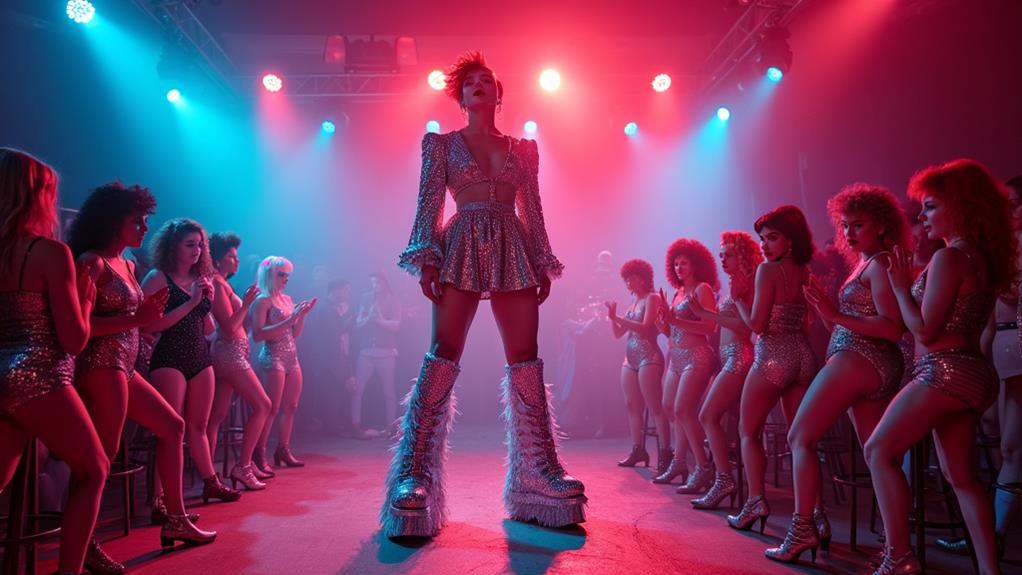
Glam rock emerged in the early 1970s in the UK, distinguished by its flamboyant fashion, vivid makeup, and theatrical performance style. Musicians in this genre embraced androgyny and sexual ambiguity, challenging traditional gender norms. Icons like David Bowie, Marc Bolan, and The Sweet became emblematic of this bold movement, pushing the boundaries of music and fashion.
The genre's visual style was unmistakable. Glam rock musicians wore tight-fitting, brightly colored outfits adorned with glitter, and platform shoes became a staple, enhancing their larger-than-life stage personas. This genre was not just about music; it was about creating an unforgettable spectacle.
Glam rock, also known as glitter rock, fused hard rock and pop with influences from cabaret and science fiction. Its theatricality and superficiality were deliberate, crafting a vivid, almost otherworldly experience. This movement left a lasting legacy, influencing punk rock, glam metal, and ongoing discussions around gender, identity, and performance in contemporary culture.
Origins and Historical Context
Glam rock's roots trace back to the early 1970s in the UK, emerging from the art rock scene. Marc Bolan's electrifying performance of "Hot Love" on *Top of the Pops* in 1971 thrust the genre into the spotlight. Influential artists like David Bowie and T. Rex combined 1950s rock elements with futuristic themes, challenging norms with their androgynous aesthetics.
Early 1970s Emergence
The early 1970s witnessed significant musical innovations, with the emergence of glam rock in the UK being a standout moment. This genre made a memorable entry with Marc Bolan of T. Rex's performance on *Top of the Pops* in 1971, marking a pivotal point for glam rock bands and setting the stage for a cultural shift that celebrated individuality and self-expression.
David Bowie quickly rose to prominence within glam rock, captivating audiences with his daring fashion choices and androgynous aesthetics. Along with other artists, he embraced platform boots and glittering, flamboyant costumes drawing from 1930s glamour and Victorian styles. This visual style was as revolutionary as the music, challenging prevailing norms and pushing the boundaries of gender expression in popular culture.
Glam rock's influence extended beyond fashion, incorporating elements from bubblegum pop, 1950s rock, and theatrical aspects of cabaret and science fiction. From 1971 to 1975, glam rock dominated the UK charts, with acts like T. Rex achieving substantial commercial success. This era signified a dynamic cultural shift, cementing glam rock as an unforgettable chapter in music history.
Influential Key Figures
The glam rock era owes much of its identity to its trailblazing key figures, who shaped the genre's origins and historical context. Marc Bolan, the founder of T. Rex, is a pioneering figure in glam rock; his electrifying performance of "Hot Love" on *Top of the Pops* in 1971 is often regarded as the genre's inception. David Bowie, through his alter ego Ziggy Stardust, pushed the boundaries of gender and fashion, becoming an iconic figure with his flamboyant costumes and theatrical performances.
Roxy Music, led by Bryan Ferry, introduced elements of high fashion and art rock to glam rock's aesthetic, setting themselves apart with their sophisticated style and groundbreaking music. The New York Dolls brought a raw, punk edge to the scene, incorporating visual flamboyance and androgyny that became hallmarks of the genre.
Although not central to glam rock, Elton John and Freddie Mercury adopted its theatrical styles, influencing its evolution and melding it with their unique musical identities. Each of these artists played a significant role in crafting the unforgettable period of glam rock.
Visual and Musical Characteristics
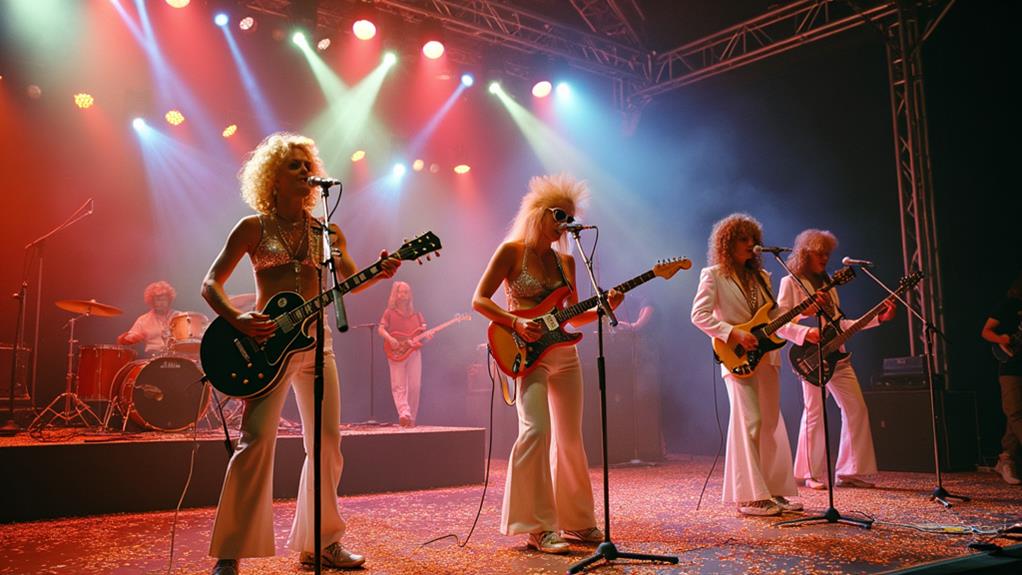
Glam rock is characterized by its flamboyant fashion, featuring platform shoes and vibrant colors. Theatrical music performances were equally crucial, combining catchy hooks and stomping rhythms with dramatic stage setups. Artists like David Bowie and Marc Bolan used their androgynous looks and bold attire to challenge traditional norms and captivate audiences.
Flamboyant Fashion Elements
Embracing flamboyance, glam rock fashion took center stage with its tight-fitting trousers, leather jackets, and towering platform shoes. This era was defined by bold statements, with glitter and sequins creating dazzling outfits. Vibrant colors, heavy makeup, thick eyeliner, and bright lip colors were hallmarks of the style.
David Bowie, one of glam rock's most iconic figures, pushed boundaries with his androgynous style. His Ziggy Stardust persona, featuring theatrical makeup and elaborate costumes, epitomized the period's flamboyance. Marc Bolan of T. Rex also set trends, blending 1930s glamour with 1950s pin-up influences and Victorian touches.
Glam rock fashion was a visual representation of the music's energy and spirit, celebrating sexual and gender ambiguity. It challenged norms and encouraged self-expression, with androgyny allowing artists to explore diverse facets of their identities.
Theatrical Music Performances
Glam rock's flamboyant fashion naturally extended into its theatrical music performances, creating an engaging spectacle for audiences. The genre's emphasis on visual and musical showmanship made every concert a memorable event. Key elements included:
- Elaborate costumes: Artists like David Bowie, especially in his Ziggy Stardust persona, wore extravagant outfits and dramatic makeup that pushed boundaries.
- Theatrical elements: Performances often featured intricate choreography and striking props, reflecting glam rock's cabaret roots.
- Vocal theatrics: The music included catchy hooks and stomping rhythms, showcasing artists' vocal prowess.
Glam rock artists like Marc Bolan of T. Rex and David Bowie weren't just performing songs; they were telling stories. Bowie's Ziggy Stardust persona examined themes of identity and gender fluidity, blending music with narrative. The genre's flamboyance was evident in every aspect, from lively stage sets to the integration of fashion and music.
This theatrical approach didn't just define glam rock's sound; it created a cultural movement celebrating self-expression and spectacle. The combination of powerful instrumentation with elaborate visuals transformed rock concerts into a feast for both the eyes and ears.
Key Artists and Performances
Though the glam rock period was short-lived, its influence and flamboyance left an indelible mark on the music world. David Bowie, with his Ziggy Stardust persona, stands out among glam rock artists for merging theatrical elements with an iconic look. Bowie's Ziggy Stardust shows were a blend of music and performance art, showcasing his talent for creating unforgettable characters.
Marc Bolan of T. Rex also played a crucial role. His performance of "Hot Love" on UK television in 1971 is often credited with launching the genre. Roxy Music, with their groundbreaking sound and flamboyant stage presence, further propelled glam rock's popularity. The Sweet and Slade contributed catchy, energetic tunes that captivated audiences.
American glam influences were no less significant. Bands like the New York Dolls and Iggy Pop introduced a raw edge to the glam aesthetic, blending it with punk elements. Although not central figures, Elton John and Freddie Mercury adopted glam styles, with John's elaborate costumes and stage sets becoming legendary.
Here are some key artists and performances:
| Artist | Notable Performance |
|---|---|
| David Bowie | Ziggy Stardust Tour |
| Marc Bolan | "Hot Love" on TV |
| Roxy Music | Early 1970s Concerts |
| New York Dolls | Multiple 1970s Shows |
These artists and their performances continue to inspire and shape the music industry today.
Gender Fluidity and Androgyny
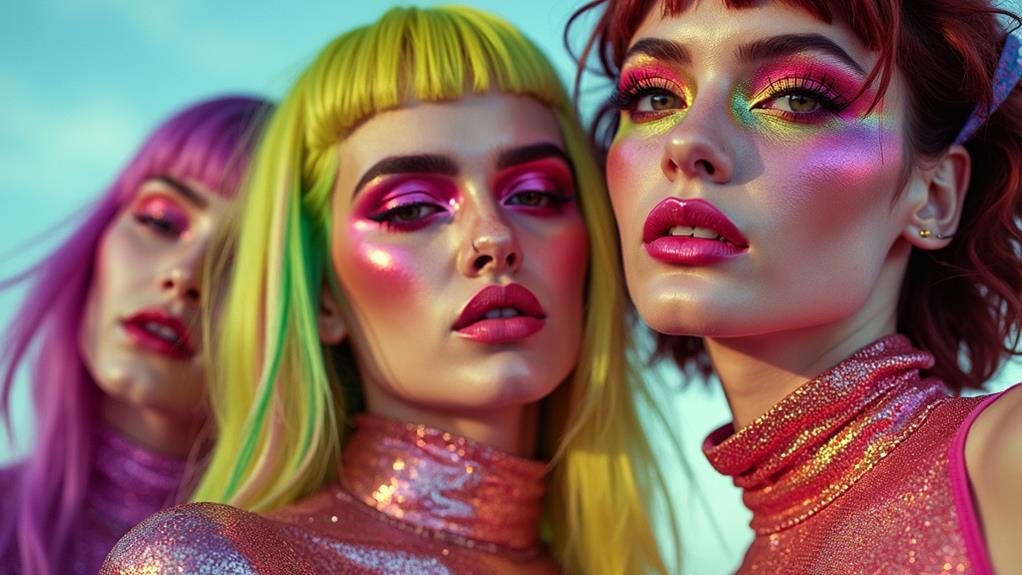
Gender fluidity and androgyny were cornerstones of glam rock, with artists like David Bowie and Marc Bolan boldly challenging traditional gender norms through their flamboyant and ambiguous styles. The genre's visual aesthetic incorporated makeup, tight clothing, and androgynous silhouettes, allowing performers to explore and express a spectrum of gender identities.
Bowie's Ziggy Stardust persona epitomized this movement. With his striking makeup and glittering outfits, Bowie blurred the lines between masculine and feminine, creating a powerful form of self-expression. Marc Bolan, another glam rock icon, likewise embraced androgyny, frequently appearing in sequins and feather boas.
Glam rock resonated with societal changes in the 1970s, reflecting a broader cultural shift towards acceptance and examination of diverse identities. The impact of this period is still evident today, influencing contemporary artists who continue to incorporate gender fluidity in their work.
- Visual Aesthetic: Makeup, tight clothing, and androgynous silhouettes.
- Iconic Performances: Bowie's Ziggy Stardust showcasing androgyny.
- Modern Influence: Artists like Lady Gaga and Harry Styles.
Cultural Impact
Glam rock's bold defiance of traditional gender norms didn't just revolutionize music; it left an indelible mark on broader cultural landscapes. By promoting androgyny and sexual ambiguity, glam rock paved the way for future discussions on gender identity in both music and fashion. This genre's cultural impact is undeniable, challenging societal norms and fostering broader acceptance of diverse expressions of identity.
Theatricality and aesthetics in glam rock greatly influenced the emergence of punk rock and gothic rock, shaping their visual styles and performance practices. The New Romantic movement of the late 1970s and early 1980s also drew heavily from glam rock's flamboyant fashion and theatricality, embedding glam influences even deeper into popular culture.
Modern artists like Lady Gaga and Måneskin continue to draw inspiration from glam rock, incorporating its elements into their work and showcasing its enduring relevance. Glam rock's emphasis on individuality and self-expression has made its aesthetics a continual source of inspiration for fashion designers and trends. Through varied channels, glam rock's legacy persists, continually shaping and redefining cultural norms.
Decline and Revivals
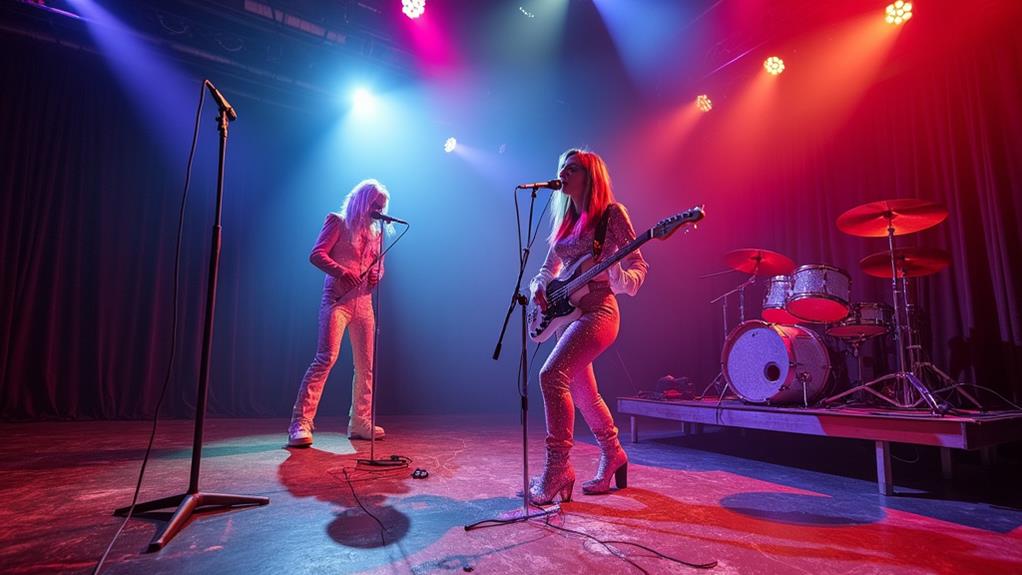
Glam rock began to lose its mainstream appeal by the late 1970s as emerging genres like punk and metal started to dominate the music scene. While many glam acts struggled to maintain their success, notable exceptions like David Bowie managed to continue thriving. The genre saw a decline, but it wasn't the end.
In the early 1980s, a second wave of glam acts, including Suzi Quatro and Sparks, kept the spirit alive. These artists continued to influence fashion and music, ensuring that glam rock's essence persisted even as its mainstream prominence waned.
- The Darkness and Scissor Sisters: These bands blended glam elements with modern music styles in the late 1990s and 2000s, reviving interest in the genre.
- Modern artists: Lady Gaga and Maneskin have incorporated glam rock aesthetics into their work, showcasing the genre's enduring appeal.
- Academic studies and festivals: These have emerged to celebrate and analyze glam rock's legacy, reflecting its ongoing influence on music and culture.
Glam rock's revivals demonstrate its lasting impact. Modern artists have adopted its flamboyant fashion and theatrical performances, ensuring that its influence continues to shape the music world. Even as new genres rise, the essence of glam rock persists, proving that its glittering legacy is far from over.
Fashion and Style Trends
Emerging in the early 1970s, glam rock fashion captivated audiences with its flamboyant clothing, heavy glitter, and bold colors. The era was defined by eye-catching outfits such as tight-fitting trousers, leather jackets, platform shoes, and dramatic accessories like feather boas and oversized jewelry, creating an unforgettable visual spectacle.
A hallmark of glam rock fashion was its embrace of androgyny. Makeup was not limited to women; men wore heavy eyeliner and vibrant lip colors, challenging traditional gender norms. Icons like David Bowie and Marc Bolan exemplified this look, encouraging fans to express themselves freely.
Glitter was omnipresent, adorning clothes and makeup to add a sparkling, otherworldly dimension. Bold makeup choices, including heavy eyeliner, contributed to a theatrical, almost alien aesthetic. This extravagant style extended into the 1980s, influencing glam metal and hair metal trends characterized by big hair, spandex, and studs.
Today, glam rock's legacy endures, inspiring contemporary artists who incorporate retro elements into their unique styles, keeping the spirit of glam rock alive.
Continuing Influence
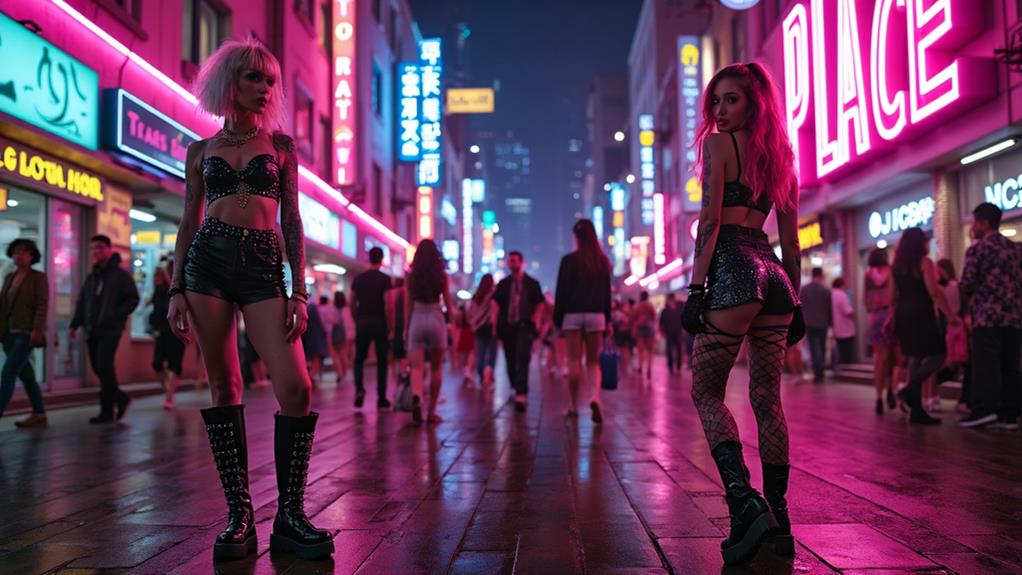
The glitter and bold fashion of the 1970s glam rock period left an indelible mark, with its influence extending far beyond that decade. Traces of glam rock can be seen in today's music scene, where artists like Lady Gaga and Harry Styles embrace flamboyant fashion and gender fluidity reminiscent of 1970s icons. Their stage personas and style choices pay homage to the daring aesthetics that defined glam rock.
- Modern music icons: Artists such as Lady Gaga and Harry Styles draw heavily from glam rock's visual and thematic playbook.
- Fashion industry: Contemporary designers frequently feature glitter, bold colors, and androgynous silhouettes in their runway collections.
- Revival bands: Groups like The Darkness and Scissor Sisters blend glam rock elements with modern pop, showcasing the genre's enduring appeal.
Glam rock's aesthetics have notably influenced contemporary fashion designers, resulting in collections that echo the bold, glittering, and androgynous styles of the 1970s. Revival bands like The Darkness and Scissor Sisters successfully combine glam rock with modern pop, proving the genre's adaptability. Modern subcultures such as Japan's visual kei celebrate elaborate costumes and makeup, honoring glam rock's legacy. Additionally, the New Romantic movement of the late 1970s and 1980s drew heavily from glam rock, emphasizing theatricality and gender ambiguity in both fashion and performance.