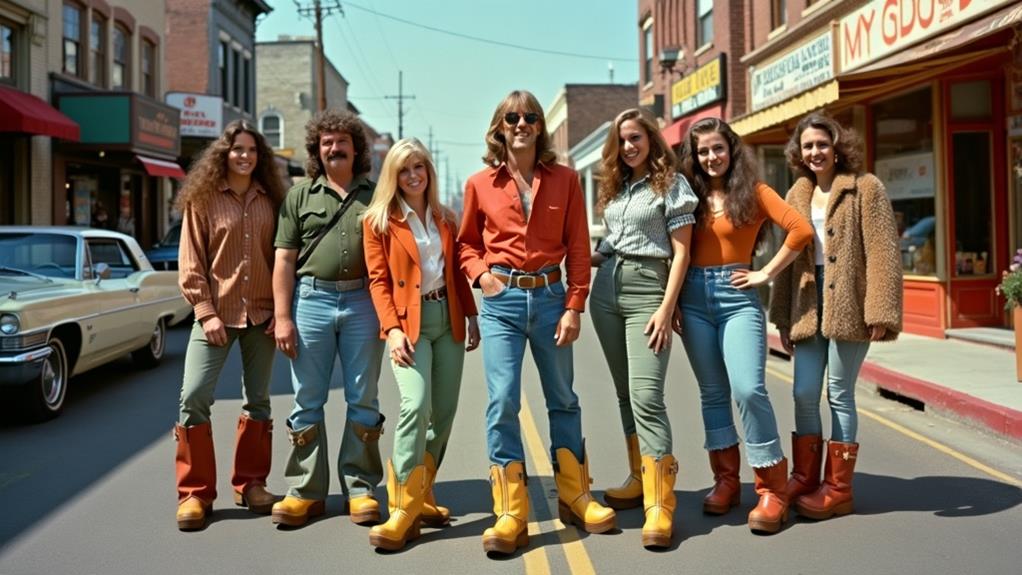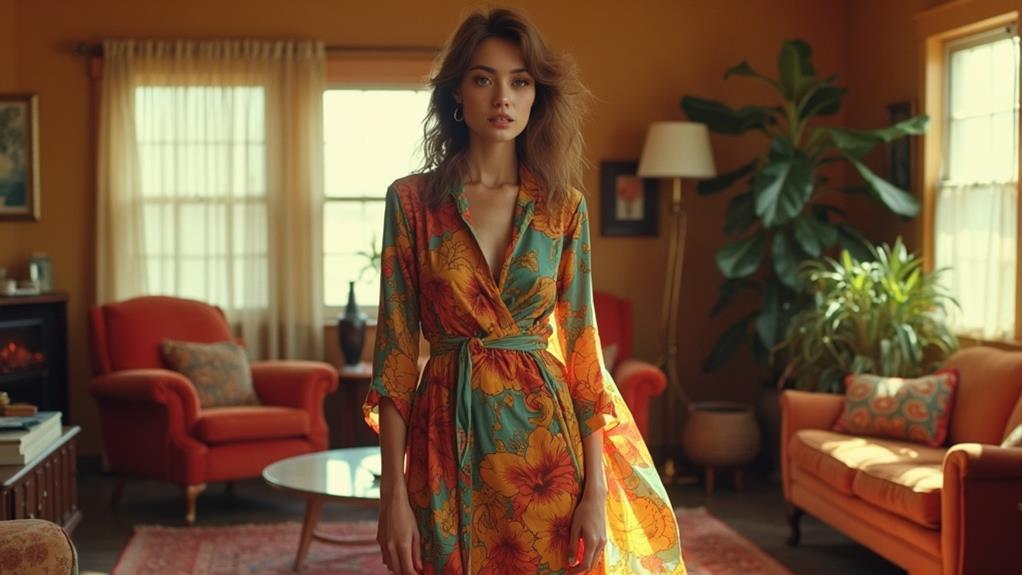
The 1970s Craze for Earth Tones and Natural Fabrics
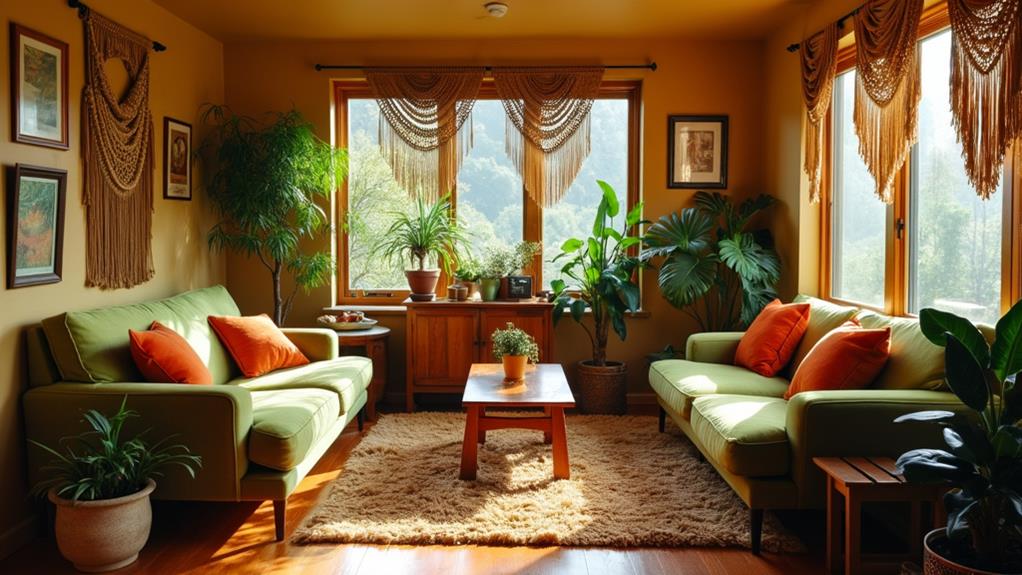
The 1970s were marked by a significant fascination with earth tones and natural fabrics, reflecting a broader shift towards environmental awareness. Popular colors like avocado green and burnt sienna dominated interiors, creating cozy, grounded spaces. Materials such as cotton, linen, and wool became design staples. This cultural shift was driven by increasing ecological consciousness and a desire for more sustainable living, which profoundly influenced the aesthetics of the era. Understanding this intersection of design and social change provides valuable insights into the period's unique style.
Historical Context of 1970s Colors

The 1970s might seem like a distant memory, but its iconic color palette remains influential. The decade's design aesthetic was defined by earthy tones, with avocado green and harvest gold becoming household staples. This shift reflected a broader societal turn toward environmental consciousness, as the environmental movement encouraged incorporating natural elements into homes. Organic materials and muted tones were highly desirable.
Unlike the lively colors of the 1960s, the 1970s emphasized comfort and a return to nature. Muted tones symbolized a desire for a simpler, more grounded lifestyle. Shades like terracotta and mustard yellow became popular, mirroring the natural world. Textiles often featured floral prints and geometric designs, enhancing the connection to nature.
This color palette wasn't just about aesthetics; it also promoted individualism and self-expression. By integrating natural elements and colors, people created spaces that celebrated their unique personalities while maintaining environmental responsibility. In sum, the 1970s color palette was a harmonious blend of comfort, individuality, and a deep connection to the environment.
Popular Earth Tones of the 1970s
During the 1970s, the design landscape transformed with the adoption of earthy color palettes. Popular earth tones such as avocado green, harvest gold, burnt sienna, and rust dominated interiors, reflecting a growing environmental consciousness and a desire to bring nature indoors. Interior design of this period focused on creating cozy spaces that radiated comfort and simplicity.
Walls, upholstery, and decor frequently featured these warm tones, making homes feel inviting and grounded. To add vibrancy, shades like tangerine and mustard yellow were used as accents, injecting optimism and energy into the setting, balancing the soothing earth tones.
Natural fabrics, including cotton, linen, and suede, became staples in 1970s interiors, further enhancing the earthy vibe. Eclecticism was a hallmark of the decade, encouraging the mixing of diverse textures and patterns. This approach allowed for highly personalized environments that felt both organic and expressive. By embracing these design elements, one could create a home that was not only stylish but also deeply connected to the natural world.
Natural Fabrics and Textures
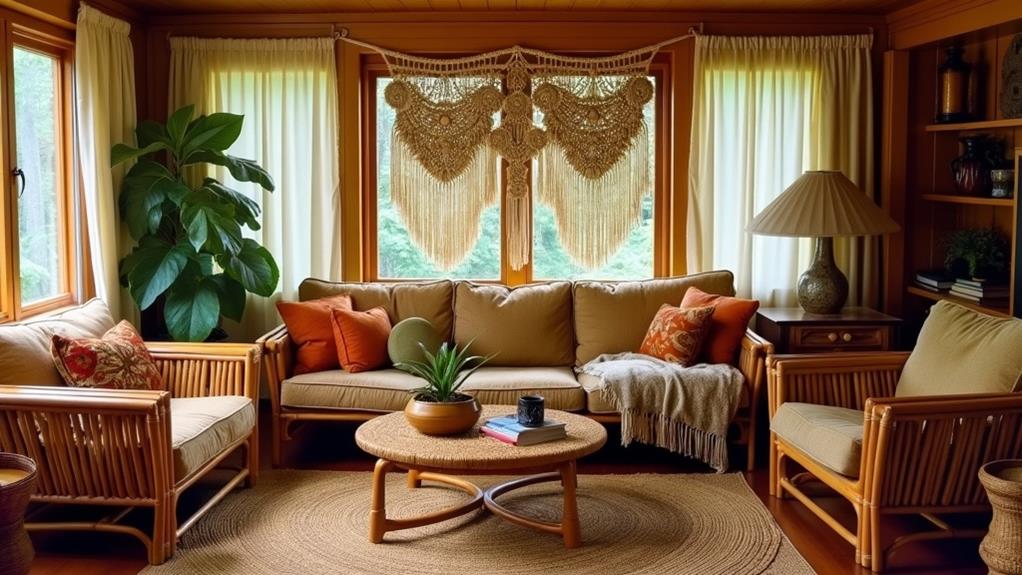
Building on the popularity of earthy color palettes in the 1970s, natural fabrics and textures played a crucial role in defining the decade's aesthetic. There was a notable rise in the use of natural fabrics such as cotton, linen, and wool, reflecting a growing preference for sustainable, organic materials in both fashion and interior design.
Textures like suede and corduroy were ubiquitous, adding a tactile element that complemented the earthy color schemes. Macramé, with its knotted cotton or jute designs, was also prevalent, serving as a DIY approach to home decor through wall hangings, plant hangers, and accessories.
Shag carpeting, made from synthetic or natural fibers, contributed to the cozy and inviting atmosphere of 1970s interiors. Upholstery embraced bold patterns and colors, enhancing the organic feel of furniture pieces like sofas and chairs.
| Element | Material | Usage |
|---|---|---|
| Natural Fabrics | Cotton, Linen, Wool | Clothing, Upholstery |
| Textures | Suede, Corduroy | Fashion, Furniture |
| Macramé | Cotton, Jute | Wall Hangings, Accessories |
| Shag Carpeting | Synthetic, Natural Fibers | Flooring |
Cultural Influences on Design Trends
The cultural zeitgeist of the 1970s, marked by heightened environmental awareness, profoundly influenced design trends. Earthy tones like avocado green, harvest gold, and burnt sienna became staples, reflecting a societal shift towards sustainability and a stronger connection with nature. This trend extended beyond colors to materials, with natural fabrics such as cotton, linen, and wool becoming dominant. These materials aligned well with the bohemian styles popularized by the hippie movement, which valued casual clothing and comfort.
Disco culture also influenced design, encouraging self-expression through lively patterns and bold colors. These designs often incorporated natural textures and organic materials, creating an aesthetic that was both vibrant and grounded. Economic factors, including the early '70s recession, drove consumers towards affordable, second-hand vintage clothing. This led to an appreciation for unique styles that mixed natural fabrics with retro designs, making each piece feel distinctive.
Cultural events like the inaugural Earth Day in 1970 further solidified this trend. The use of organic materials and earthy colors resonated with ideals of health, wellness, and environmental connection, influencing both fashion and interior design.
Modern Resurgence of 1970s Styles
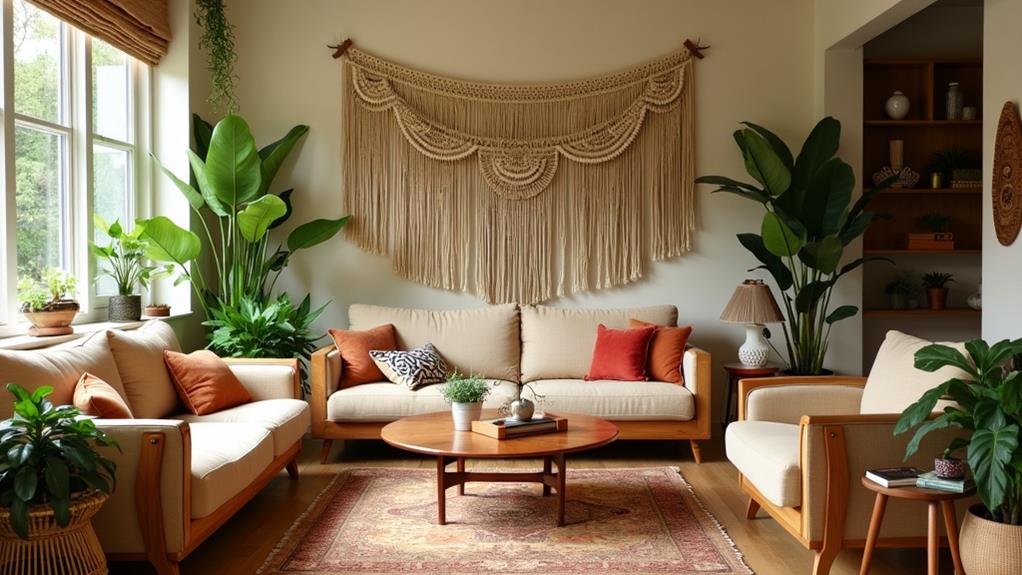
Embracing the modern resurgence of 1970s styles, today's design landscape is experiencing a lively return of warm earth tones like avocado green, burnt orange, and mustard yellow. This revival reflects a broader cultural shift towards environmental consciousness and an appreciation for organic aesthetics. Natural fabrics such as linen, cotton, and wool have become staples in contemporary interior design, echoing the 1970s love for biophilia and integrating nature into living spaces.
Homeowners are increasingly drawn to retro patterns, including geometrics and florals, which allow for the expression of individuality through eclectic decor choices. These bold, vintage-inspired designs create a nostalgic yet fresh atmosphere in modern homes. Furthermore, furniture pieces like low-profile sofas and mid-century modern accents seamlessly blend nostalgic elements with current design trends, enhancing the overall aesthetic.
Social media platforms like Instagram and Pinterest have played a significant role in this resurgence, enabling users to share and discover vintage-inspired decor that celebrates bold color and texture combinations. By incorporating these 1970s styles, you can create a unique, inviting space that honors the past while embracing contemporary tastes.