The Trend of Wearing All-White Outfits in the 2010s
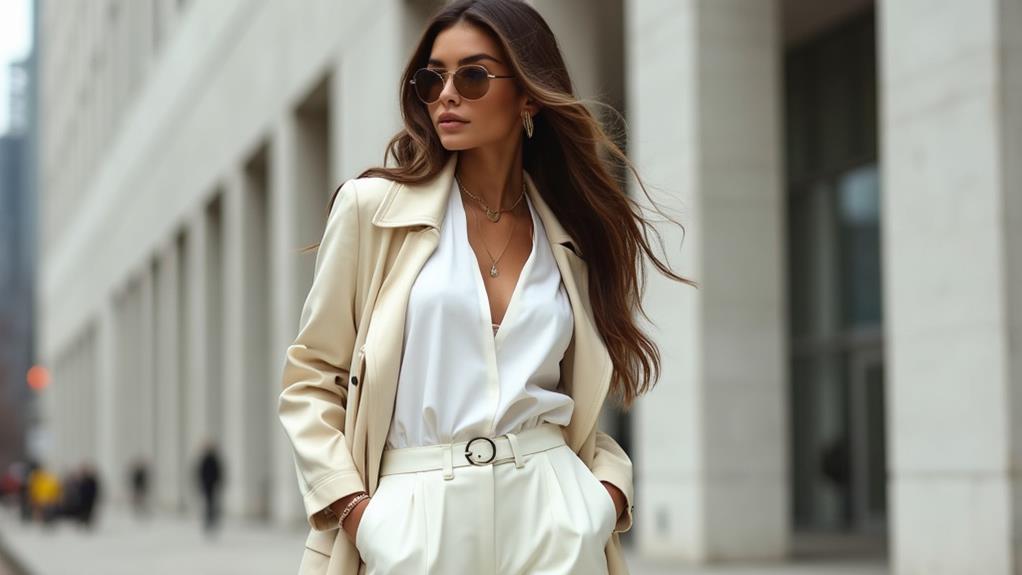
The 2010s saw all-white outfits become the embodiment of minimalist chic. Esteemed designers like Chanel and iconic celebrities such as Kim Kardashian and Beyoncé embraced this look, establishing it as a modern wardrobe essential. Social media platforms, particularly Instagram, significantly contributed to the trend's popularity with hashtags like #AllWhiteEverything. The adaptability of all-white ensembles, seamlessly transitioning across seasons and events, heightened their allure. But what deeper implications did this trend have on fashion and personal expression? Let's delve further.
Minimalist Aesthetic
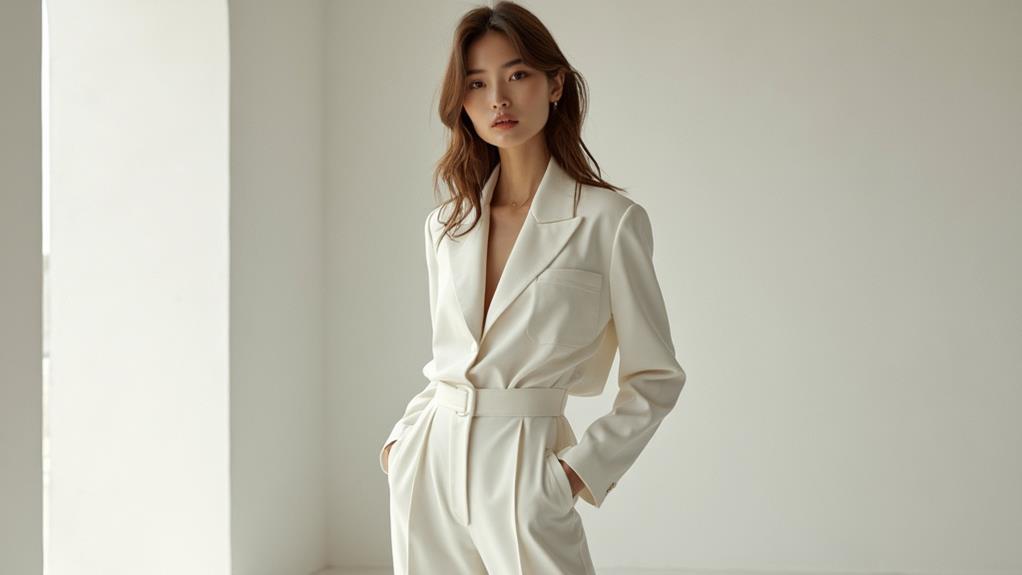
In the 2010s, the minimalist aesthetic transformed the fashion industry with its clean lines, neutral palettes, and focus on simplicity. All-white outfits became a hallmark of this trend, epitomizing sophistication and modernity. Influencers on Instagram embraced this look, making it a staple in contemporary fashion.
Minimalist fashion often brings to mind all-white ensembles, showcasing monochromatic elegance. These outfits exude luxury and timelessness, emphasizing high-quality materials and perfect tailoring. The minimalist aesthetic isn't just about fewer colors; it's about distilling fashion to its essentials.
Fashion designers were instrumental in popularizing this style by integrating minimalist elements into their collections. At high-profile events and fashion weeks, attendees frequently donned immaculate all-white outfits, reinforcing the trend's association with exclusivity and elegance.
With its clean lines and neutral palettes, the minimalist aesthetic provides a refreshing escape from the chaos of everyday life, promoting simplicity and understated elegance.
Celebrity Influence
Minimalist fashion's rise in the 2010s owes much to the star power of celebrities who embraced and showcased all-white outfits with flair. Icons like Kim Kardashian and Beyoncé were essential in popularizing all-white ensembles through their high-profile appearances and social media posts. These celebrities didn't just wear white; they made it a symbol of luxury and minimalism.
High-fashion designers also played a significant role by incorporating all-white outfits in their collections, ensuring it became a staple on the red carpet. The 2016 Met Gala is a prime example, where stars like Claire Danes and Lady Gaga turned heads with their stunning monochromatic dressing, inspiring countless fans to adopt the trend.
Social media influencers on platforms like Instagram further amplified the trend. By sharing their all-white looks using hashtags like #AllWhiteEverything, they showcased how versatile and chic this fashion trend could be. Key points include:
- Celebrity influence: Stars like Kim Kardashian and Beyoncé led the way.
- Red carpet events: High-profile events solidified the trend.
- High-fashion designers: They made all-white outfits a luxury staple.
- Instagram: Influencers spread the trend far and wide.
These factors combined to make all-white outfits a defining fashion trend of the 2010s.
Street Style Adoption
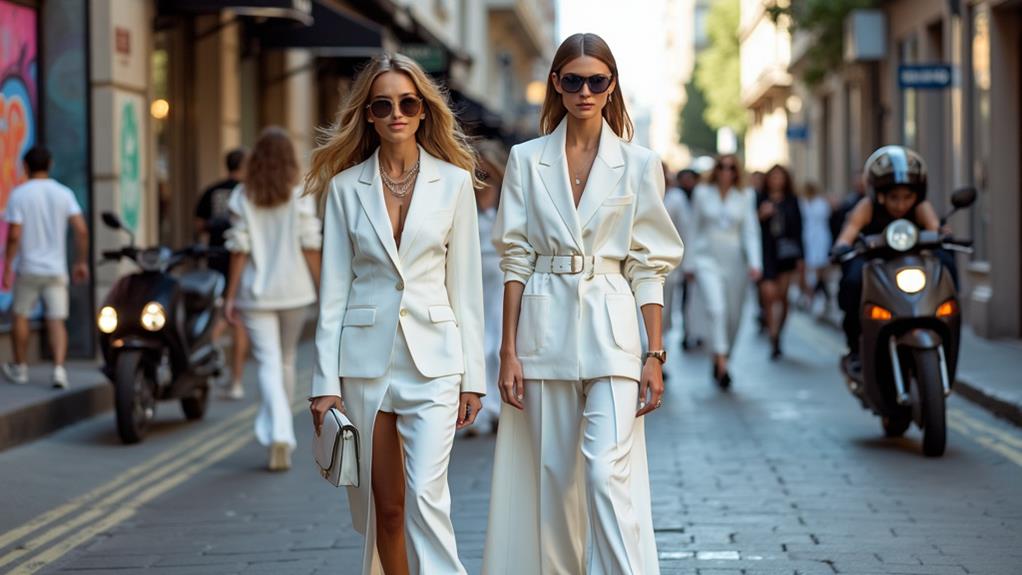
Throughout the 2010s, scrolling through social media meant encountering influencers and celebrities sporting all-white outfits, turning it into a street style phenomenon. Platforms like Instagram, with hashtags such as #AllWhiteEverything, amplified the trend. Seasonal collections from top designers kept the look fresh and relevant. Celebrities like Kanye West and the Kardashians not only wore all-white but also set the standard, influencing countless followers to embrace the style.
Social Media Influence
The rise of all-white outfits in the 2010s can largely be attributed to the influence of social media, especially Instagram. This visual-centric platform became a key arena for influencers to display their clean, minimalistic styles. Often seen in monochromatic ensembles, these influencers played a significant role in popularizing the trend. All-white outfits quickly became a staple of street style, blending casual and high fashion.
The hashtag #AllWhiteEverything gained traction, fostering a community around this pristine aesthetic. Here's how social media propelled the all-white trend:
- Influencers: Regularly posted photos in all-white outfits, making the trend both accessible and desirable.
- Street Style Photography: Celebrities and fashion icons frequently appeared in these clean ensembles, rendering the look aspirational.
- Hashtags: Tags like #AllWhiteEverything and #WhiteOut enabled users to share and discover new ways to style white.
- Athleisure: The rise of stylish white sneakers and activewear made all-white outfits practical and chic for everyday wear.
Events like the Met Gala also played a part, with celebrities donning all-white ensembles, solidifying the trend and inspiring many to follow suit.
Celebrity Endorsements
Several high-profile celebrities significantly contributed to the street style adoption of all-white outfits in the 2010s. Icons like Kim Kardashian and Rihanna frequently showcased their stunning all-white ensembles on social media, sparking a massive wave of street style trends. These visual endorsements transformed all-white outfits from a mere fashion statement into a lifestyle choice.
Events like the 2015 Met Gala also played a crucial role. Attendees in all-white attire enhanced the trend's chic and sophisticated appeal. Fashion brands quickly capitalized on this, launching collections that made these stylish pieces accessible to the general public. Influencers on Instagram amplified this movement, using hashtags like #AllWhiteEverything to drive engagement and inspire their followers.
The impact of celebrity endorsements is epitomized by moments like Beyoncé's iconic all-white ensemble at the 2016 Super Bowl, which cemented the trend's place in popular culture and street style.
| Celebrity | Event | Impact |
|---|---|---|
| Kim Kardashian | Social Media | Increased street style |
| Rihanna | Social Media | Influenced fashion trends |
| Beyoncé | Super Bowl 2016 | Cemented trend in culture |
Seasonal Trends
In the 2010s, the trend of wearing all-white outfits gained prominence in seasonal street style, especially during summer. This trend aligned well with the wellness movement, emphasizing a fresh and clean aesthetic that symbolized health and simplicity. Influencers and street style icons frequently showcased these looks on platforms like Instagram, solidifying their status in urban fashion.
All-white outfits became synonymous with chic and effortless style during the summer months. Seasonal trends highlighted the versatility of these ensembles, often featuring lightweight fabrics such as linen and cotton, which not only kept wearers cool but also ensured a stylish and sophisticated appearance.
Here are four reasons why all-white outfits flourished in the 2010s:
- Visual Impact: Celebrities and fashion enthusiasts chose white for its striking visual appeal at events and festivals.
- Versatility: All-white outfits were adaptable for various occasions, from casual to formal settings.
- Minimalist Fashion: The demand for simplicity and elegance in mainstream fashion led designers to create all-white collections.
- Comfort: Lightweight fabrics provided comfort during warm summer months while maintaining a polished look.
Embracing these seasonal trends, all-white outfits became a prominent feature in 2010s street style.
High Fashion Embrace
You can't discuss high fashion's embrace of all-white outfits in the 2010s without highlighting Chanel's couture transformation. Chanel revolutionized the runway with its sleek, all-white designs, seamlessly blending traditional elegance with modern flair. At the same time, monochrome looks infiltrated streetwear as designers like Alexander Wang fused minimalism with urban edge, making all-white ensembles both chic and accessible.
Chanel's Couture Revolution
Karl Lagerfeld's spring 2014 Chanel show marked a pivotal moment in couture by pairing elegant attire with sneakers, signaling a transformative shift in high fashion. Integrating comfortable footwear into the realm of couture, Lagerfeld blurred the lines between luxury fashion and athleisure. This move wasn't just about style; it acknowledged the wellness movement and the rising popularity of all-white outfits as a chic yet effortless choice.
Chanel's embrace of casual wear and sneakers was more than a trend; it was a revolution. This revolution manifested in four key ways:
- Athleisure Acceptance: Chanel demonstrated that sneakers could complement high-end fashion, merging comfort with sophistication.
- Versatile Collections: Subsequent collections included both monochrome and technicolor sneakers, showcasing versatility and adaptability.
- Cultural Shift: Lagerfeld's choices mirrored a broader cultural move towards relaxed, casual sophistication, resonating with modern consumers.
- Wellness Focus: The emphasis on comfortable footwear and casual wear highlighted a growing interest in health and wellness.
These elements collectively marked a crucial moment in the fashion industry, where luxury and practicality achieved a harmonious balance, making all-white outfits a symbol of this new era.
Monochrome Meets Streetwear
As Chanel's couture revolution redefined the intersection of luxury and practicality, high fashion's embrace of streetwear further propelled the all-white outfit trend into the mainstream. Designers like Alexander Wang and Phoebe Philo led this movement, integrating monochrome aesthetics into their collections to promote a clean, minimalist look that appealed to both luxury fashion and streetwear aficionados.
Brands such as Balenciaga and Gucci showcased all-white ensembles on runways, underscoring the importance of white sneakers as essential accessories. This fusion of comfort and style reflected the athleisure movement, where sleek, sporty designs seamlessly merged with high-end fashion to offer a sophisticated yet relaxed vibe.
Influencers and celebrities, including Kim Kardashian and Rihanna, played a pivotal role in popularizing all-white outfits through their social media platforms. Their endorsement made this aesthetic a staple in urban fashion culture, symbolizing simplicity, sophistication, and modernity.
The all-white trend transcended fashion to become a cultural statement. Embracing a minimalist look allowed individuals to effortlessly blend into luxury fashion while remaining true to the edgy, urban streetwear scene. This fusion of styles marked a significant shift in the fashion landscape of the 2010s.
Seasonal Versatility
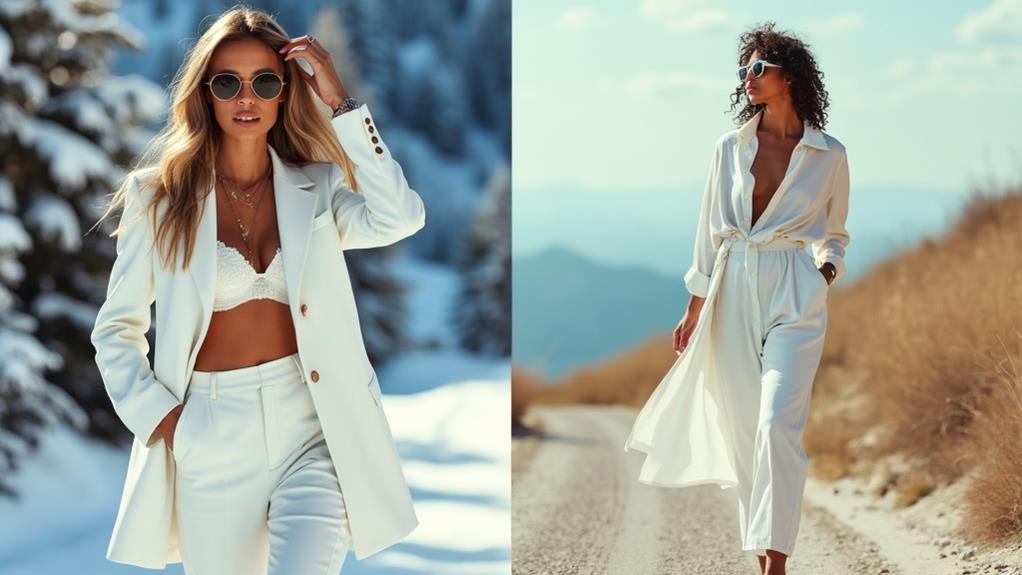
The all-white outfit trend of the 2010s truly showcased its seasonal versatility, making it a favorite for many. Whether for a casual outing or a formal event, all-white outfits created a sleek, minimalist look that could adapt to any occasion. The trend's ability to shift between seasons was a major draw. For winter, you could layer white turtlenecks and long coats, while summer called for lighter fabrics like linen.
Fashion influencers and celebrities frequently highlighted these outfits, showcasing their adaptability and encouraging widespread adoption. This wasn't just a fleeting trend; major fashion brands incorporated all-white looks into their collections, emphasizing both elegant simplicity and wellness trends. Whether heading to a yoga class or a chic brunch, athleisure pieces in all-white offered a stylish yet comfortable option.
Here's how you can make the most of all-white outfits year-round:
- Winter: Layering options like white turtlenecks, long coats, and boots.
- Spring: White blazers paired with crisp white trousers.
- Summer: Light fabrics such as linen and cotton for breathability.
- Fall: Cozy white sweaters and tailored white pants.
With these tips, you'll master the art of seasonal versatility in your wardrobe.
Social Media Impact
The rise of all-white outfits as a dominant trend in the 2010s can be attributed to the powerful influence of social media. Platforms like Instagram enabled influencers and celebrities to showcase their all-white ensembles, making the trend synonymous with elegance and minimalism. Influencers such as Chiara Ferragni and Leandra Medine Cohen frequently posted their chic all-white looks, inspiring their followers to adopt the same aesthetic.
Hashtags like #AllWhiteEverything significantly contributed to spreading the trend. Users shared their own all-white outfits, creating a sense of community and further popularizing the style among young consumers. The visibility of these outfits at major events like fashion weeks and red carpets also amplified their appeal. High-profile figures like Beyoncé and Kim Kardashian donned all-white outfits, solidifying the trend's status in the fashion world.
This movement aligned perfectly with broader fashion trends emphasizing clean aesthetics and monochromatic styles. Curated social media feeds and lifestyle blogs heavily promoted these looks, making all-white outfits a staple in many wardrobes. Therefore, social media's impact was crucial in transforming all-white outfits into a defining trend of the 2010s.
Future of Monochrome
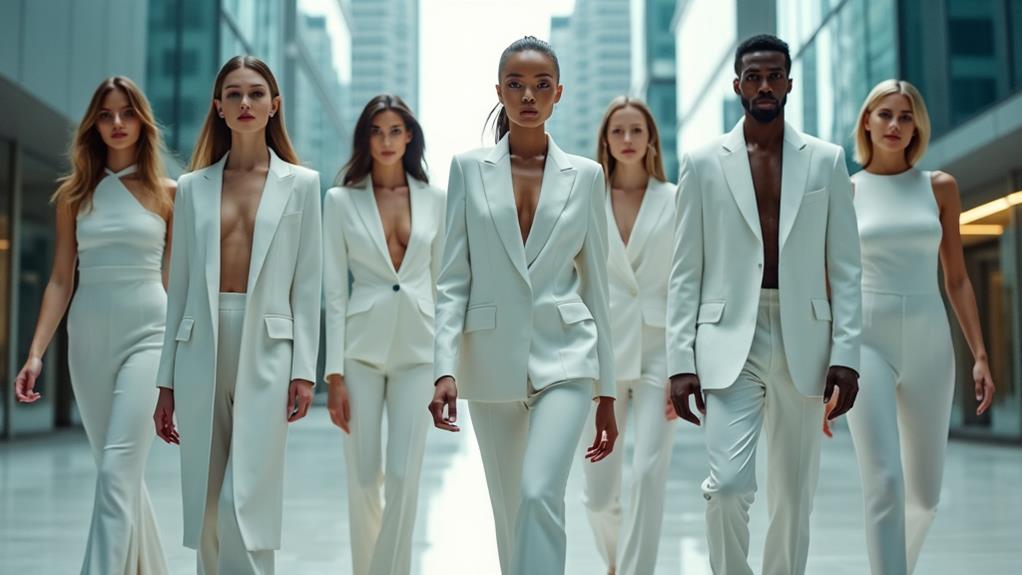
With social media solidifying all-white outfits as a staple in fashion, it's time to contemplate the future of monochrome. The allure of all-white ensembles lies in their minimalism and elegance, making them ideal for those seeking timeless styles. As we move forward, several factors will shape the trajectory of monochrome fashion.
- Sustainability: A growing emphasis on high-quality, durable fabrics that maintain their appearance is crucial. Investing in sustainable materials ensures that all-white outfits remain pristine across seasons.
- Gender-fluid fashion: Monochrome outfits, especially all-white, offer a neutral base that transcends traditional gender norms. As gender-fluid fashion gains traction, expect more all-white collections catering to diverse audiences.
- Digital fashion: The rise of digital fashion and virtual wardrobes allows experimentation with all-white looks without the environmental impact of fast fashion. This trend supports sustainability while promoting creativity.
- Timeless styles: All-white outfits will continue to be a go-to for those who appreciate elegance and minimalism. Their versatility and sophistication make them a lasting trend in any wardrobe.