The Popularity of Fake Fur in the 1970s and 2010s
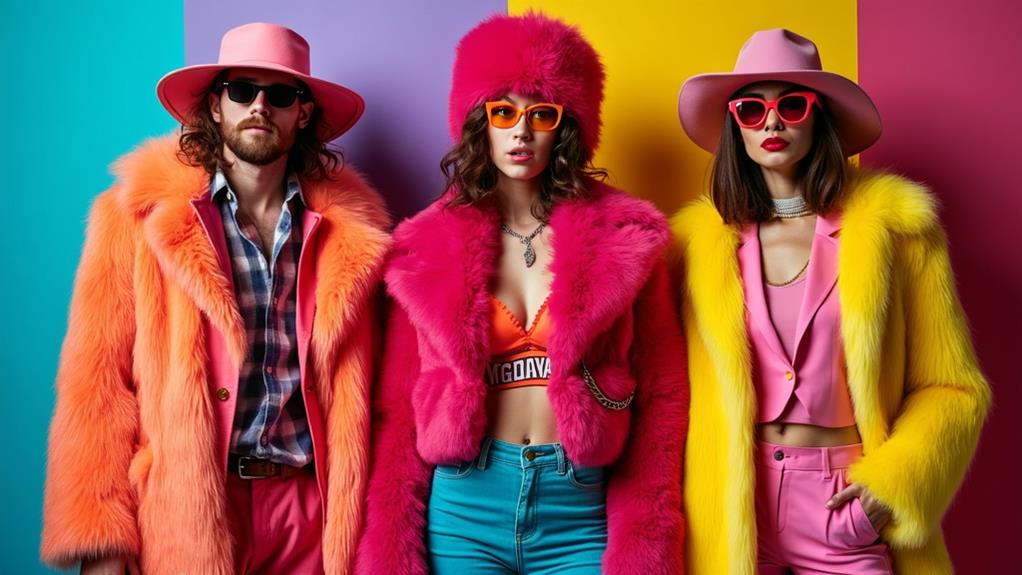
Fashion trends often come full circle, and the popularity of fake fur is a prime example. In the 1970s, a growing awareness of animal rights and anti-fur activism led to a surge in faux fur. Celebrities like Joan Jett and Cher made it fashionable to be compassionate. By the 2010s, high-profile designers such as Stella McCartney and Gucci embraced faux fur, further popularized by social media influencers. What drove this renewed interest, and how has it impacted the fashion industry? Keep exploring to uncover more.
Emergence of Faux Fur

Faux fur emerged as a fashionable alternative to real fur in the 1950s, gaining traction due to advancements in synthetic materials. By 1957, sales had skyrocketed to $80 million, indicating a significant shift in consumer preferences. The popularity of faux fur can be attributed to its ability to mimic the luxurious feel of real fur without the associated ethical concerns.
Initially, faux fur provided a sustainable option for fashion enthusiasts who opposed the fur industry. The anti-fur movements of the 1970s further amplified this trend, with activists promoting faux fur as a symbol of resistance against animal cruelty, thereby enhancing its appeal.
From the outset, faux fur was more than just an affordable substitute; it made a statement. As technology advanced, high-quality faux fur began to rival real fur in appearance and texture. Designers like Ingvar Helgason have pushed the boundaries with innovations such as BioFur, which replicates the luxurious qualities of natural pelts while remaining ethical and sustainable.
1970s: A Decade of Change
In the 2010s, the fashion industry underwent a significant transformation as consumers increasingly demanded cruelty-free alternatives, bringing faux fur into prominence. Major fashion brands like Stella McCartney and Gucci led this movement by eliminating real fur from their collections, responding to growing consumer preferences and relentless advocacy by animal rights organizations.
Faux fur evolved from a mere substitute to a luxury fashion statement. Advances in synthetic fibers allowed it to closely mimic the texture and appearance of real fur, offering a sophisticated and opulent option without ethical compromises.
Young consumers, particularly in the 2010s, were drawn to faux fur for its alignment with progressive values and sustainability. Wearing faux fur became a statement of ethical concern, showcasing a commitment to animal rights and environmental sustainability. This decade marked a transformative period for faux fur in the fashion world, reflecting a broader shift towards conscious consumption.
Anti-Fur Activism
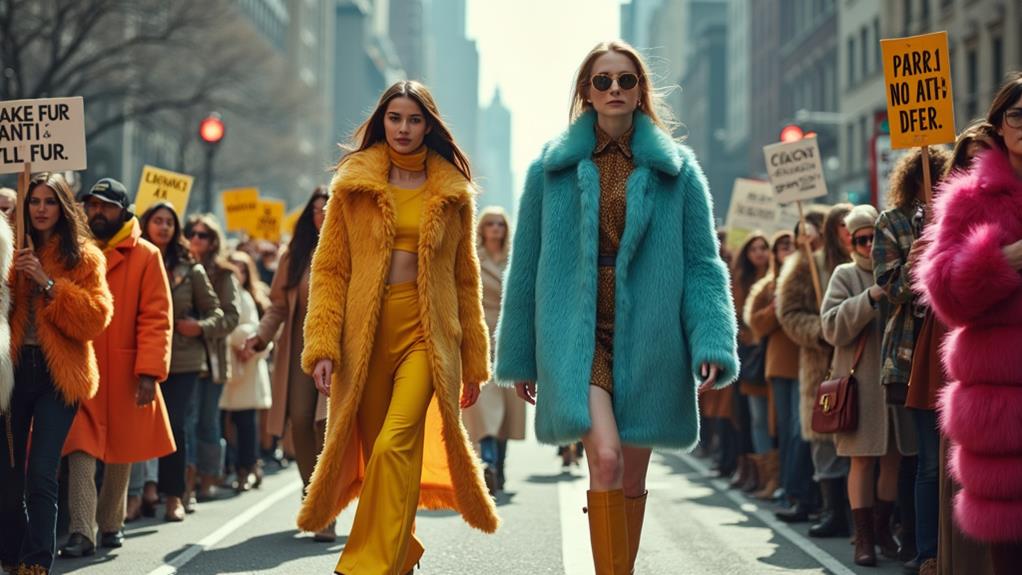
The 2010s spotlighted the rise of faux fur, underscored by a powerful force: anti-fur activism. Emerging in the 1970s, this movement aligned with animal rights activism and the establishment of the Endangered Species Act, which increased public awareness about the cruelty of fur farming.
By the 1990s, PETA's impactful campaigns, featuring the slogan "I'd rather be naked than wear fur," brought the issue to mainstream attention. High-profile models and celebrities fronted these campaigns, stigmatizing fur wearers and highlighting ethical concerns about animal exploitation. Consequently, luxury brands like Calvin Klein and Gucci began phasing out real fur, opting for synthetic alternatives.
Grassroots activism also played a crucial role. Events like Compassionate Fashion Day and Fur Free Friday mobilized public sentiment and promoted animal welfare. Legislative victories, such as bans on fur farming in the UK and the prohibition of dog and cat fur sales in the U.S., further bolstered the cause, reflecting the growing influence of anti-fur activism on policy and consumer behavior. Supporting synthetic fur garments contributes to this ongoing movement.
Celebrity Influence
Celebrity influence has significantly impacted the popularity and acceptance of faux fur, shaping public opinion and fashion trends over the decades. In the 1970s, icons like Joan Jett and Cher led the anti-fur movement, using their platforms to advocate against animal cruelty and promote faux fur as a stylish and ethical choice. Their support made faux fur a symbol of rebellion and compassion, resonating with a generation eager for change.
Fast forward to the 2010s, and the trend continued with high-profile designers such as Stella McCartney and brands like Calvin Klein embracing faux fur, often driven by celebrity endorsements. Celebrities at fashion events and on social media platforms wore faux fur, elevating its status and aligning it with modern ethical standards. This shift not only reflected evolving societal values but also made faux fur a desirable fashion statement.
Key moments in the celebrity-driven rise of faux fur include:
| Decade | Key Figures | Impact |
|---|---|---|
| 1970s | Joan Jett, Cher | Popularized faux fur as a compassionate choice |
| 1990s | Naomi Campbell, Cindy Crawford | Strengthened PETA's anti-fur campaigns |
| 2010s | Stella McCartney, Calvin Klein | Established faux fur in high fashion |
Over the years, the prominence of faux fur in celebrity wardrobes has driven its acceptance and desirability, aligning with the broader anti-fur movement and ethical fashion trends.
Faux Fur in High Fashion
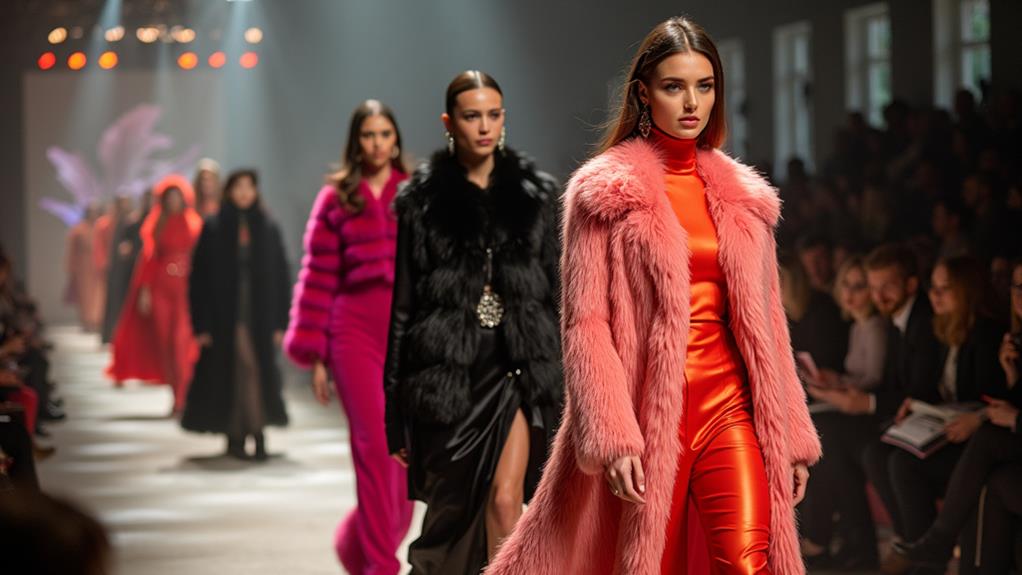
Faux fur has become a staple in high fashion for several reasons. The 1970s saw the rise of the anti-fur movement, which pushed designers to use synthetic alternatives. Faux fur coats emerged as both stylish and ethical choices, reflecting high fashion's evolving values.
High-profile fashion shows, including Karl Lagerfeld's Chanel collections, showcased faux fur as a chic addition to classic designs, proving that luxury could align with animal welfare. By the 2010s, brands like Gucci and Stella McCartney led the charge in phasing out real fur, reinforcing the industry's commitment to cruelty-free fashion.
The rise of social media in the 2010s also played a crucial role. Influencers highlighted faux fur's ethical appeal and versatile style, making it essential for fashion-forward consumers. Advances in synthetic fibers have made faux fur almost indistinguishable from real fur, offering luxury without guilt.
Incorporating faux fur into your wardrobe means participating in a movement that values both style and compassion. High fashion's acceptance of faux fur signifies a broader shift towards ethical and sustainable choices, without sacrificing elegance or sophistication.
Environmental Impact
The rise in faux fur's popularity brings significant questions about its environmental footprint. While you might assume synthetic fur is a more eco-friendly option, the reality is complex. Faux furs are often made from petroleum-based fibers, which are non-biodegradable and contribute to plastic pollution. Additionally, the manufacturing process frequently involves harmful chemicals that can release toxins into ecosystems.
Consider this comparison:
| Aspect | Faux Fur (Synthetic) | Natural Fur |
|---|---|---|
| Biodegradability | Non-biodegradable | Biodegradable |
| Production Impact | Chemical processes, pollution | Renewable resource, less processing |
| Long-term Pollution | Contributes to plastic waste | Minimal long-term pollution |
Critics argue that the environmental impact of synthetic fur negates its cruelty-free benefits. Conversely, the British Fur Trade Association posits that natural fur, being a renewable resource, may have a lower environmental footprint. Innovations in biotechnology, such as BioFur, aim to develop more sustainable faux fur by emulating natural pelts and minimizing ecological damage.
The debate over the environmental impact of faux versus natural fur continues, encouraging you to consider more sustainable, ethically sourced materials in your fashion choices.
Future of Faux Fur
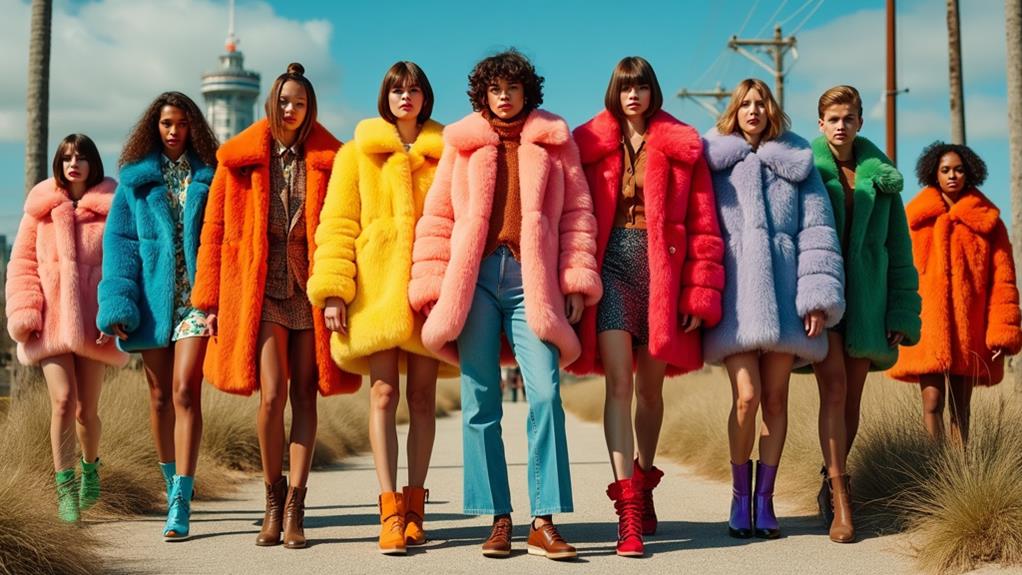
As you look to the future of faux fur, technological advancements like BioFur are revolutionizing the industry by replicating the luxurious feel of real pelts. Consumer demand for sustainable and ethical fashion is driving brands to adopt biodegradable materials and innovative production methods. With major fashion weeks banning real fur, faux fur is becoming the new standard in high fashion.
Sustainable Production Methods
In the rapidly evolving landscape of fashion, sustainable production methods for faux fur are gaining significant attention. As consumer demand for cruelty-free and eco-friendly options grows, the industry is responding with innovative solutions. One notable advancement is the development of BioFur by designer Ingvar Helgason, which aims to replicate natural pelts in a sustainable and ethical manner. These biodegradable, plant-based faux furs represent a major improvement, addressing concerns over the environmental impact of traditional synthetic materials.
By prioritizing these materials, major fashion brands are not only reducing their ecological footprint but also meeting consumer expectations for transparency and responsibility. The shift toward sustainable and biodegradable options reflects a broader trend in the industry. While critics often highlight that many synthetic furs are not biodegradable, ongoing research is tackling this issue directly. The focus is on creating materials that are both fashionable and sustainable.
Efforts to reduce reliance on petroleum-based fibers are also crucial. These advancements in sustainable faux fur production are balancing style with environmental consciousness, ensuring that fashion choices can be both chic and ethical.
Technological Advancements in Materials
Fueled by cutting-edge technology, faux fur is undergoing a remarkable transformation. Advances in biotechnology have paved the way for synthetic furs like BioFur, which closely replicate the texture and appearance of natural pelts. These technological advancements have revolutionized the faux fur industry, offering stylish and ethical alternatives.
Key innovations include:
- High-quality synthetic fibers: Materials such as Orlon and Dynel, introduced in the late 1940s, have been continually improved to convincingly mimic genuine fur. These fibers ensure a realistic look and feel.
- Biodegradable options: Newer synthetic materials are designed to be biodegradable, addressing environmental concerns. This means you can enjoy fashionable faux fur without contributing to long-term waste.
- Advanced manufacturing techniques: Methods like knitting and intarsia have expanded design possibilities for faux fur. These techniques make production more efficient and offer diverse styles and patterns.
- Biotechnology breakthroughs: Innovations like BioFur use biotechnology to enhance the realism of faux fur, making synthetic options nearly indistinguishable from natural fur.
With these advancements, faux fur continues to evolve, offering high-quality, sustainable, and fashionable choices.
Ethical Fashion Trends
The future of faux fur is closely tied to the rising trend in ethical fashion. As awareness of animal rights grows, the demand for cruelty-free alternatives has significantly increased. Faux fur, made from synthetic fibers, has advanced considerably since the 1970s anti-fur movement. Today, technological innovations enable faux fur to closely resemble genuine fur in both appearance and texture, making it a highly attractive option.
Consumers are increasingly seeking ethical fashion choices, prompting the market to respond. High-end brands are now adopting faux fur to align with evolving values. This shift goes beyond aesthetics; it signifies a broader commitment to sustainability. Current trends indicate a notable shift towards biodegradable and plant-based faux furs, addressing environmental concerns while maintaining style.
Celebrities and influencers have been instrumental in driving this change. Their endorsement of faux fur has made it a fashionable and ethical choice, particularly among younger audiences. By choosing faux fur, you're not just making a style statement; you're supporting a future where fashion is kind to animals and the planet.