The Evolution of Women's Hats: From Wide Brims to Fascinators
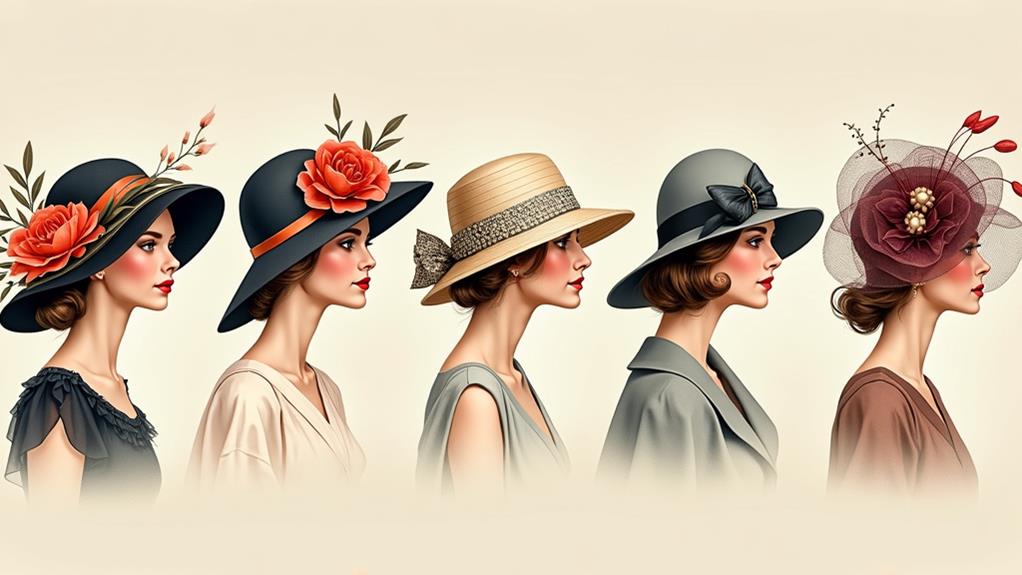
The evolution of women's hats reflects societal shifts and changing tastes. From the grand, wide-brimmed bonnets of the Victorian era to today's chic fascinators, each period's headwear tells a unique story. In the early 1900s, hats were more than accessories; they symbolized femininity and status, often featuring intricate embellishments. By the 1920s, the cloche hat emerged, mirroring the new modernity post-World War I. Practical needs during wartime further influenced these changes, reshaping fashion to meet the demands of the times.
Early 1900s Fashion Trends
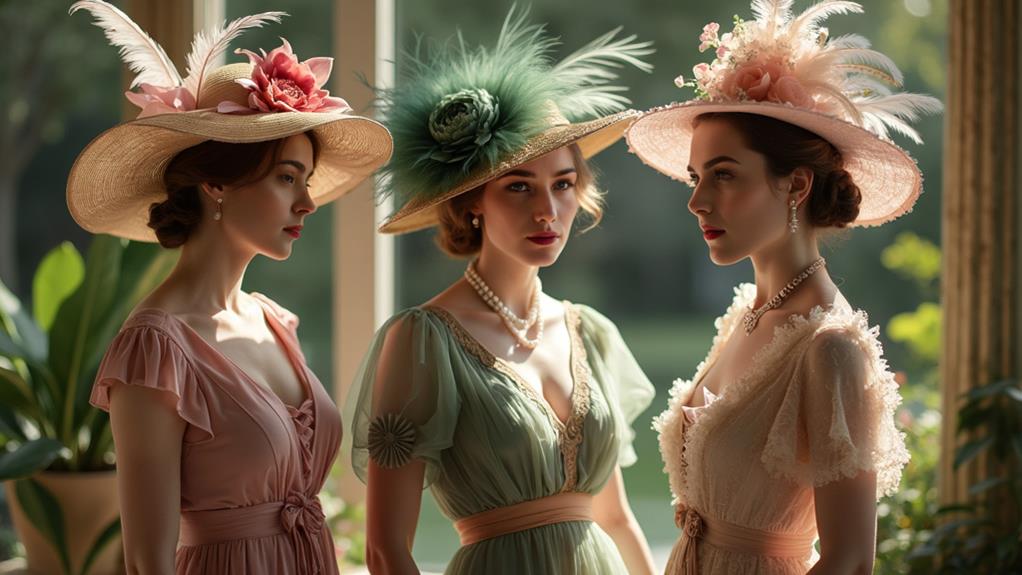
In the early 1900s, women's hats were more than just accessories; they were symbols of social status and femininity. During the Edwardian age, fashion dictated that hats be small and perched atop elaborate hairstyles. Crafted from materials like straw, felt, and silk, these hats were often adorned with feathers, flowers, and ribbons to signify elegance and sophistication.
As a woman of the Edwardian age, you would have chosen a hat that complemented your elaborate, high-piled hairstyle. The hat was not just an accessory but a statement of your social standing and personal style. Wide-brimmed hats, in particular, became emblematic of this age's fashion, serving as a visual representation of one's place in society.
Although the cloche hat didn't debut until the 1920s, the groundwork for such fashion evolution was laid during this era. The emphasis on intricate details and artistic craftsmanship started to take shape. The Edwardian age's focus on opulent and luxurious hat designs would eventually give way to simpler, more practical styles, reflecting the societal changes and evolving fashion sensibilities of the time. This period remains a fascinating chapter in the history of women's fashion.
The 1910s to 1920s
As you investigate the period from the 1910s to the 1920s, you'll observe significant changes in hat styles. The oversized, floral-adorned hats of the pre-war era were replaced by the sleek and snug cloche hats that characterized the Roaring Twenties. This transition mirrored women's evolving roles and newfound freedoms after World War I, with designers emphasizing simplicity and modernity.
Rise of Cloche
The 1920s marked a pivotal shift in women's fashion with the rise of the cloche hat, a snug, bell-shaped headpiece that contrasted sharply with the elaborate millinery of the previous decade. Often crafted from felt, this close-fitting hat symbolized modern femininity and the newfound freedoms women experienced in the post-World War I era. Its minimalist design focused on shape and structure rather than floral embellishments or decorative elements.
The cloche hat perfectly complemented the bobbed hairstyles that were gaining popularity at the time. Its snug fit accentuated the sleek lines of short hair, creating a chic, modern look. More than just a fashion statement, the cloche hat reflected the changing roles and attitudes of women. By the late 1920s, it had become an essential accessory for any stylish woman, embodying the spirit of the flapper movement.
With its distinctive shape and understated elegance, the cloche hat marked a significant departure from the wide-brimmed hats of the past, signaling a new phase in women's fashion.
Simplified Wartime Styles
In the 1910s, many hats were grandiose, featuring wide brims and elaborate floral decorations. However, with the onset of World War I, women's fashion changed dramatically. Hats became smaller and more practical, reflecting the simplified wartime styles necessitated by resource scarcity and the need for functionality.
During this period, hat sizes significantly decreased. Wide brims gave way to designs that hugged closely to the head, capturing the essence of wartime sentiments. This shift wasn't merely about aesthetics; it was also about practicality in a world where extravagance was no longer appropriate.
- Closer Fits: Hats were designed to fit snugly to the head.
- Resource Scarcity: Simplified designs were necessary due to limited materials.
- Practicality: Emphasis was placed on practical, wearable fashion.
1930s and 1940s Styles
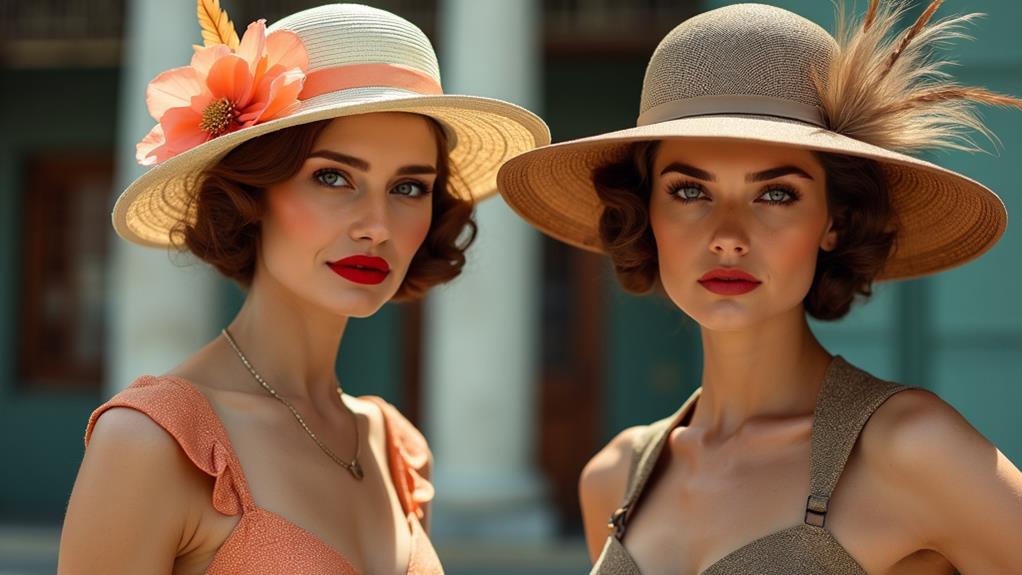
Hat fashion in the 1930s and 1940s embodied both practicality and resilience. In the 1930s, women's hats featured shallower crowns and wider brims, complementing the curled hairstyles of the era. Amid the economic hardships of the Great Depression, functional styles were essential. These hats served both style and utility, becoming staples in women's wardrobes.
In the 1940s, hat styles became more extravagant yet practical due to wartime influences. Designs like turbans and wide-brimmed hats reflected the scarcity of materials and the need for simplicity. Women adorned these creations with flair, often incorporating patriotic themes to mirror the times.
Popular 1940s styles included berets and military-inspired designs, symbolizing women's contributions to the war effort. These hats weren't just fashion statements; they embodied the resilience and spirit of the period. By the end of the decade, there was a resurgence of glamour, with larger, more structured designs driven by a post-war desire for elegance and luxury. This phase paved the way for the next evolution in women's hats, leading toward the modern fascinator.
Post-War Fashion Changes
After WWII, women's fashion embraced a return to glamour, with extravagant hat designs becoming essential for formal occasions, largely influenced by Christian Dior's "New Look." In the early 1950s, large, ornate hats adorned with flowers and luxurious fabrics were highly fashionable. However, by the end of the decade, everyday hat-wearing began to decline. As the 1960s approached, hats became less common in daily attire, shifting their focus to special occasions.
Return to Glamour
In the wake of World War II, women's fashion saw a significant shift towards opulence and elegance, particularly in hat designs. This era marked a return to glamour, with elaborate hats becoming essential accessories for special occasions and social events. Inspired by Christian Dior's "New Look," hats during this period were large, structured, and often adorned with flowers and luxurious fabrics, enhancing the femininity of the hourglass silhouettes that dominated women's fashion.
Hats of the 1950s were:
- Extravagant: Featuring luxurious materials and intricate designs.
- Versatile: Ranging from small pillbox styles to large, elaborate creations.
- Elegant: Perfectly complementing the sophisticated, feminine outfits of the age.
These hats were more than just fashion statements; they symbolized the post-war return to glamour and sophistication. Whether attending a wedding, a formal gathering, or a high-society event, women's hats were indispensable for making a stylish impression. Although everyday hat-wearing began to decline by the end of the 1960s, the allure of these statement pieces for special occasions remained, showcasing the enduring appeal of post-war fashion's return to glamour.
Decline in Popularity
The late 1960s marked a significant transition in women's fashion, notably characterized by a decline in the popularity of hats. This shift was due to evolving social and fashion norms, which saw women gravitating towards more casual styles for daily wear, reserving elaborate hats for formal occasions only.
Public figures like Jackie Kennedy temporarily rekindled interest in hat fashion with her iconic pillbox hat in the early 1960s. Despite this, the trend towards practicality and comfort gained momentum as the decade advanced, overshadowing her influence.
| Period | Hat Type | Occasion |
|---|---|---|
| Post-War | Extravagant | Formal Occasions |
| Early 1960s | Pillbox (Jackie) | Everyday and Formal |
| Late 1960s | Rare | Primarily Formal |
Milliners responded to these changes by designing intricate hats mainly for weddings, galas, and other formal events. The decline in hat usage for everyday wear mirrored women's expanding roles and responsibilities, which called for more practical and comfortable clothing. This evolution marked a pivotal moment in the history of women's hats, transforming them from everyday essentials to occasional accessories.
Cultural Influences on Hats
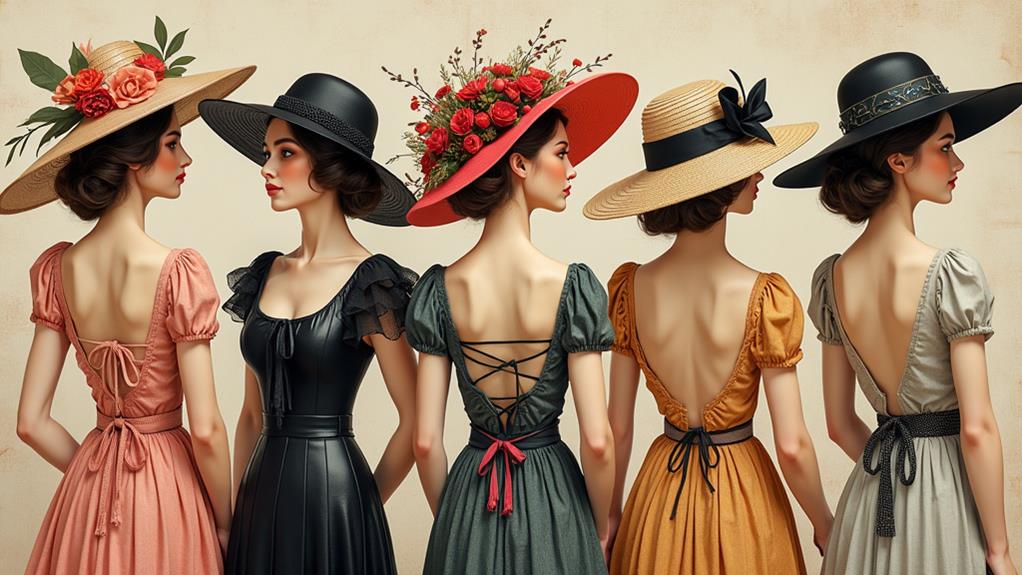
Cultural influences on women's hats have been profound and dynamic throughout history. From the lavish courts of Marie Antoinette to the rich heritage of African traditions, women's hats have reflected societal changes and cultural significance. Marie Antoinette's penchant for extravagant hats set high fashion trends, making ornate headpieces an emblem of status and luxury. Similarly, African traditions showcase cultural representations of hats, where headwraps symbolized identity and community, evolving into significant elements of church attire among Black women.
Wearing a fascinator today can be seen as a nod to historical influences while embracing modern creativity. This blend of the past and present underscores the ongoing evolution of women's hats as symbols of individuality and expression.
Historical Significance
- Hats as status symbols: In the 18th and 19th centuries, hats were emblematic of social standing.
Fashion as Protest
- Civil Rights period: Hats were used to convey respectability and solidarity.
Modern Trends
- Resurgence of fascinators: Contemporary styles blend historical and modern elements.
Understanding cultural influences on hats enriches your appreciation of their role in fashion. Whether donning a simple headwrap or a fascinator, you're participating in a vibrant tradition that continues to evolve.
Notable Eras in Hat Fashion
Several notable periods in hat fashion have left an indelible mark on women's style, each reflecting the social and cultural milieu of its time. In the Victorian era, wide-brimmed bonnets adorned with elaborate decorations epitomized fashion. Often made of straw during summer months, these bonnets symbolized femininity and social status.
In the Edwardian era, hats became extravagant, with the Merry Widow hat taking center stage. These hats could reach widths of up to 18 inches and were adorned with ornate embellishments, showcasing the age's opulence.
The 1920s introduced the cloche hat, a close-fitting design that embodied modern femininity. Paired with the popular bob hairstyles of the time, the cloche hat shifted focus from traditional adornments to groundbreaking shapes.
During the 1940s, hats varied widely. Patriotic turbans and wide-brimmed hats emerged as symbols of resilience during WWII, influenced by material restrictions that shaped fashion trends.
The 1960s saw a decline in everyday hat-wearing, but the pillbox hat, popularized by Jackie Kennedy, became an iconic style. This era marked a shift towards minimalist headwear, reflecting changing social attitudes.
Iconic Hat Styles
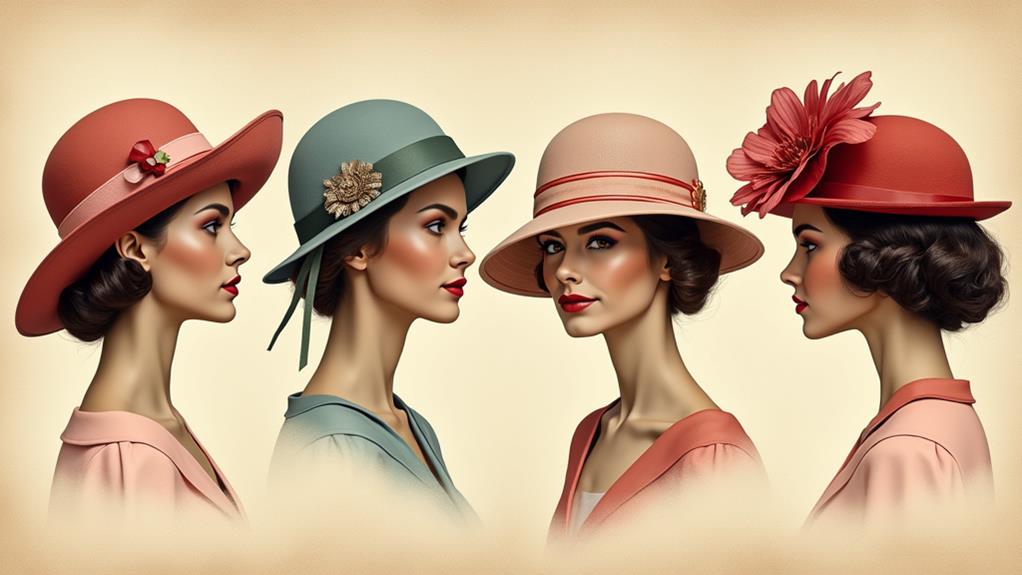
When you think of iconic hat styles, several distinct designs come to mind, each with its unique flair and history. One of the most enduring is the fedora, known for its versatility and elegance. With its soft brim and indented crown, the fedora has been a staple in fashion since the late 19th century, effortlessly blending sophistication and practicality.
Another iconic hat is the wide-brimmed sun hat, perfect for summer days. This style not only provides excellent sun protection but also adds a touch of glamour to your outfit. Often adorned with ribbons or flowers, it's the go-to choice for a chic, sunny-day ensemble.
The fascinator stands out as a decorative headpiece frequently seen at formal events. Unlike traditional hats, fascinators are brimless and often feature artistic elements like feathers and flowers. This style has gained immense popularity, particularly at royal weddings, making it a symbol of high fashion and elegance.
Here are three iconic hat styles that have left a lasting impact on fashion:
- Fedora: Timeless elegance with a soft brim and indented crown.
- Wide-brimmed sun hat: Stylish sun protection with decorative elements.
- Fascinator: Ornate headpieces for formal occasions.
These styles showcase the diverse and constantly evolving world of hats.
Modern Hat Trends
As we transition from iconic hat styles of the past, let's explore the modern hat trends shaping today's fashion landscape. The 21st century has seen a revival of vintage hat styles, blending traditional elements with modern aesthetics. This fusion appeals to a new generation of fashion enthusiasts who appreciate the charm of yesteryear with a contemporary twist.
Eco-friendly materials are becoming increasingly popular in hat production. Reflecting a growing consumer demand for sustainable fashion choices, hats are now made from organic cotton, recycled fibers, and biodegradable materials. This shift not only benefits the environment but also offers a fresh take on classic designs.
Customization of hats is another significant trend. Whether it's a monogram, unique color combination, or personalized embellishment, the ability to customize hats allows individuals to express their personal identity and style. Fashion accessories like hats are now more than just practical items; they are statements of individuality.
Fashion weeks around the world prominently feature hats in haute couture collections, underscoring their importance. With online retail expanding access to diverse styles and designs, finding the perfect hat to fit contemporary trends has never been easier.