
The Evolution of Swimwear: From Modesty to Bold Statements
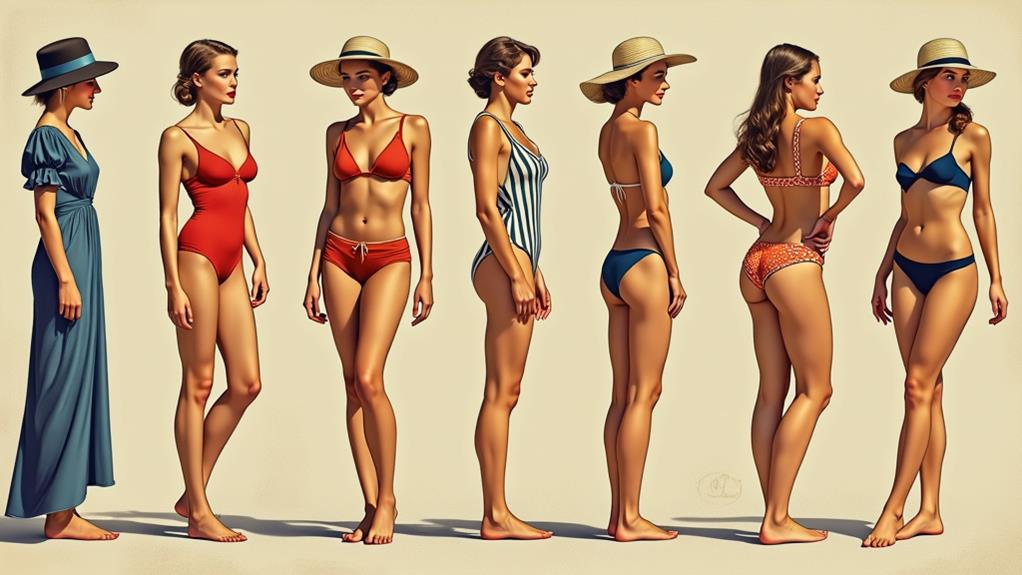
The evolution of swimwear is a compelling journey from modesty to bold statements of fashion and identity. In the 1800s, women wore heavy, full-body suits designed for modesty. Today, swimwear embraces body positivity and self-expression. This transformation didn't happen overnight; it involved societal changes, material innovations, and the influence of celebrities. Understanding this shift from woolen dresses to bikinis and eco-friendly swimwear provides insight into our changing cultural landscapes.
Early Modesty: 1800s-1940s
From the 1800s to the 1940s, swimwear was dominated by the concept of modesty. In the 1800s, women wore bathing gowns made of heavy wool, which could weigh up to nine pounds when wet. This was a reflection of the societal norms of the time, ensuring that women's bodies were fully covered even while swimming.
Men's swimwear also followed conservative standards, typically consisting of knee-length pants paired with striped shirts. The emphasis on modesty extended to the use of bathing machines, which allowed women to change into their swimwear privately.
By the 1930s, societal attitudes began to evolve, and swimwear started to become more form-fitting. However, the emphasis on modesty persisted. In the 1940s, influenced by post-war conservatism, women's swimwear saw a return to high-waisted bottoms and longer designs. This period marked a balance between emerging form-fitting styles and traditional modesty.
These evolving styles set the stage for future innovations in swimwear, but modesty remained a key factor from the 1800s through the 1940s.
Women's Swimwear Breakthroughs
In exploring women's swimwear breakthroughs, one can see that early modesty standards were significantly challenged by figures like Annette Kellerman in the early 1900s. The introduction of the bikini in 1946 sparked controversy but gradually gained acceptance, especially with endorsements from celebrities. Today, swimwear embraces modern inclusivity trends, offering a variety of styles that celebrate body positivity and cater to all body shapes and sizes.
Early Modesty Standards
In the early 20th century, women's swimwear was focused on maintaining modesty, often at the expense of comfort and practicality. Women typically wore heavy wool bathing gowns that could weigh up to nine pounds when wet. These outfits required elaborate changing processes using bathing machines to ensure privacy. The standards of modesty were so strict that even minor deviations were considered controversial.
Annette Kellerman challenged these norms in 1907 by wearing a form-fitting one-piece swimsuit, which led to her arrest. This incident sparked widespread debate and eventually paved the way for more revealing swimwear designs.
| Timeframe | Swimwear Style | Key Features |
|---|---|---|
| Early 20th Century | Heavy wool bathing gowns | Modesty, privacy, impracticality |
| 1907 | Form-fitting one-piece swimsuit | Annette Kellerman's controversial choice |
| 1920s | Shorter swimsuits | Lower necklines, midriff exposure |
| Flapper Period | Daring styles | Influenced by societal changes, more revealing |
Bikini Controversy Era
Early modesty standards in swimwear began to ease as society's attitudes towards women's fashion evolved, leading to groundbreaking changes in the mid-20th century. The introduction of the bikini in 1946 by Jacques Heim and Louis Réard ignited public outrage. This bold departure from the modest swimwear that had dominated beaches represented more than just a fashion shift; it was a cultural milestone.
The arrest of Annette Kellerman in 1907 for wearing a revealing one-piece swimsuit had already begun to chip away at conservative norms. By the 1950s, celebrities like Marilyn Monroe and Brigitte Bardot brought the bikini into the spotlight through films and magazines, gradually shifting public perception towards acceptance.
When the initial Miss World pageant crowned a winner in a bikini in 1951, it symbolized growing societal changes. The bikini became a sign of women's empowerment and sexual liberation in the 1960s and 1970s, reflecting broader shifts in body image and personal expression. While the initial public outrage was significant, the bikini's progression from scandal to mainstream acceptance highlights the evolving landscape of women's fashion and societal norms.
Modern Inclusivity Trends
Women's swimwear has experienced transformative breakthroughs in the 2010s and 2020s, driven by the wave of body positivity and inclusivity. Brands have expanded size ranges to accommodate diverse body types, promoting self-expression and comfort. Options now include high-waisted bikinis and one-piece swimsuits with cut-outs, catering to varied preferences and balancing coverage with style.
Brands like Aerie and Savage X Fenty have revolutionized the market with inclusive advertising campaigns, featuring models of all shapes, sizes, and backgrounds. These campaigns celebrate diversity in beauty, helping you feel represented and confident.
The shift towards eco-friendly materials is also significant. Swimwear now often incorporates recycled plastics and sustainable fabrics, meeting the growing consumer demand for environmentally responsible fashion. This allows you to enjoy stylish swimwear without compromising your environmental values.
Customizable options such as adjustable straps and mix-and-match separates have become increasingly popular. These features enable you to create personalized swimwear looks that improve comfort and fit, ensuring that your swimwear reflects your unique style and needs.
Embrace these modern trends for a more inclusive and eco-friendly swimwear experience.
Bikini Controversy and Acceptance
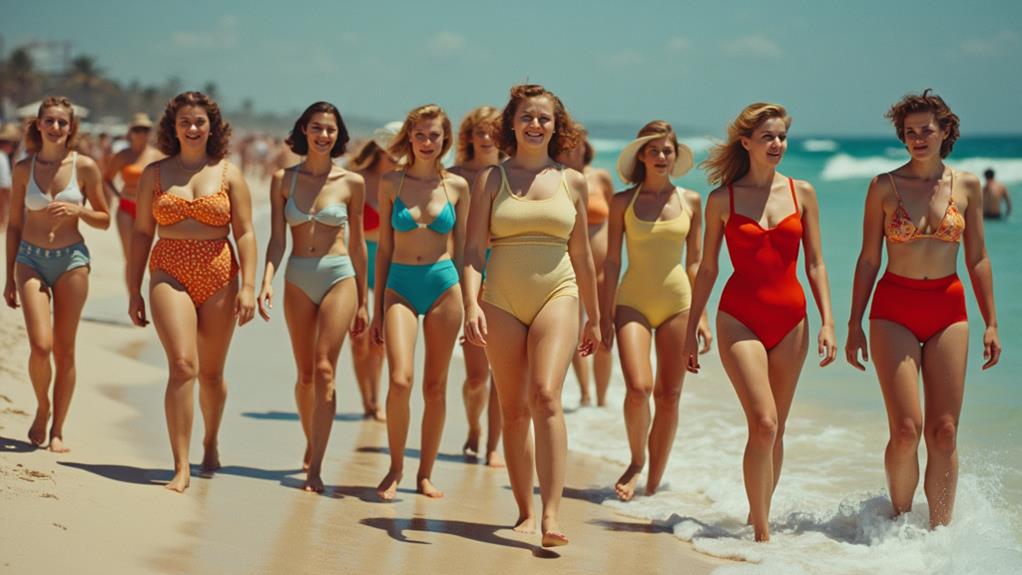
The bikini's debut in 1946 by Jacques Heim and Louis Réard was more than a fashion statement; it sparked a significant controversy. Initially, the bikini faced widespread rejection as many viewed it as scandalous and inappropriate for mainstream use. Societal norms at the time were conservative, heavily influenced by incidents like Annette Kellerman's 1907 arrest for wearing a form-fitting one-piece swimsuit, underscoring the ongoing battle for acceptance and modesty in women's swimwear.
By the 1950s, however, the bikini began to gain acceptance, largely thanks to celebrity endorsements. Icons such as Marilyn Monroe played a pivotal role in transforming public perception. This shift was not merely about fashion; it mirrored broader cultural changes. Throughout the 1960s and 1970s, the bikini emerged as a symbol of sexual liberation and empowerment, resonating with the women's rights movement and evolving societal norms.
Key Phases in the Bikini's Evolution:
- Initial Controversy: Met with public backlash and deemed inappropriate.
- Celebrity Endorsements: Influential figures reshaped its perception.
- Cultural Shift: Became emblematic of liberation and empowerment.
This evolution of the bikini reflects a broader narrative of changing attitudes towards women's fashion and societal norms.
Men's Swimwear Evolution
Exploring the evolution of men's swimwear reveals a dramatic shift from the full-coverage woolen garments of the early 1900s to today's focus on functionality and comfort. Modern styles range from sleek briefs to versatile boardshorts, reflecting changing societal norms and a growing emphasis on personal expression and body positivity.
Early Modesty Trends
Imagine stepping back into the early 1900s, where men's swimwear primarily consisted of one-piece, knee-length woolen garments. These early modesty trends showcased conservative swimsuits that covered the torso, arms, and thighs. These one-piece suits prioritized functionality over style, aiming to protect the skin from sun exposure and maintain societal decency standards.
However, these garments had significant drawbacks. The heavy woolen fabric hindered mobility in the water, making swimming challenging. The emphasis on modesty often outweighed practical considerations, reflecting the societal attitudes of the time.
Early men's swimwear evolved with the following characteristics:
- Functionality Over Style: Designs focused more on covering the body than on swimming ease.
- Heavy Fabric: Woolen materials were common, making the swimsuits cumbersome when wet.
- Conservative Societal Attitudes: The need for modesty dictated beach culture norms.
These early swimwear choices were vastly different from today's variety, where comfort and performance materials dominate. Back then, beach culture was more about adhering to strict modesty than embracing the freedom and adventure we associate with modern swimwear.
Modern Functional Styles
Have you ever wondered how men's swimwear evolved from cumbersome woolen suits to the sleek, functional designs we see today? Delving into the past reveals early 20th-century trends featuring heavy, full-coverage woolen garments, a far cry from the modern functional styles dominating today's market.
By the mid-20th century, swim trunks emerged with shorter leg lengths, improving mobility and showcasing bolder styles. As beach culture boomed, swim shorts gained popularity, utilizing lightweight fabrics and elastic waistbands for comfort and versatility.
Today, men's swimwear offers a range of styles, including briefs, square-cut trunks, and hybrid designs that blend fashion with functionality. Advanced materials enhance performance, making modern swimwear suitable for everything from casual beach days to competitive swimming.
Recent trends emphasize inclusivity and body positivity, with brands expanding size ranges and promoting diverse body types in advertising. Whether you seek comfort, style, or performance, today's men's swimwear caters to all needs while celebrating diversity and individual expression.
Material Innovations

Swimwear has evolved significantly due to material innovations. In the early 20th century, elasticized fabrics like Lastex revolutionized swimsuits, making them more form-fitting and comfortable for aquatic activities. This trend continued with the development of synthetic materials such as nylon and lycra in the 1960s and 1980s, improving both durability and flexibility.
By the 1990s, the introduction of the tankini—a hybrid of a tank top and bikini bottoms—demonstrated the adaptability of modern materials. The 2010s saw the emergence of eco-friendly swimwear options, with brands using recycled plastics to reduce carbon footprints and emphasize sustainability.
Today, advancements in textile technology have led to swimsuits with performance-boosting features like moisture-wicking and UV protection. These innovations cater to diverse body types and preferences, ensuring that everyone can find a suit that meets their needs. Key material innovations in swimwear include:
- Elasticized fabrics: Enhanced comfort and fit.
- Synthetic materials: Increased durability and flexibility.
- Eco-friendly options: Emphasis on sustainability.
These advancements have transformed swimwear into a blend of style, function, and environmental consciousness.
Cultural Shifts and Trends
Material innovations have certainly driven the evolution of swimwear, but cultural shifts and trends have played an equally essential role. In the early 20th century, swimwear emphasized modesty with heavy woolen fabrics and full-coverage designs, reflecting the conservative societal norms of the time. However, a significant turning point came in 1907 when Annette Kellerman was arrested for wearing a one-piece swimsuit. This event sparked a movement towards more revealing styles, eventually leading to the introduction of the iconic bikini in 1946.
The 1960s and 1970s brought a wave of sexual liberation, resulting in bold swimwear designs like Rudi Gernreich's monokini. Bikinis became mainstream, symbolizing a broader cultural shift towards individual freedom and expression. By the 1980s, vibrant colors and daring cuts dominated swimwear trends, celebrating self-expression and individualism.
Today, swimwear trends emphasize inclusivity and body positivity. Brands are expanding size ranges and promoting diverse body types, reflecting a significant cultural shift towards acceptance and representation. These changes underscore how societal values continue to shape swimwear, transforming it from modest garments to bold statements that celebrate diversity and self-expression.
Celebrity Influence

Celebrity influence has played a pivotal role in the evolution of swimwear. In the 1950s, icons like Marilyn Monroe were instrumental in transforming the bikini from a controversial garment into a fashionable choice, using their star power to endorse and popularize daring styles. This shift not only increased the bikini's popularity but also altered societal perceptions of swimwear.
The 1960s and 1970s continued this trend, with celebrities showcasing bold and revealing designs in films and magazines. Rudi Gernreich's monokini, introduced in 1964 and worn by models and celebrities, challenged conventional norms and promoted a more liberated approach to women's fashion.
By the 1990s, television shows like "Baywatch" brought high-cut swimsuits into mainstream culture, blending athleticism with glamour. The visibility of these styles on popular shows made them widely accepted.
Today, contemporary influencers and social media personalities continue to shape swimwear trends by advocating for body positivity and inclusivity. They highlight diverse styles and body types, making swimwear a more inclusive and varied fashion landscape.
Key impacts of celebrity influence on swimwear include:
- Elevating the bikini's status.
- Popularizing daring and high-cut styles.
- Promoting body positivity and inclusivity.
Modern Sustainability and Inclusivity
Over the past decade, the swimwear industry has increasingly focused on sustainability and inclusivity, reflecting evolving consumer values. Brands are now adopting eco-friendly fabrics like recycled nylon and polyester, significantly reducing their carbon footprint by up to 80%. This shift towards using recycled materials not only benefits the environment but also aligns with rising consumer demand for responsible practices.
Inclusivity and body positivity are central to this transformation. Swimwear lines now feature a diverse range of sizes and adjustable designs, ensuring that everyone can find a well-fitting option that celebrates their individuality. This approach fosters a culture where all body types are appreciated and represented.
Functionality remains a priority as well. Modern swimwear incorporates innovations such as moisture-wicking materials and quick-dry technologies, ensuring both comfort and performance. These advancements make swimwear practical and eco-conscious.
As awareness of environmental issues grows, so does the expectation for brands to adopt sustainable and responsible practices. Today's swimwear is not just about aesthetics; it's about feeling good and making a positive impact on the planet. When you shop for a swimsuit, you're not just choosing a style—you're supporting sustainability and inclusivity.
Related posts