The 1990s "Heroin Chic" Aesthetic

When you think about the 1990s, the "heroin chic" aesthetic might come to mind, characterized by emaciated figures, pale skin, and a raw, almost careless vibe. Popularized by figures like Kate Moss and photographers such as Davide Sorrenti, this look left a lasting impact on fashion and societal norms. But how did this controversial style influence mental health, and why does it continue to echo in contemporary beauty standards? Let's investigate the origins and implications of this polarizing aesthetic to understand its enduring impact on modern perceptions.
Origins and Definition

The term "heroin chic" emerged in the 1990s, defined by a gaunt appearance, pale skin, and dark makeup. This aesthetic was deeply intertwined with the glamorization of drug use and the lifestyle of certain high-profile models. Characterized by an unhealthy, almost emaciated look, heroin chic starkly contrasted with the athletic beauty standards of the previous decade.
The trend gained momentum with Calvin Klein's 1993 campaign featuring Kate Moss, whose waifish look became emblematic of heroin chic, captivating fashion magazines and runways. The aesthetic traces its roots to earlier icons like supermodel Gia Carangi, whose tragic story and early death from AIDS in 1986 contributed to this edgy, rebellious image.
However, the glorification of such a frail appearance had severe repercussions. Eating disorders among young women surged dramatically from 1990 to 1998 as the cultural obsession with thinness intensified. By the late 1990s, public awareness grew, particularly after the death of photographer Davide Sorrenti in 1997, leading to a backlash against this dangerous trend.
Key Influencers
Key influencers played a pivotal role in shaping the heroin chic aesthetic of the 1990s, a trend that remains a significant chapter in fashion history. Central to this movement was supermodel Kate Moss, whose waif-like figure and pale, almost gaunt appearance became emblematic of heroin chic, particularly following her iconic Calvin Klein campaign in 1993. However, the roots of this aesthetic can be traced back to Gia Carangi, considered the original muse, who set the stage in the late '70s and early '80s. Carangi's tragic death in 1986 added a somber dimension to the allure of this aesthetic.
Photographers such as Davide Sorrenti were instrumental in defining the visual narrative of heroin chic with their raw, gritty imagery. Sorrenti's untimely death in 1997 prompted the fashion industry to critically examine the glamorization of drug use. Fashion editor Ingrid Sischy and designer Marc Jacobs also played crucial roles. Sischy coined the term "heroin chic" following Sorrenti's death, while Jacobs' use of emaciated models on runways reinforced the trend. These influencers did not merely define a look; they imprinted an era with a lasting and controversial legacy.
Fashion Industry Impact
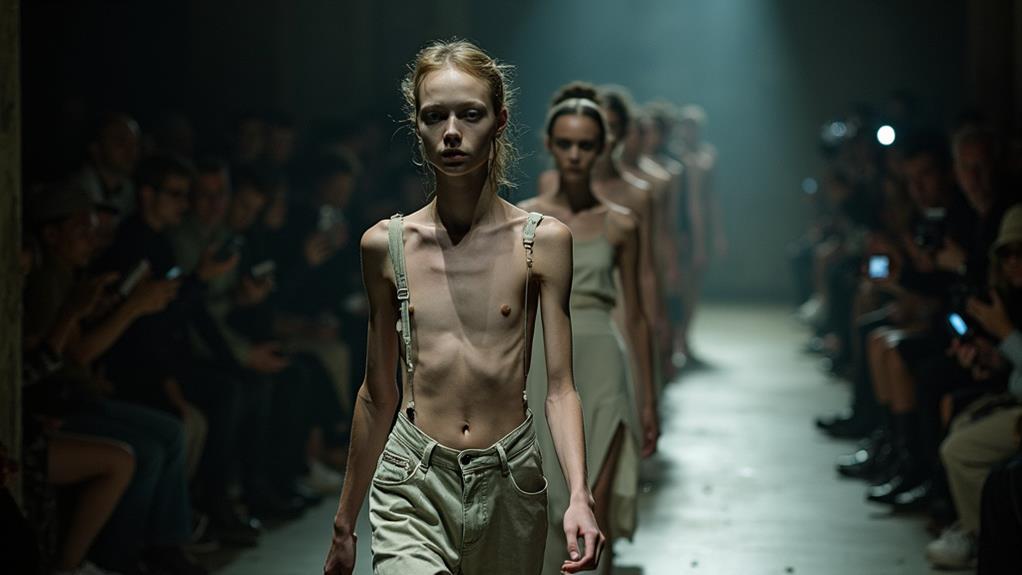
Influencers like Kate Moss and Gia Carangi didn't just shape the heroin chic aesthetic; they set the stage for a profound impact on the fashion industry. The 1990s saw fashion campaigns and magazine covers dominated by extremely thin models with pale skin and dark makeup, epitomized by the 1993 Calvin Klein campaign featuring Moss. This narrow definition of beauty didn't just change what you saw on the runway; it affected societal standards, contributing to a troubling rise in eating disorders among young women from 1990 to 1998.
The fashion industry's acceptance of heroin chic wasn't without backlash. Anti-drug organizations and public figures, including U.S. President Bill Clinton, criticized the glamorization of drug use. Despite these criticisms, the era's impact lingers. Even as the industry shifts towards more diverse body representations, the debate over using very thin models persists, particularly during recent fashion weeks.
This legacy of heroin chic keeps the conversation going about fashion brands' responsibility to promote healthy body images and mental health awareness. Amidst fluctuating beauty standards, the 1990s heroin chic aesthetic remains a crucial chapter in fashion history.
Media Representation
During the 1990s, the "heroin chic" aesthetic became a pervasive media phenomenon. Fashion magazines and campaigns, particularly those by Calvin Klein, prominently featured models with gaunt appearances, pale skin, and dark makeup. High-profile models like Kate Moss epitomized this trend, especially following her provocative 1993 Calvin Klein campaign.
The media's portrayal of heroin chic glamorized unhealthy thinness and a drug-infused lifestyle, contributing to a rise in eating disorders among young women from 1990 to 1998. This portrayal faced significant backlash. Anti-drug organizations and public figures, including U.S. President Bill Clinton, condemned the trend as harmful.
In 1997, the death of photographer Davide Sorrenti, linked to heroin use, intensified media scrutiny. This tragic event marked a pivotal moment, with Vogue declaring the end of the heroin chic era in 1999. This shift paved the way for more diverse body representations in media.
| Year | Event | Impact |
|---|---|---|
| 1993 | Kate Moss's Calvin Klein Campaign | Popularized heroin chic |
| 1997 | Death of Davide Sorrenti | Increased media scrutiny |
| 1998 | Rise in eating disorders among women | Highlighted negative impact of trend |
| 1999 | Vogue declares end of heroin chic | Shift towards diverse body representations |
This summary provides a clear, accurate, and concise overview of the heroin chic trend and its impact, maintaining semantic accuracy, completeness, and consistency.
Social Media and Public Reaction

Social media users have increasingly rejected the "heroin chic" aesthetic, advocating instead for body positivity and diverse beauty standards. Influencers are crucial in this movement, promoting various body types and raising mental health awareness. This trend signifies a broader cultural shift towards inclusivity and the rejection of harmful beauty ideals.
Social Media Backlash
Social media platforms like TikTok and Instagram are increasingly cracking down on content that glorifies eating disorders, reflecting a growing backlash against the harmful ideals linked to the heroin chic aesthetic. As this trend resurfaces, these platforms are shifting their approach to handle such content more responsibly. Influencers and body positivity advocates are using social media to combat this resurgence, promoting healthy body images and rejecting thinness as the sole standard of beauty.
Public outcry against the heroin chic aesthetic is amplified by social media campaigns that emphasize mental health and the dangers of substance abuse. These campaigns are crucial, especially for young audiences who are most vulnerable to these harmful ideals. Despite these efforts, young users often seek out "thinspo" content, revealing a troubling gap between the ideals promoted by social media and the reality of public health concerns.
The rise in body positivity movements has also led to increased scrutiny of brands that superficially adopt inclusive marketing strategies without making meaningful changes in their design processes. This has further fueled the backlash against the harmful ideals of heroin chic.
Body Positivity Movement
The body positivity movement has surged on social media, celebrating diverse body types and challenging the harmful "heroin chic" aesthetic of the 1990s. Platforms like TikTok and Instagram are filled with individuals embracing their bodies, rejecting extreme thinness, and advocating for healthier beauty standards. This movement has democratized discussions about body image, encouraging widespread participation.
However, critics argue that some brands exploit body positivity for marketing purposes, diluting its authentic message. While promoting inclusivity, many brands still prioritize traditional sizing, limiting genuine representation. Social media platforms have made efforts to restrict content promoting eating disorders, yet "thinspo" content occasionally slips through, creating ongoing challenges.
Young audiences increasingly reject outdated beauty standards, with body positivity influencers actively opposing the resurgence of unhealthy ideals. This cultural shift emphasizes the importance of mental health awareness and promoting a healthy body image, reinforcing that beauty exists in all shapes and sizes.
Influencer Impact
Influencer culture wields immense power in shaping public perceptions of beauty and body image. The resurgence of the "heroin chic" aesthetic in the 1990s wasn't just a fashion trend—it was amplified by social media platforms like Instagram and TikTok. Ultra-thin models and celebrities became the faces of this controversial look, sparking heated debates on body image and beauty standards.
Despite restrictions on content promoting eating disorders, young audiences still seek "thinspo" content, showcasing a troubling desire for thinness validation. Influencers often face backlash for promoting unhealthy ideals, leading to increased calls for body positivity and mental health awareness. The glamorization of the "heroin chic" look has prompted significant public reaction, with many advocating for the rejection of such beauty standards.
To counter this, the body positivity movement on social media emphasizes inclusivity and diverse body representations. Here's a quick comparison of the trends:
| Trend | Characteristics | Public Reaction |
|---|---|---|
| Heroin Chic | Ultra-thin, pale, edgy | Criticism and backlash |
| Thinspo Content | Thinness validation | Restrictions, yet persistent |
| Body Positivity | Inclusivity, diversity | Growing support and advocacy |
Health Implications
The health implications of the "heroin chic" aesthetic are both severe and far-reaching, often going unnoticed. This trend has been linked to rising rates of eating disorders, affecting around 28.8 million Americans, predominantly young women. The pressure to conform to these unrealistic beauty standards can lead to significant mental health issues, including anxiety and depression, particularly during teenage years.
The normalization of substance abuse through glamorized media images exacerbates the problem. Constant exposure to glorified thin bodies and drug use can reinforce negative body image and self-esteem issues, pushing individuals towards disordered eating and even addiction. The American Psychological Association emphasizes that such images promoting thinness and drug use can trigger unhealthy behaviors.
Public health experts warn that the glorification of the heroin chic aesthetic could worsen the opioid crisis. By desensitizing individuals to the dangers of substance abuse, it perpetuates a misleading narrative around drug use. Addressing these portrayals in fashion and media is crucial to breaking this harmful cycle. These images do not reflect reality and can have devastating health consequences.
Cultural Criticism

Few cultural trends have sparked as much controversy as the "heroin chic" aesthetic of the 1990s. Characterized by its glorification of extreme thinness and an unhealthy, gaunt appearance, this fashion trend faced severe criticism for promoting dangerous body ideals and glamorizing substance abuse. Critics argued that "heroin chic" contributed to a rise in eating disorders among young women, with the prevalence of these disorders increasing considerably throughout the decade.
High-profile figures, including U.S. President Bill Clinton, openly condemned the trend, highlighting its destructive influence. Clinton and others pointed out that "heroin chic" created a troubling perception of drug use as glamorous and desirable, a notion perpetuated by fashion campaigns featuring sickly-looking models. The term itself, coined by editor Ingrid Sischy after photographer Davide Sorrenti's death in 1997, underscored the dark connection between the fashion industry and substance abuse.
Anti-drug organizations and mental health advocates also voiced their concerns, emphasizing the negative mental health implications of such imagery. Despite the backlash, the resurgence of "heroin chic" elements in recent fashion shows has reignited fears about the impact of these harmful beauty standards on contemporary society's body image and mental health.
Grunge Connection
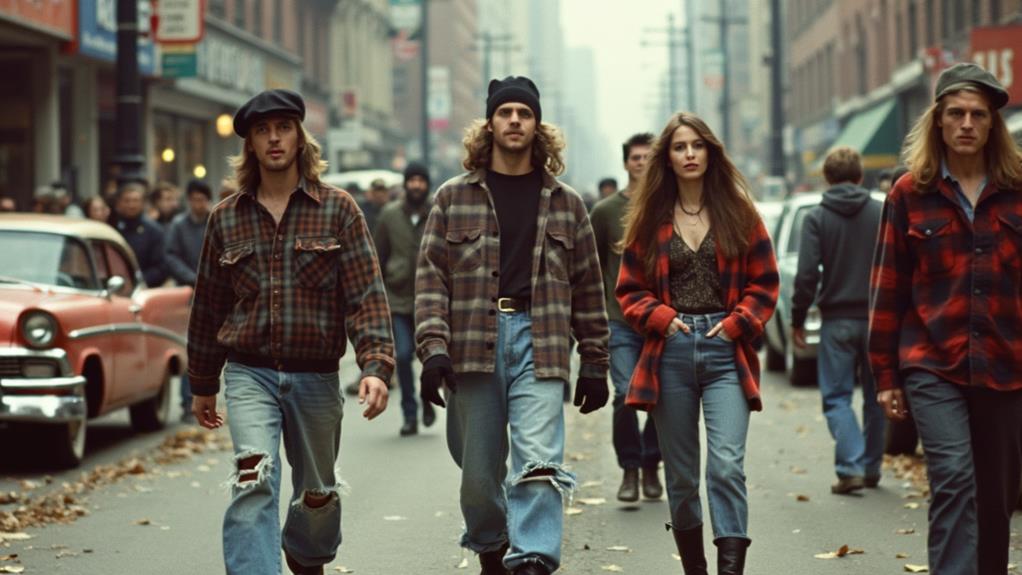
During the 1990s, the grunge music scene in Seattle emerged as a cultural phenomenon, prominently featuring artists like Kurt Cobain, who struggled with heroin addiction. Media of the period often associated Seattle with espresso, beer, and heroin, reflecting the nihilistic themes pervasive in grunge. This environment catalyzed the heroin chic aesthetic, characterized by gaunt appearances and dark makeup, mirroring the anti-establishment ethos of the grunge movement.
Grunge musicians frequently discussed their drug use openly, inadvertently glamorizing heroin and shaping public perceptions. This openness contributed to the allure of heroin chic, creating a visual representation of the grunge lifestyle. The gaunt look and a sense of dishevelment echoed the raw, unpolished sound of grunge music. Photos from that era clearly illustrate the connection between grunge and heroin chic.
This cultural link extended beyond fashion, sparking broader conversations about drug addiction in America. The grunge scene's raw portrayal of heroin use, both in music and personal narratives, significantly impacted societal attitudes towards substance abuse and fueled the heroin chic trend.
Marketing Exploitation

During the "heroin chic" era, marketing campaigns often exploited thinness, glamorizing unhealthy lifestyles to sell products. Even today, while some brands claim to be inclusive in their advertising, they often still prioritize traditional sizing in their collections. This superficial inclusivity can obscure the persistent influence of harmful beauty standards.
Superficial Inclusivity in Advertising
Fashion brands often proclaim their commitment to body positivity, but their actions frequently tell a different story. While advertisements may feature a diverse range of models, the runway still primarily showcases size small figures, reminiscent of the 1990s heroin chic aesthetic. This superficial inclusivity serves as a marketing ploy, criticized for prioritizing profit over genuine change.
Despite glossy campaigns, traditional sizing remains largely unchanged, alienating many consumers. Social media empowers individuals to highlight these inconsistencies, exposing the gap between brands' promises and their actions. Performative inclusivity often prioritizes brand loyalty over addressing real issues like body image and self-esteem.
Critics argue that this exploitation of body positivity dilutes its message, transforming a movement aimed at fostering mental health awareness into another marketing gimmick. Research indicates that while diverse body types in ads can boost brand loyalty, it doesn't address deeper problems. The fashion industry's commitment to inclusivity often remains at the surface, perpetuating harmful beauty standards rather than dismantling them. So, next time you see an ad, ask yourself: Is this genuine change, or just another sales tactic?
Thinness as a Selling Point
Fashion brands often leverage thinness as a key selling point, capitalizing on societal pressures around body image to boost sales. This trend was particularly evident in the 1990s with the "heroin chic" aesthetic. Brands like Calvin Klein used extremely thin models, such as Kate Moss, to set a standard of desirability. The waifish look was not just a fashion statement but a strategic marketing move that positioned thinness as an aspirational quality.
Calvin Klein's 1993 campaign was notably influential, making thinness synonymous with beauty and success. This marketing choice had a profound impact, with thin models featured prominently on billboards and in magazines, reinforcing the idea that extreme thinness was the pinnacle of attractiveness. Unfortunately, this glamorization had severe consequences, contributing to a significant increase in eating disorders among young women during that decade.
Despite growing awareness of the mental health issues tied to body image, many fashion brands today still utilize thinness in their advertising. They continue to exploit societal pressures, using thin models to appeal to an audience conditioned to see thinness as the ultimate goal. This practice perpetuates harmful beauty standards, keeping thinness at the forefront of fashion marketing.
Legacy and Evolution
The legacy of the heroin chic aesthetic is undeniable, having left a significant mark on the fashion industry and societal perceptions of beauty. Emerging in the 1990s, this look, characterized by extremely thin models with pale skin and dark makeup, was popularized by figures like Kate Moss and Calvin Klein's 1993 campaign. Despite its initial allure, the heroin chic trend was linked with the glamorization of drug use, leading to considerable backlash over its detrimental impacts on body image and mental health.
Public criticism grew after editor Ingrid Sischy coined the term "heroin chic" in the late 1990s, especially following the death of photographer Davide Sorrenti. This incident marked a pivotal moment, prompting the fashion industry to reassess its standards. By the late 1990s, models like Gisele Bündchen signified a shift towards healthier and more diverse body representations.
Nevertheless, the influence of heroin chic persists. Recent fashion shows, including those at New York Fashion Week, have sparked concerns about the resurgence of ultra-thin models. The ongoing dialogue about body image remains crucial, highlighting four key impacts:
- Increased awareness of mental health issues.
- Greater diversity in beauty standards.
- Ongoing debates about model health.
- Continued scrutiny of fashion industry practices.
These discussions underscore the need for continued vigilance and advocacy for healthier and more inclusive beauty standards.