The 1970s Craze for Crochet and Macramé Clothing
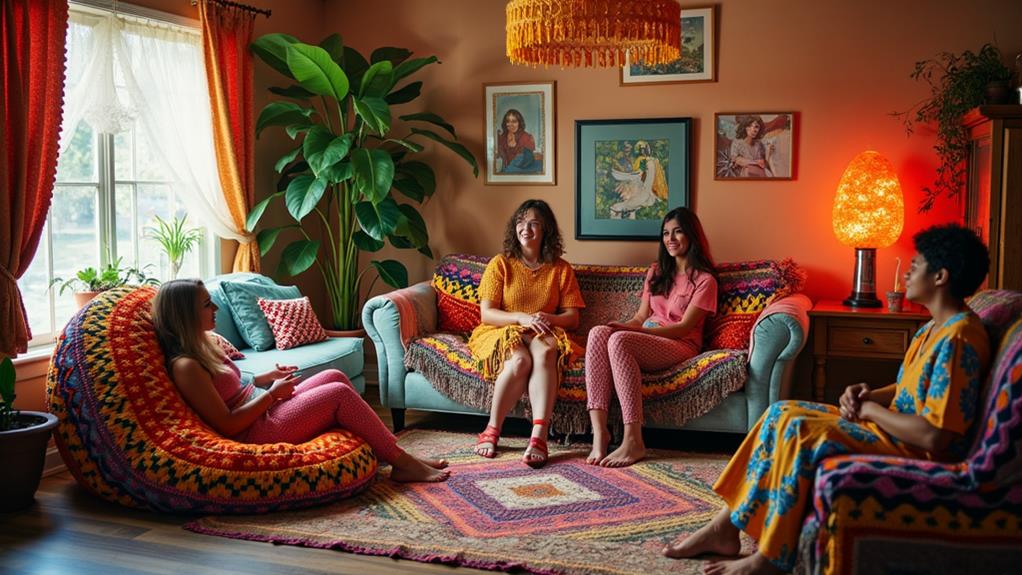
Imagine yourself immersed in the vibrant 1970s, an era where creativity and self-expression dominated the fashion scene. Crochet and macramé clothing were more than just trends; they symbolized individuality and a departure from conventional styles. Influential figures like Cher and Stevie Nicks transformed these handmade garments into iconic fashion statements, igniting a widespread movement. But what exactly made these intricate designs so captivating, and how did they impact the crafting communities of the time? Delving into this dynamic period offers a unique insight into how fashion can both shape and reflect cultural values.
Crafting Trends of the 1970s
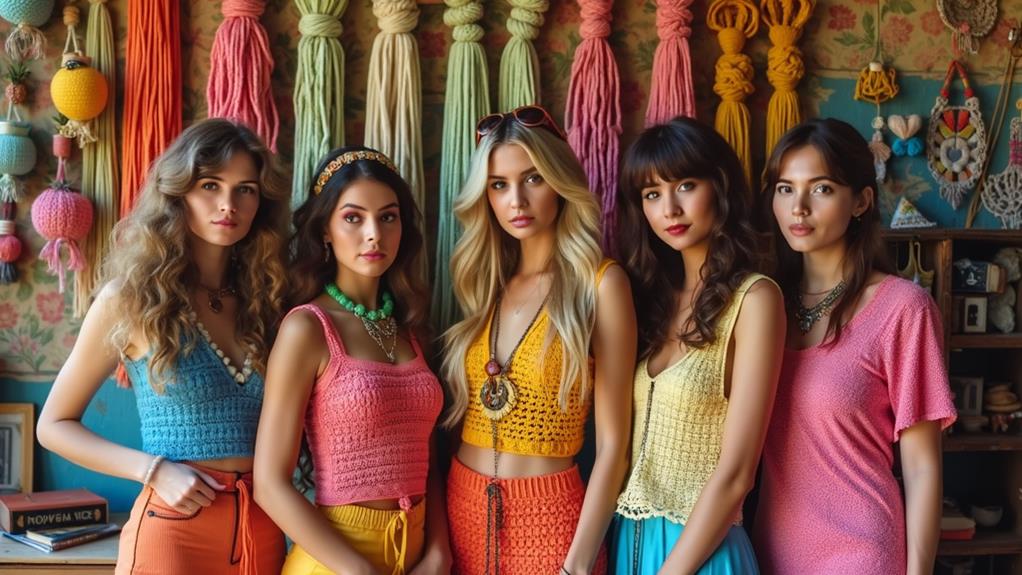
In the 1970s, crafting trends reflected the era's emphasis on personal expression and handmade aesthetics. Crochet clothing became a significant part of pop culture, extending beyond accessories to include vests, hats, and dresses, showcasing creativity and individuality. This trend aligned with the period's love for unique, handcrafted styles.
Macramé also gained popularity, with plant hangers becoming especially common, bringing a touch of nature indoors while highlighting crafting skills. These intricate designs were not limited to plant holders; wall hangings and decorative owls were also popular, adding a bohemian flair characteristic of the '70s.
The decade saw the introduction of Shrinky Dinks in 1973, captivating children by allowing them to create and transform their designs. Love beads, often associated with the hippie movement, enabled the crafting of personalized jewelry, aligning with the period's focus on self-expression through art. These trends collectively highlighted the 1970s as a golden era for crafting.
Popular Crochet Clothing
Crochet clothing truly gained momentum in the 1970s, evolving from simple accessories to everyday items like vests, dresses, and even hot pants. This trend was driven by the hippy culture of the time, which celebrated self-expression and individuality. Crochet allowed for the creation of unique, colorful designs, perfectly aligning with the fashion ethos of the era.
Celebrities such as Cher and Stevie Nicks played a significant role in bringing crochet into the mainstream. Their stylish crochet outfits inspired many to take up crocheting and create their own garments. It wasn't just about the appearance; it was about the personal touch and creativity that each piece embodied.
Macramé in Home Decor
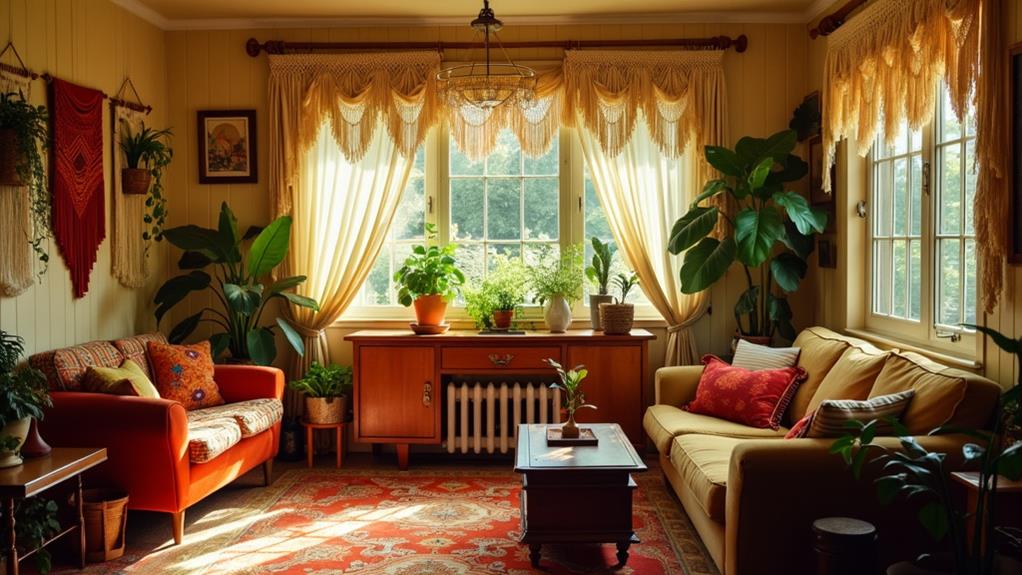
In the 1970s, macramé became a staple in home decor, featuring items like wall hangings, plant hangers, and tablecloths that embodied a bohemian vibe. DIY macramé kits were widely available, allowing people to craft unique pieces and add a personal touch to their homes. Decorative owls were especially popular, showcasing the playful charm of handmade artistry.
Popular Macramé Decor Items
The 1970s saw macramé's intricate knot patterns bring unique texture and style to home decor, making it a beloved craft among DIY enthusiasts. One of the most iconic macramé decor items from this period was the wall hanging, which often featured elaborate designs that turned blank walls into visual focal points. Unlike mass-produced decor, these handmade items added a personalized touch to any room.
Another popular macramé item was the plant hanger. These hangers displayed indoor plants in a stylish, bohemian manner, freeing up floor space and adding a natural element to the home. The resurgence of macramé also led to the popularity of DIY kits, making it easy to create your own macramé projects.
Decorative macramé owls and other animal figures became quirky home accents, often placed in living rooms or entryways. The versatility of macramé didn't stop there; table runners, curtains, and even furniture accents were crafted from this durable yet elegant material. Fundamentally, macramé was a staple in 1970s interior design, offering endless creative possibilities.
DIY Macramé Projects
Macramé's intricate designs gained popularity in 1970s home decor and have since become a favorite for modern DIY enthusiasts looking to personalize their spaces. From wall hangings and plant holders to curtains, macramé's versatility allows you to create a variety of decorative items. Using sustainable materials like cotton, jute, and hemp, you can find options that align with both your aesthetic and environmental values.
Starting with beginner projects is an excellent way to immerse yourself in macramé. Basic knots such as the square knot and lark's head knot serve as foundational techniques. These simple patterns help you build your skills and confidence, preparing you to tackle more complex designs. Twisted rope offers strength for larger pieces, while softer string is ideal for tighter, more detailed knots.
DIY macramé kits are widely available, making it easy to begin your crafting adventure. These kits typically include all the materials and instructions needed to create personalized home decor pieces. With the resurgence of 1970s aesthetics and bohemian style, macramé is experiencing renewed interest, with contemporary designers incorporating it into their collections.
Needlepoint and Gender Norms
In the 1970s, needlepoint challenged traditional gender norms, partly due to influential male crafters like Rosey Grier. His book "Needlepoint for Men" broke barriers, encouraging men to explore this craft without stigma. This shift broadened needlepoint's appeal and reflected the period's evolving views on masculinity and creativity.
Breaking Gender Barriers
In 1973, Rosey Grier, a former NFL player, published "Needlepoint for Men," challenging traditional gender norms by inviting men to engage in a craft typically associated with women. Initially met with skepticism, Grier's book played a pivotal role in normalizing needlepoint among men, expanding the craft's audience and allowing men to explore new forms of gender expression.
By embracing needlepoint, men contributed to a broader movement in the 1970s that promoted inclusivity in crafting. This shift enabled individuals to express their creativity without societal stigma. As more men took up needlepoint, the crafting community became more diverse, fostering camaraderie among crafters of all genders.
Key impacts of this cultural shift include:
- Gender Expression: Men discovered a new avenue for creative expression.
- Crafting Identity: Needlepoint's identity expanded beyond traditional gender roles.
- Societal Perceptions: The acceptance of men in needlepoint reflected evolving views on gender roles.
This inclusive movement reshaped the crafting landscape of the 1970s, making it more welcoming for everyone.
Influential Male Crafters
Rosey Grier's groundbreaking book "Needlepoint for Men," published in 1973, was more than just a guide to crafting; it was a bold challenge to rigid gender norms. By promoting needlepoint as a hobby for men, Grier encouraged male participation in crafting activities, helping to normalize needlepoint among men and sparking broader interest in male artisanship.
As more men embraced needlepoint, they fostered a more inclusive crafting community. This acceptance contributed to a cultural shift in the 1970s, allowing men to engage in traditionally feminine crafts without facing stigma. This trend paralleled larger feminist movements of the time, questioning and redefining societal expectations surrounding gender roles.
Grier's influence extended beyond needlepoint, highlighting crafting as a form of self-expression and creativity that transcends gender boundaries. His work, alongside the rise of other male crafters, had a significant cultural impact, proving that crafting could be enjoyed by anyone, regardless of gender. This shift enriched crafting communities and contributed to a more inclusive and diverse cultural landscape.
Shrinky Dinks Craze

The 1970s are often remembered for their distinctive crochet and macramé clothing trends, but another crafty craze also captured the imaginations of children and parents: Shrinky Dinks. Introduced in 1973 by two creative housewives, Shrinky Dinks allowed kids to color thin plastic sheets that magically shrank in the oven while retaining their original designs. This unique effect, where the plastic reduced to about one-third of its original size, fascinated everyone.
Original Shrinky Dinks kits offered a variety of designs for coloring, encouraging artistic expression and customization. The craft quickly gained popularity due to its interactive and creative nature, becoming a favorite pastime for kids. The appeal wasn't just in the finished product but also in the process, which turned simple coloring into an exciting transformation.
Kids used Shrinky Dinks to create everything from keychains to jewelry. Even today, Shrinky Dinks remain a nostalgic symbol of 1970s childhood and continue to be available in stores, showcasing their lasting appeal.
Here's a quick overview of why Shrinky Dinks were so beloved:
- Interactive Crafting: Engaged kids with hands-on creativity.
- Artistic Expression: Encouraged customization and artistic skills.
- Nostalgic Memories: Fondly remembered by those who enjoyed them in the 1970s.
Love Beads and Self-Expression
Love beads, vibrant and colorful, epitomized self-expression in the late 1960s and early 1970s. Crafted from materials like wood, glass, and plastic, these beads allowed individuals to create personalized necklaces and bracelets that showcased their individuality. Rooted in hippie culture, love beads symbolized peace, love, and a rejection of mainstream societal norms.
Making these beads wasn't just a solitary activity; it fostered lively crafting communities. People gathered to share techniques, ideas, and stories, creating a sense of unity and shared purpose. These communities thrived on the DIY spirit, making bead-making a social and collaborative experience.
The cultural significance of love beads extended beyond mere fashion. Worn at music festivals and complementing tie-dye clothing, these accessories were statements of personal beliefs and values. The endless customization options allowed individuals to reflect their unique personalities and ideals, making love beads a powerful tool for self-expression during the transformative era of the 1970s.
Fashion Influences of the 1970s
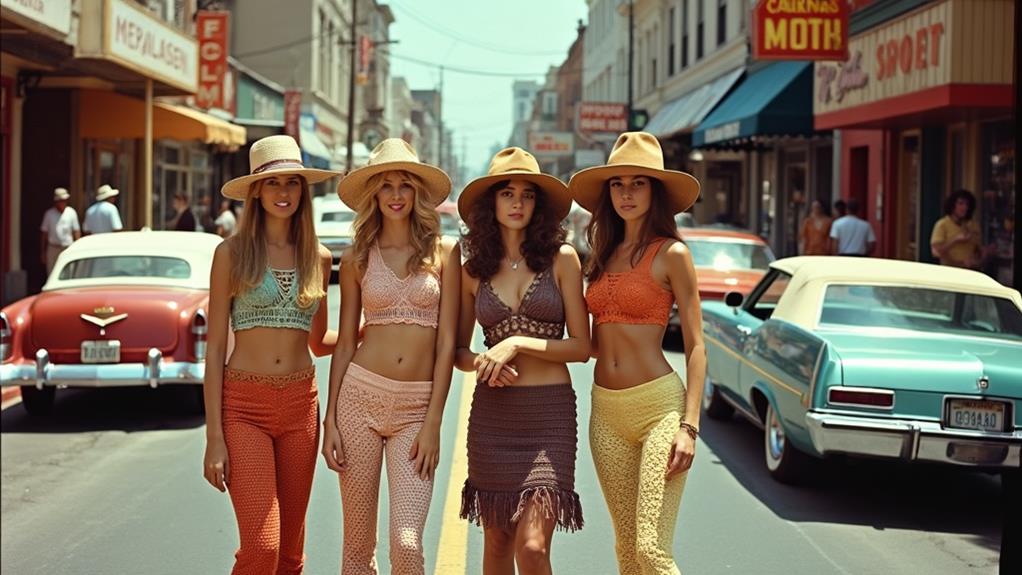
In the 1970s, fashion embraced bold patterns and vibrant colors, mirroring the era's spirit of self-expression. As traditional gender norms were increasingly questioned, designers and cultural icons promoted DIY crafts like crochet and macramé. This shift not only made fashion more inclusive but also highlighted the appeal of handcrafted clothing.
Bold Patterns and Colors
Embracing the vibrant spirit of the 1970s, fashion was defined by bold patterns and bright colors that celebrated life and individuality. Crochet clothing became iconic, featuring intricate designs and vivid hues, symbolizing the era's dynamic energy. Tie-dye was also widespread, often paired with colorful crochet items, representing the counterculture movement and a desire for self-expression.
Fashion icons like Cher and Stevie Nicks popularized these styles, demonstrating how bold patterns and bright colors could be both trendy and expressive. Their influence made crochet vests, ponchos, and dresses adorned with geometric patterns and floral motifs highly sought after. These garments echoed the psychedelic aesthetic of the decade, making a statement with every wear.
Textile techniques were essential in bringing these bold designs to life. The intricate crochet patterns and tie-dye methods were not just about fashion; they were about making a statement. The influence of hippie culture further embraced this colorful and eclectic style with love beads and crocheted accessories.
Key Elements of 1970s Fashion:
- Bold Patterns: Geometric and floral motifs dominated.
- Bright Colors: Tie-dye and vivid hues symbolized self-expression.
- Fashion Icons: Celebrities like Cher and Stevie Nicks set trends.
Gender Norms Challenged
During the 1970s, traditional gender norms in fashion underwent a significant transformation. This era saw an increase in fluid gender expression, with crafting communities playing a pivotal role. The publication of Rosey Grier's "Needlepoint for Men" in 1973 was a groundbreaking moment, encouraging men to engage in needlepoint and broadening the cultural significance of crafting.
Crochet clothing, embraced by both men and women, broke down gender barriers. Unisex staples like vests and ponchos became popular, reflecting the period's counterculture movement. This rise in unisex fashion allowed individuals to express themselves freely, regardless of gender.
Male celebrities like Elton John and David Bowie adopted crocheted and macramé garments, making these styles more mainstream and challenging conventional fashion norms. Their public personas and bold fashion choices helped normalize these garments across genders, emphasizing the cultural significance of this shift.
Looking back, the acceptance of crafting and DIY culture in the 1970s fostered creativity and supported more inclusive fashion choices. This era allowed people to break free from conventional gendered clothing norms, paving the way for future fashion revolutions.
DIY Craft Revolution
The 1970s DIY craft revolution significantly transformed fashion, making crochet and macramé iconic symbols of individuality and self-expression. Crochet vests, ponchos, and dresses became ubiquitous, often inspired by cultural icons like Cher and Stevie Nicks. This era's fashion was about more than aesthetics; it showcased personal creativity and the joy of handmade craftsmanship.
Crafting communities flourished, as people exchanged vintage patterns and created unique pieces that stood out. The publication of "Needlepoint for Men" by Rosey Grier in 1973 broadened the appeal of crafting, making it more inclusive. Joining a DIY craft kit project allowed people to feel part of a larger movement.
Three key influences of the 1970s DIY craft revolution include:
- Crafting Communities: These groups thrived on sharing tips and patterns, fostering a sense of belonging and collaboration.
- Vintage Patterns: Revived old-school designs breathed new life into traditional techniques and styles.
- Sustainable Materials: The use of natural and recycled fibers reflected the growing environmental consciousness of the period.
Crafting Challenges
Many crafters in the 1970s faced significant challenges when creating crochet and macramé clothing. Sizing issues were common, as achieving the perfect fit often proved tricky due to variations in tension and pattern instructions. To address this, experienced crafters developed solutions like creating swatches to test tension and altering patterns based on personal measurements. As a novice, you might appreciate tips such as beginning with simpler projects and gradually advancing to more complicated designs to build confidence and skill.
Maintaining consistent tension is fundamental for achieving uniform stitches, which directly impacts the final fit and appearance of your crochet garments. Practice and patience are key; don't be discouraged if your initial attempts aren't perfect.
Macramé presented its own set of difficulties, especially for newcomers. Complex patterns could be overwhelming, often leading to frustration. It's important to start with basic knots and simpler projects to avoid feeling discouraged. Remember, crafting is an adventure, and each mistake is a step toward mastering the art of crochet and macramé. Stick with it, and you'll find the process rewarding.
Nostalgic Memories

Many people fondly remember the 1970s as a time when crafting crochet items and macramé pieces brought families closer together. These moments spent weaving intricate patterns weren't just about the final product, but about the family bonding that occurred. Gathered around the living room, they shared stories and laughter, passing down crafting techniques from one generation to the next.
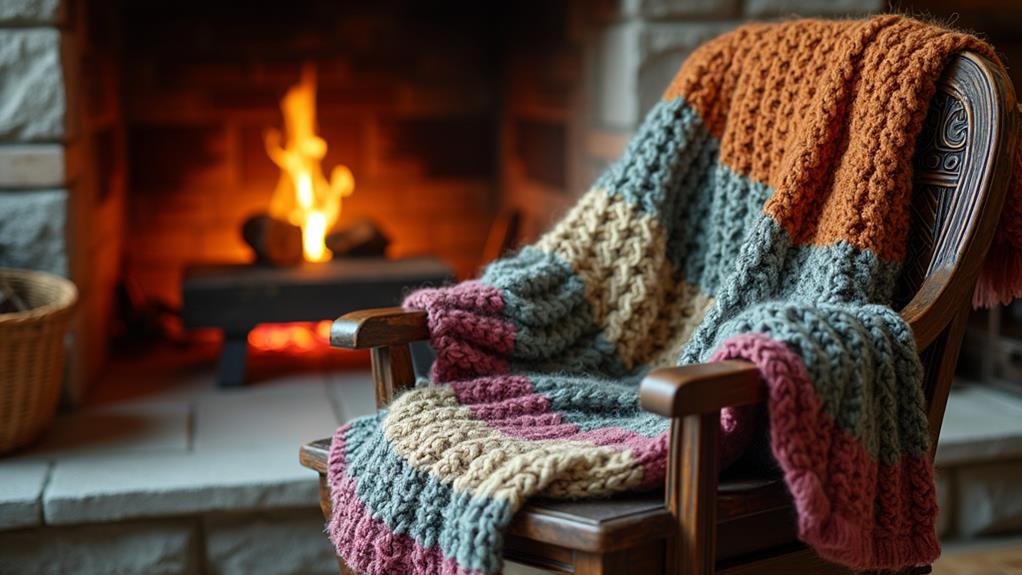
Handmade crochet gifts, like afghans and clothing, carried a personal touch that fostered a sense of community. These items were symbols of love and connection, exchanged among friends and neighbors. This creative nostalgia brings back memories of simpler times, when lively crochet and macramé styles epitomized the playful spirit of the decade.
Crafting sessions often doubled as communal gatherings, where participants shared patterns and techniques, enriching the collective tapestry of their social circle. The joy of these gatherings was palpable, turning each session into a trove of communal memories.
Key elements of these nostalgic memories include:
- Family bonding over shared creative projects.
- Creative nostalgia for lively 1970s styles.
- Communal gatherings that fostered community and connection.
These cherished memories continue to inspire and resonate with many today.
Modern Revival of Crochet and Macramé
Have you ever wondered why crochet and macramé are making a big comeback? The resurgence of 1970s aesthetics in fashion and home decor has played a significant role, drawing designers and consumers alike to the unique charm and creativity of retro styles. Sales of crochet items have surged, reporting an impressive 81% year-on-year increase, reflecting a strong interest in nostalgic fashion trends.
Social media platforms are buzzing with DIY crochet and macramé projects, nurturing lively crafting communities. These online spaces are perfect for sharing crochet techniques and macramé patterns, making it easier than ever to learn and connect.
| Influencers | Impact |
|---|---|
| Harry Styles | Renewed interest in DIY crochet |
| Social Media | Fostering crafting communities |
| Online Kits | Accessibility and skill development |
Celebrity endorsements, like those from Harry Styles, have also ignited renewed interest in handmade garments and accessories. The accessibility of online tutorials and crafting kits has made these crafts appealing to a new generation of enthusiasts. These platforms encourage skill development and community engagement through shared experiences. Whether you're a seasoned crafter or a newbie, there's never been a better time to immerse yourself in the world of crochet and macramé.