The 1960s Space Age Fashion: Metallics and Futuristic Designs
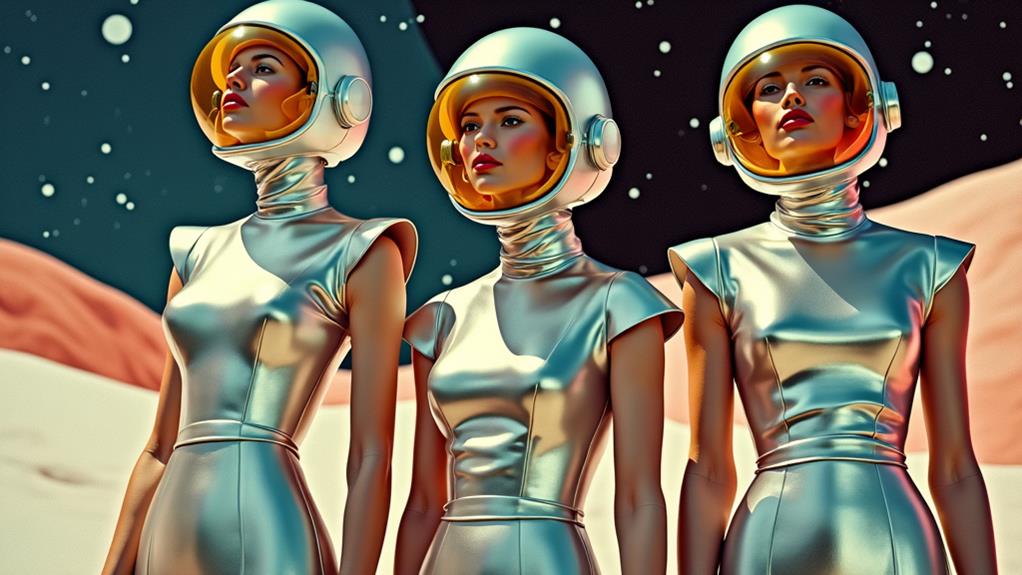
Imagine the 1960s, an era where space exploration captivated global attention, and designers like Pierre Cardin and André Courrèges revolutionized fashion with metallics and futuristic designs. Cutting-edge materials such as PVC and lamé created sleek, geometric silhouettes that pushed the boundaries of traditional fashion and embraced modernity. These unisex styles challenged gender norms and significantly influenced the cultural landscape. Curious how these bold choices shaped contemporary trends? Let's delve into these designers' groundbreaking creations and their enduring impact on fashion.
Historical Context
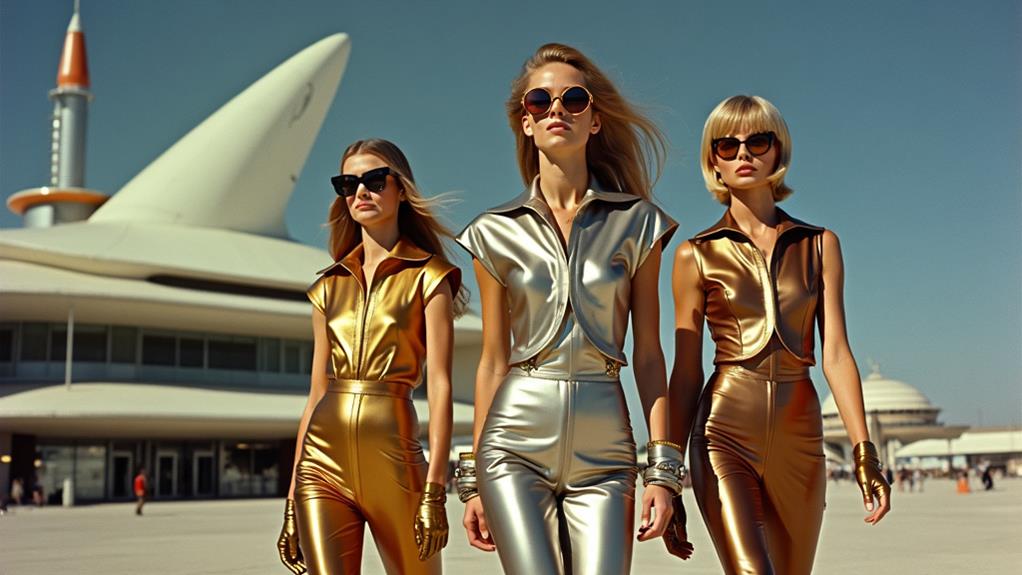
In the 1960s, a period marked by groundbreaking innovation and discovery, the Apollo 11 mission's successful Moon landing in 1969 electrified public imagination. This era of space exploration captivated not only scientists but also permeated all aspects of culture, notably influencing fashion. Space Age fashion emerged as a direct response to the societal shifts and aspirations of the time, with designers drawing inspiration from the cosmos to create futuristic designs that broke free from traditional norms.
The excitement surrounding space exploration propelled fashion into new realms. Influential films and television shows like "2001: A Space Odyssey" showcased futuristic themes, further fueling the movement. Designers began utilizing new materials and construction techniques to create sleek, modernist silhouettes emblematic of Space Age fashion. The use of metallic fabrics, plastics, and geometric shapes became common, all aimed at evoking the thrill of a high-tech future.
Unisex silhouettes were another hallmark of this era, challenging traditional gender norms in clothing. These futuristic designs not only looked forward but also embodied a society eager to break boundaries and discover new frontiers, much like the astronauts venturing into space.
Pierre Cardin's Innovations
Pierre Cardin's Innovations
When you think of space-age fashion, Pierre Cardin's groundbreaking silver vinyl ensembles instantly come to mind. His sharp, modernist silhouettes, crafted from shimmering lamé, captured the futuristic vision of the 1960s. Cardin's inventive designs, particularly the unisex styles in his Cosmocorps collection, redefined fashion norms and left an enduring legacy.
Space-Age Fashion Visionary
Pierre Cardin, a visionary in space-age fashion, revolutionized the industry with his 1963 Cosmocorps collection. Embracing the allure of space, Cardin crafted silver vinyl ensembles and sharp, modernist silhouettes that epitomized the futuristic aesthetic of the 1960s. His groundbreaking designs not only captivated audiences but also sparked the imagination, leaving a lasting impact on the fashion world.
Cardin's innovative use of shimmering lamé and geometric shapes pushed the boundaries of traditional garments. His work marked a significant departure from the norm, emphasizing sleekness and a forward-thinking approach to both form and material. This evolution in design was not merely about clothing; it represented a new mindset.
Cardin's designs were embraced by the public and iconic figures such as Mia Farrow and The Beatles, solidifying his influence. He played a pivotal role in blurring gender lines in fashion, introducing unisex silhouettes that reflected the cultural shifts of the era. His legacy continues to inspire modern designers, proving that his ideas were truly ahead of their time.
Iconic 1960s Silhouettes
The 1960s witnessed iconic silhouettes, largely due to Pierre Cardin's revolutionary designs. Cardin introduced sharp, modernist silhouettes with materials like shimmering lamé and silver vinyl, epitomizing the decade's futuristic aesthetics. His 1963 Cosmocorps collection was transformative, presenting space-age looks that captivated a generation.
Icons like Mia Farrow and The Beatles often donned Cardin's avant-garde creations, solidifying his influence. These unisex designs didn't just make fashion statements; they challenged traditional gender norms, heralding the future of clothing. Cardin's work was about redefining fashion itself, not just looking forward.
While Paco Rabanne also gained attention with his metal and plastic designs, it was Cardin who laid the groundwork for avant-garde styles and materials. His legacy continues to inspire contemporary designers, pushing the limits of fashion. Cardin's impact on the industry is undeniable, and his 1960s silhouettes remain a testament to his visionary approach. For anyone passionate about fashion, his contributions are indispensable.
André Courrèges' Impact
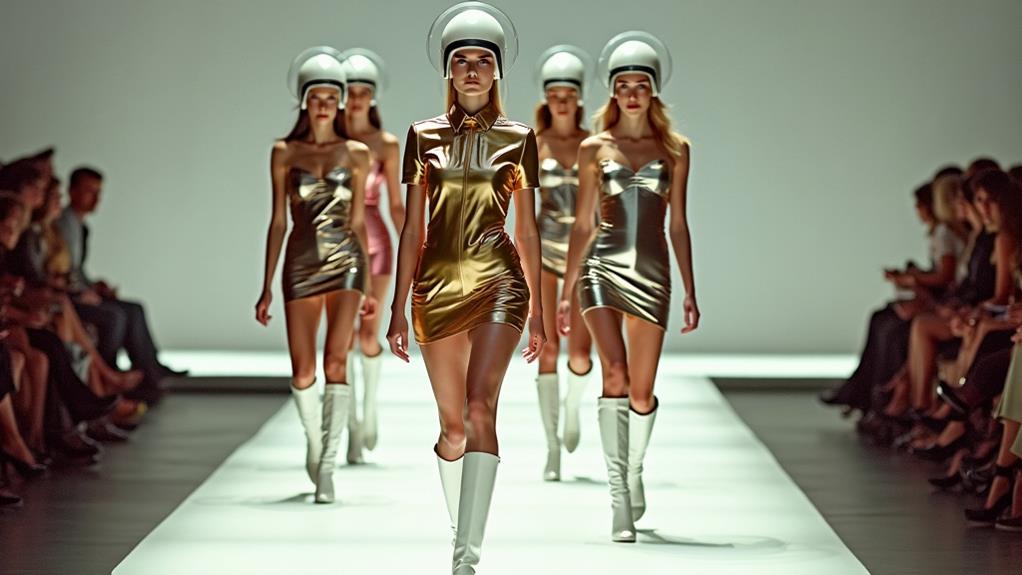
André Courrèges transformed 1960s fashion by introducing futuristic aesthetics that redefined the era's style. With a background in civil engineering, Courrèges revolutionized garment construction through innovative techniques, ushering in the bold, modern look synonymous with the Space Age.
In spring 1964, Courrèges unveiled his iconic "Moon Girl" collection, featuring go-go boots and high-shine PVC. This collection captivated a generation looking towards the future. His designs, particularly the stiff A-line skirts made from glossy materials, highlighted the fusion of modernity and space-inspired glamour.
Courrèges also challenged traditional fashion norms by incorporating gender-neutral elements in his designs as early as 1961. This transformative approach broke down barriers between male and female fashion, setting a new industry standard. His intergalactic-themed designs continued to influence fashion well into the 1990s, demonstrating his enduring impact beyond the 1960s.
Paco Rabanne's Creations
Paco Rabanne's creations in the 1960s redefined fashion by using unconventional materials with daring innovation. Known for his avant-garde approach, Rabanne introduced mini shift dresses crafted from chain mail, merging fashion with an armor-like aesthetic. His 1966 collection, "12 Unwearable Dresses," featured plastic and metal discs, creating a provocative and futuristic look.
Rabanne pushed the limits of traditional clothing, often drawing comparisons to designer Pierre Cardin, another proponent of futuristic designs. However, Rabanne's work stood out for its boldness and innovation, often resembling extraterrestrial warriors and blending historical and futuristic elements.
Rabanne's influence extended beyond the runway, inspiring iconic imagery in pop culture, particularly in the 1968 film "Barbarella," where his avant-garde costumes became legendary. Key highlights of Rabanne's contributions to Space Era fashion include:
- Mini shift dresses made from chain mail.
- The "12 Unwearable Dresses" collection.
- Iconic costumes for "Barbarella."
Rabanne's legacy is a testament to the power of innovation in fashion.
Reed Crawford's Helmets

Rabanne's bold advancements in fashion set a high bar for futuristic design, and Reed Crawford took up the challenge with his striking helmet-hat hybrids. Crawford introduced these unique creations as key features of 1960s fashion, merging functionality with futuristic aesthetics. His most notable piece, the Dollar Princess hat, debuted at a London hat show in 1966 and instantly garnered attention. This groundbreaking design combined elements of a half-visor and half-space helmet, reflecting the period's fascination with space exploration and advanced technology.
What made the Dollar Princess hat even more remarkable was Crawford's choice of materials. Crafted from silver milk bottle tops, it showcased his ability to creatively use unconventional materials, pushing the boundaries of traditional millinery. Crawford's designs perfectly represented the space-age fashion movement, capturing the imagination and forward-thinking spirit of the 1960s.
These helmet-hat hybrids became iconic, symbolizing the stylistic shift towards more avant-garde and imaginative headwear. Reed Crawford didn't just create hats; he crafted statements that encapsulated the futuristic dreams and technological aspirations of the time. His work remains a tribute to the daring and pioneering spirit of 1960s fashion.
Thierry Mugler's Cosmic Styles
Thierry Mugler's cosmic styles are truly enchanting, especially with his signature star motifs that add a celestial flair to fashion. His designs often featured futuristic feminine silhouettes, incorporating bold shoulder pads and metallic fabrics. Mugler's work from the 1980s, characterized by its dramatic forms and theatrical elements, has left a lasting impact on the space-age fashion narrative.
Star Motif Embellishments
Thierry Mugler's 1986 Paris Fashion Week collection brought a mesmerizing cosmic flair to the runway with star motifs that shimmered under the lights, capturing the essence of the Space Age aesthetic. These star embellishments weren't mere accessories; they epitomized the era's fascination with the cosmos. Mugler's designs frequently showcased bold, glamorous elements that blended 1980s fashion with futuristic visions, making his pieces unforgettable.
Star motifs adorned various outfits, from dresses to jackets. Mugler's use of metallic fabrics like gold and silver lamé, combined with large, boxy shoulder pads, created a dramatic, celestial vibe. This wasn't just fashion; it was a statement reflecting the cultural obsession with space exploration.
Key elements of Mugler's star motif embellishments included:
- Bold Fabrics: Gold and silver lamé enhanced the star motifs, creating an ethereal glow.
- Shoulder Pads: Large, boxy shoulder pads added a futuristic silhouette, aligning with the cosmic theme.
- Star Accents: These were central to each piece, making them standout features.
Mugler's cosmic styles echoed a broader fascination with space, seamlessly blending femininity and futurism.
Futuristic Feminine Silhouettes
Mugler's 1986 Paris Fashion Week collection captivated audiences with its innovative take on futuristic feminine silhouettes. His cosmic-inspired styles featured pronounced, boxy shoulder pads and intricate star motifs, creating a look that combined elegance with creativity. By using metallic fabrics like gold and silver lamé, Mugler enhanced the otherworldly allure of his designs, seamlessly blending Space Age aesthetics with Haute Couture.
Mugler's approach mirrored the excitement of the space race, emphasizing bold, geometric shapes that both flattered and elongated the female form. His designs depicted a powerful yet graceful modern woman, embodying strength and sophistication. The space-era vixen theme was a recurring element in his collections throughout the 1980s, where femininity and avant-garde elements converged.
The lasting impact of Mugler's cutting-edge silhouettes and use of unconventional materials is significant. He redefined how feminine designs could incorporate futuristic concepts, profoundly influencing the evolution of modern fashion.
| Element | Description | Impact |
|---|---|---|
| Shoulder Pads | Pronounced, boxy | Created a strong, futuristic silhouette |
| Metallic Fabrics | Gold and silver lamé | Increased otherworldly appeal |
| Geometric Shapes | Bold and flattering | Emphasized elegance and power |
| Star Motifs | Intricate details | Added cosmic flair, tying to space race |
Mugler's cosmic styles remain a testament to the creative spirit of the 1960s Space Age fashion.
Design Characteristics
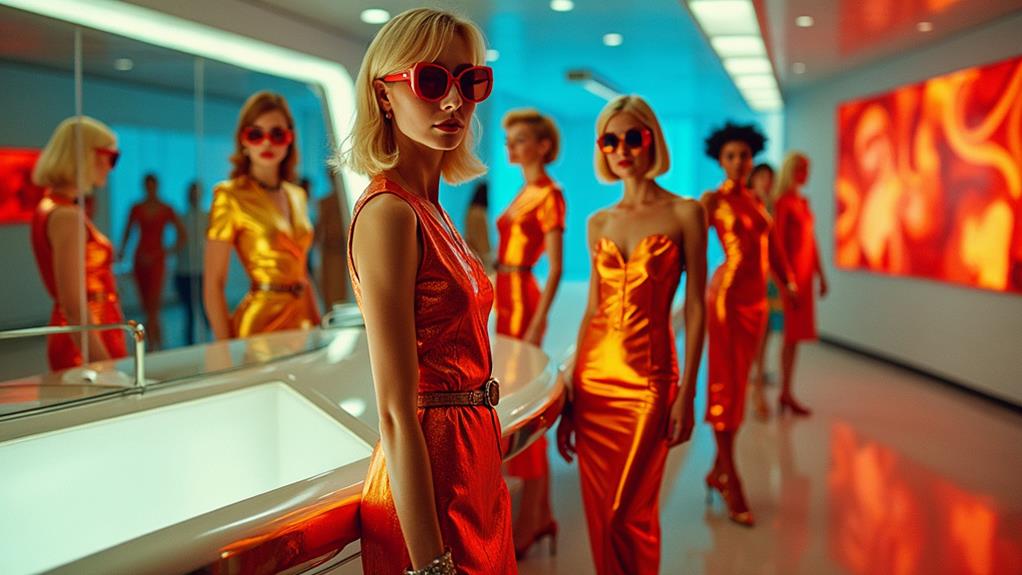
Space Period fashion in the 1960s embraced a sleek and futuristic aesthetic, marked by modern, color-neutral silhouettes. Designers pushed boundaries with unconventional materials like high-shine PVC and metallic fabrics, giving garments a bold, reflective quality that mirrored the era's fascination with space exploration and technological innovation.
Geometric designs were prominent, shaping the era's silhouettes. A-line and mini shift dresses emphasized clean, abstract forms, creating a modern and forward-thinking style. Key characteristics of 1960s Space Period fashion include:
- Metallic Fabrics: Extensively used to add a futuristic sheen to outfits, capturing the Space Period's spirit.
- Geometric Designs: Popular abstract shapes like A-line and mini shift dresses emphasized simplicity and modernity.
- Innovative Accessories: Vinyl boots, helmets, and plastic goggles completed the space-inspired look, making it functional and stylish.
Bright, metallic hues dominated the color palette, reinforcing the visual connection to space and technology. This period's fashion not only reflected contemporary times but also looked ahead, embodying the excitement and curiosity of a new frontier.
Cultural Impact
The cultural impact of 1960s spaceflight fashion was profound, shaping the era's style and challenging societal norms. Designers embraced futuristic aesthetics, resonating with the youth culture and broader societal shifts. The use of metallics and innovative materials in spaceflight fashion captured the collective imagination, pushing boundaries and breaking away from traditional fashion norms.
This influence was evident everywhere, from expressive street styles to iconic films like "Barbarella" and "2001: A Space Odyssey." These movies didn't just showcase spaceflight fashion; they embedded its aesthetic into popular culture, shaping public perceptions of style.
The movement also catalyzed change in clothing perception regarding gender. Unisex silhouettes became popular, challenging long-standing gender norms and paving the way for more inclusive designs in subsequent decades.
Even beyond the 1960s, the bold designs and materials of spaceflight fashion continued to inspire. The fascination with futuristic themes and the use of metallics remain influential in contemporary fashion, reflecting an enduring legacy.
Legacy and Evolution
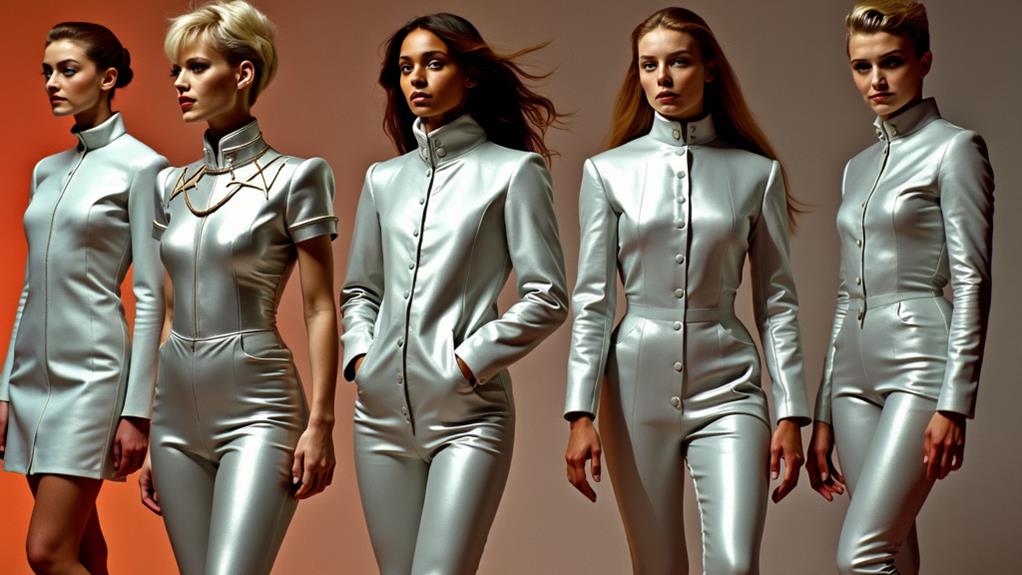
Unconventional materials and bold designs from the 1960s Space Epoch fashion continue to shape today's fashion landscape. Pioneering designers like Pierre Cardin and André Courrèges revolutionized the use of groundbreaking fabrics and unisex styles, challenging traditional gender roles in fashion. This evolution still resonates, influencing both high fashion and everyday wear.
The futuristic aesthetics of the 1960s remain a source of inspiration, evident in contemporary collections that frequently incorporate metallics and bold geometric shapes. The cultural impact of this period is also reflected in modern design philosophies prioritizing simplicity and creativity.
The legacy of the 1960s Space Era fashion is evident in today's trends:
- Innovative Fabrics: Modern designers utilize cutting-edge materials such as smart textiles and eco-friendly fabrics.
- Unisex Styles: The gender-neutral designs of the '60s paved the way for more inclusive fashion.
- Futuristic Aesthetics: Metallics and geometric patterns from the Space Epoch continue to influence contemporary fashion trends.
Related posts