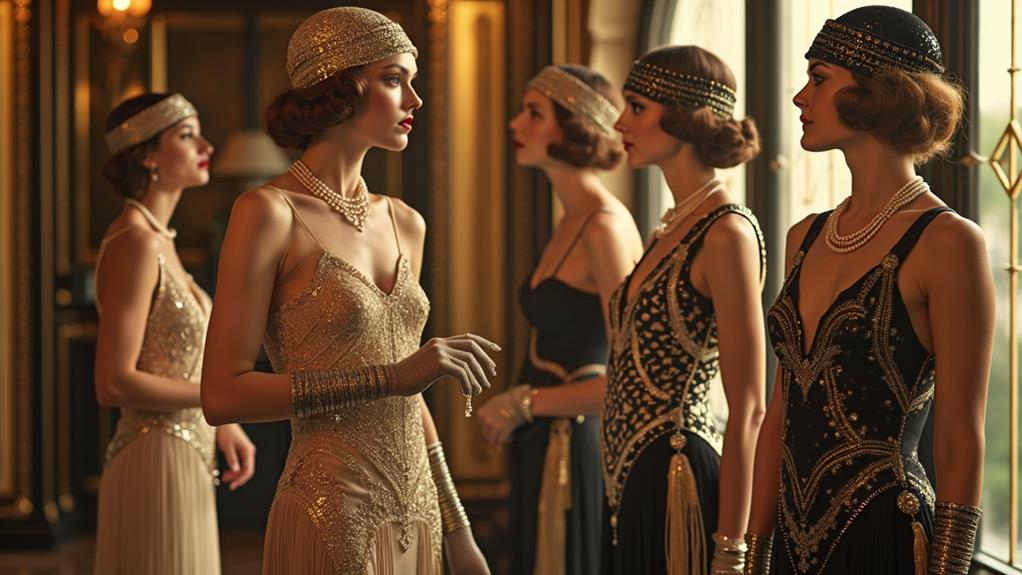
The 1920s Cloche Hat Craze
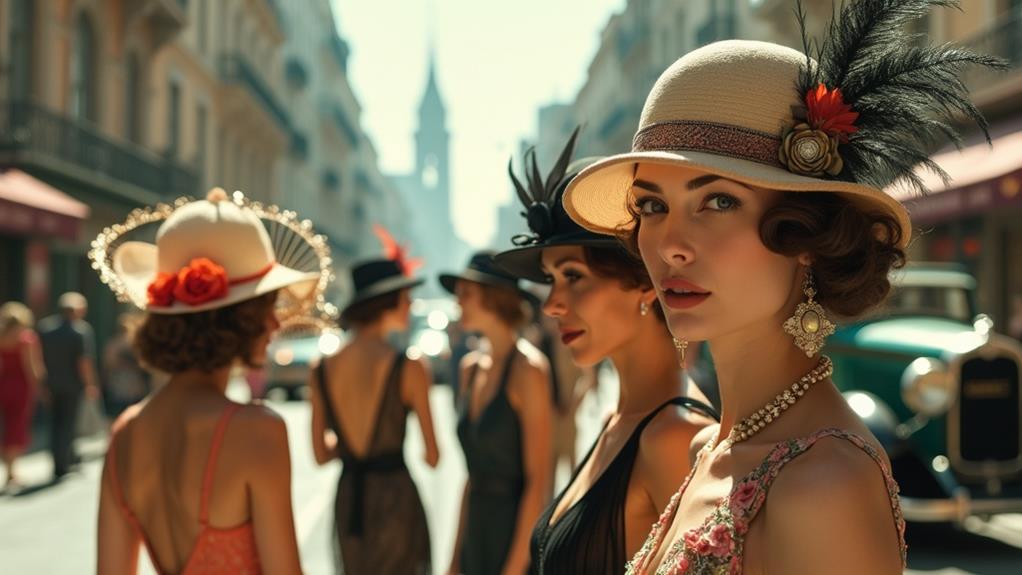
The 1920s cloche hat was more than just a fashion accessory; it symbolized women's growing independence. These snug-fitting hats, which sat low on the forehead, perfectly complemented the bobbed hairstyles of the decade and embodied the bold, geometric aesthetics of the Art Deco movement. The cloche's appeal transcended social boundaries, becoming a universal trend. Let's explore how this iconic hat evolved and what it represented for the modern woman throughout the roaring twenties.
Early 20th Century Hat Styles
In the early 1900s, women's hats were marked by formality and grandeur, characterized by voluminous designs adorned with elaborate decorations. These substantial hats required hat pins for secure fastening due to their size and weight. The high and intricate hairstyles of the time made it difficult to wear hats with shallow, flat crowns at the forehead level.
As the 1910s approached, women's evolving roles and more active lifestyles demanded a shift in fashion. This change led to simpler, more comfortable hat styles reflecting modern femininity. Post-World War I, the shift from elaborate to practical designs became evident. The cloche hat, featuring a deep, bell-shaped crown, was designed in Paris between 1908 and 1914. This style symbolized a significant movement towards modern femininity in fashion.
The transition from intricate, formal hats to the cloche hat marked a crucial change in women's fashion, aligning with societal shifts following World War I. The practicality and simplicity of the cloche hat mirrored the new, active roles women were embracing, making it a defining accessory of the era.
Emergence of the Cloche Hat
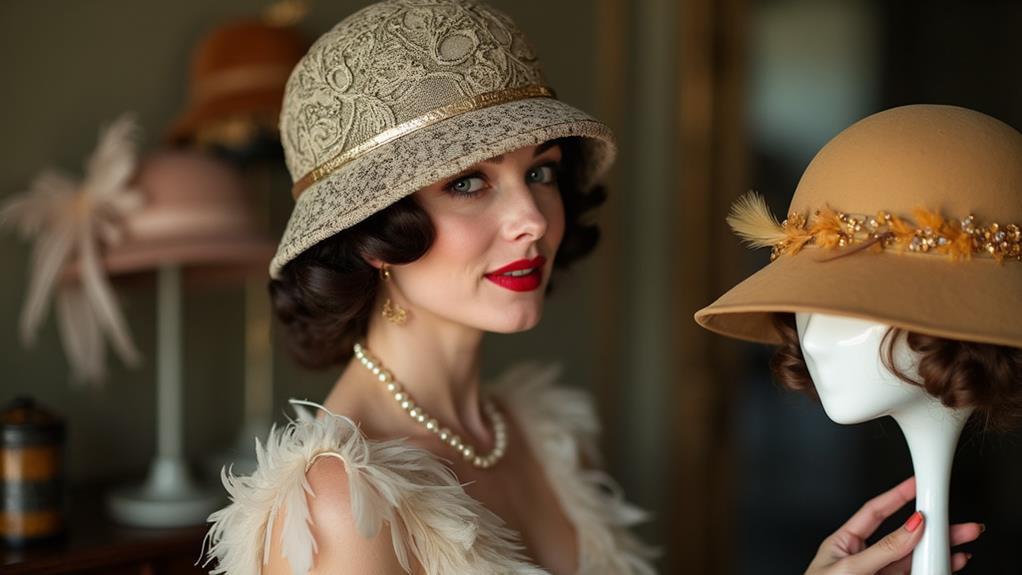
The cloche hat emerged on the fashion scene between 1908 and 1914, designed by French milliner Caroline Reboux. Named after the French word for "bell," its distinctive shape set it apart from the wide-brimmed hats common in the early 1900s. Initially crafted from materials like felt, sisal, or straw, these hats were custom-designed to fit snugly to the wearer's head, contrasting sharply with the elaborate and oversized headwear of previous decades.
The cloche hat symbolized a significant shift in women's fashion. Its low placement on the forehead, often just above the eyebrows, highlighted the increasingly popular bobbed hairstyles. Beyond being a fashion statement, the cloche represented modern femininity and independence. Women embraced its minimalistic and practical design, which complemented their more active lifestyles.
The history of the cloche illustrates a clear evolution from decorative to functional headwear. This hat style mirrored the changing roles and attitudes of women in society, moving away from the ornate towards the streamlined and practical. The emergence of the cloche hat was a pivotal moment in early 20th-century fashion.
The 1920s Fashion Revolution

As the cloche hat gained popularity, it became a central piece in the broader 1920s fashion revolution. This period marked a significant shift towards modern femininity, featuring simpler, more practical clothing and accessories. The cloche hat, with its snug fit and compatibility with the bob hairstyle, symbolized women's changing roles and newfound independence.
The 1920s fashion revolution was characterized by several key elements:
- Art Deco Influence: The Art Deco movement heavily influenced fashion, incorporating bold geometric designs and embellishments. Cloche hats often featured these striking patterns, making them not just accessories but statements of style.
- Democratization of Fashion: Cloche hats were popular among diverse social groups, from working-class women to Hollywood stars. This wide appeal showcased the democratization of fashion during the twentieth century, as style became accessible to all.
- Evolution of Design: By the end of the decade, cloche hats evolved, incorporating different materials and styles while maintaining their iconic bell-shaped silhouette. These hats were made to reflect the period's dynamic spirit and creativity.
Through these aspects, cloche hats emerged as style icons, encapsulating the essence of the 1920s fashion revolution.
Modern Cloche Adaptations
The cloche hat has undergone significant transformations over the years while retaining its vintage charm. Modern adaptations often feature wider brims and looser fits, blending vintage inspiration with contemporary style sensibilities. This evolution allows the hat to remain relevant in today's fashion landscape.
Designers like Dior have showcased cloche-inspired collections, notably in 2008, highlighting the hat's enduring appeal in high fashion. The cloche's resurgence in the 1960s, popularized by iconic figures like Twiggy, sparked a renewed interest in vintage trends that continue to influence modern designs.
Contemporary cloche hats are crafted from a variety of materials to suit different seasons. Versions made from felt are popular for winter, while straw versions are ideal for summer, showcasing their seasonal versatility. Fashion shows and collections frequently incorporate these hats, confirming their status as a timeless accessory.
Whether you're seeking a touch of vintage elegance or a modern twist, the cloche hat's adaptability ensures it remains a cherished piece in the world of fashion. Its continuous evolution proves that some styles are truly timeless.
Crafting and Caring for Cloches
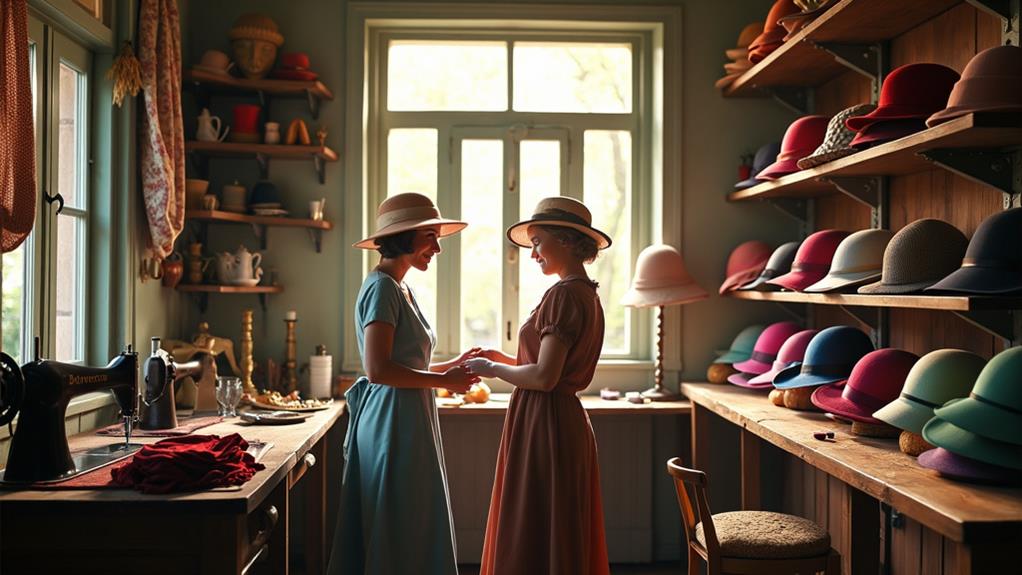
Modern cloche adaptations continue to captivate fashion enthusiasts, and crafting and caring for these timeless accessories can be a rewarding experience for both beginners and seasoned crafters. You can easily craft cloche hats using simple blocking techniques, with a cloche block helping achieve the perfect shape, especially when working with felt. Alternatively, fabric sewing patterns allow for the creation of cloche hats without blocking, making the process accessible to more crafters.
Proper care is essential to maintain the beauty and longevity of your cloche hats. Here are three key tips:
- Storage: Store your cloche hats flat or on a hat stand to maintain their shape and avoid moisture exposure.
- Cleaning: Cleaning methods vary by material. Felt requires different techniques compared to straw, so pay careful attention to the specific needs of each material to prevent damage.
- Guidance: Utilize valuable resources like Mary Jane Baxter's instructions in HATalk to enhance your skills in crafting and caring for cloche hats.